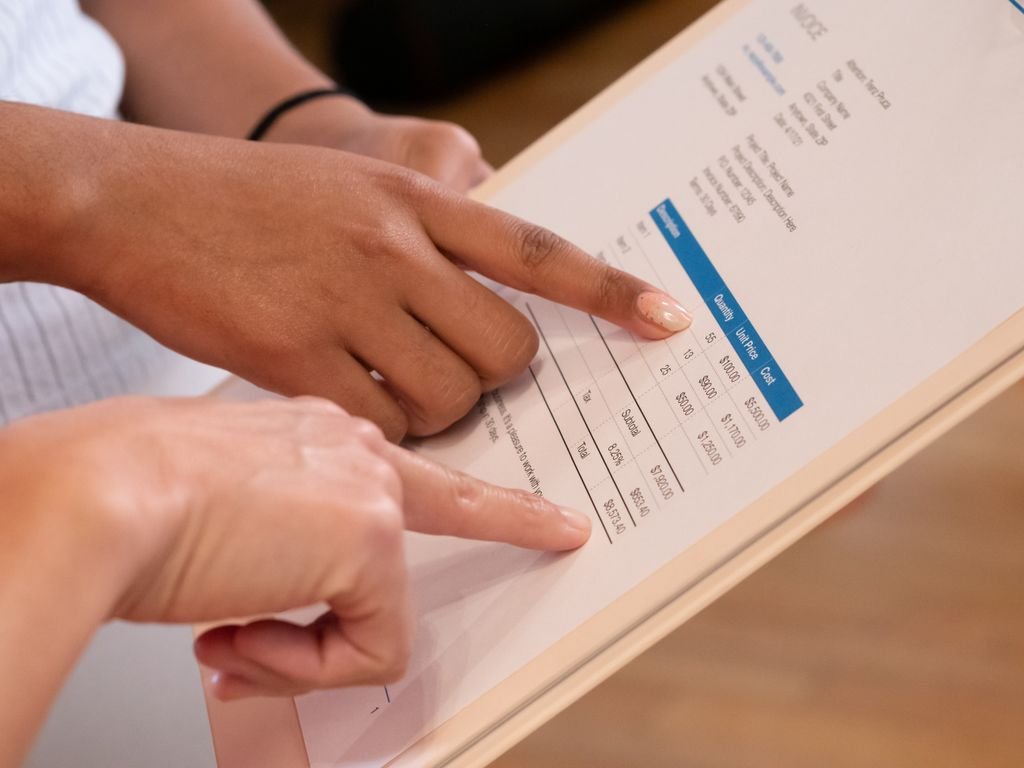
A large medical bill is not necessarily the final amount you must pay. Before sending money or putting the balance on a credit card, verify that the charges are accurate, confirm that insurance processed the claim correctly, and ask whether the provider offers financial assistance, a discount, or an interest-free payment plan.
The strongest negotiation is based on facts. You need the itemized bill, your insurer’s explanation of benefits, the provider’s assistance policy, and a realistic amount you can afford. A polite request may help, but there is no universal discount and no provider is required to accept every settlement offer.
This guide explains how to negotiate medical bills step by step, whether you have insurance, are uninsured, received an unexpected out-of-network charge, or are already dealing with a collection agency.
Quick answer: Do not negotiate from the one-line balance alone. Request an itemized bill, compare it with your explanation of benefits, challenge errors, ask the insurer to reprocess or appeal a denied claim when appropriate, apply for financial assistance, then request a discount or payment plan. Get every agreement in writing before paying.
Can You Really Negotiate a Medical Bill?
Often, yes—but “negotiate” can mean several different things:
- Correcting a billing or coding error
- Getting insurance to pay an amount it should cover
- Applying for hospital charity care or financial assistance
- Receiving an uninsured or prompt-pay discount
- Agreeing to a lower lump-sum settlement
- Setting up an affordable monthly payment plan
- Requesting a temporary hardship arrangement
The best option depends on why the balance exists. If the provider billed the wrong amount, your goal is correction—not a negotiated discount. If the bill is accurate but unaffordable, financial assistance or payment terms may be more appropriate.
1. Pause Before Paying the Full Balance
Medical billing often involves several documents arriving at different times. A provider statement is not the same as an insurer’s explanation of benefits, or EOB. An EOB normally shows what the provider billed, the insurer’s allowed amount, what the plan paid, and the amount the patient may owe.
Before paying:
- Confirm the bill is addressed to the correct patient
- Check the provider and date of service
- Verify that insurance information is current
- Look for a note showing the claim is still pending
- Compare the balance with the EOB
- Check whether you already paid a copay or deposit
Do not ignore the bill. Contact the billing office before its due date and explain that you are reviewing the charges. Ask whether the account can be placed on hold while an insurance appeal or financial-assistance application is pending.
2. Ask for a Detailed Itemized Bill
A summary statement may show only “hospital services” and a total. Request an itemized bill that lists each service, supply, medication, facility charge, professional charge, and adjustment.
Review it for common problems:
- Services you did not receive
- Duplicate charges
- Wrong dates or quantities
- A canceled test or medication that was still billed
- Incorrect room type or length of stay
- Charges already paid
- Insurance adjustments that are missing
- A provider incorrectly treated as out of network
- Separate physician, facility, laboratory, or imaging bills you do not recognize
Medical codes can be difficult to interpret. Ask the billing office to explain an unfamiliar code or charge in plain language. If the error involves coding, ask for a formal coding review rather than guessing which code should have been used.
Keep notes showing whom you spoke with, the date, the reference number, and what was promised.
3. Compare the Bill With Your EOB
If you used insurance, match every provider bill to an EOB. Pay special attention to:
| EOB field | What to check |
|---|---|
| Amount billed | Does it match the provider’s original charge? |
| Allowed amount | Did the provider apply the insurer’s negotiated rate? |
| Plan paid | Has the provider credited this payment? |
| Deductible | Does it fit your year-to-date deductible record? |
| Copay or coinsurance | Was your correct plan share applied? |
| Not covered or denied | What reason code and appeal right are shown? |
| Patient responsibility | Does the provider’s balance match this amount? |
The EOB is not usually a bill, but it is essential evidence. If the provider asks for more than the EOB says you owe, contact both the provider and insurer before paying.
If the terms on your statement are confusing, our guide to fixed copays and percentage-based coinsurance explains how these two cost-sharing methods differ.
4. Make Sure Insurance Processed the Claim Correctly
An unexpectedly large balance may result from a denied or incorrectly processed claim rather than the price of care alone.
Ask the insurer:
- Was the claim received and completed?
- Which reason code explains the denial or reduction?
- Was prior authorization required?
- Did the provider submit the correct insurance information?
- Was the service classified as in network or out of network?
- Can the provider correct and resubmit the claim?
- What is the appeal deadline?
- What records are required for an appeal?
Ask the provider to correct clerical information and rebill when appropriate. If the insurer denied a medically necessary service, request the complete appeal instructions and supporting criteria. Follow the deadline and keep proof of submission.
Do not negotiate away a balance that the insurer may be contractually responsible for paying. Resolve the coverage question first.
5. Check Your Rights Under the No Surprises Act
The federal No Surprises Act protects many insured patients from certain unexpected out-of-network bills, including covered emergency care, air ambulance services, and some non-emergency services received at an in-network hospital, hospital outpatient department, or ambulatory surgical center.
These protections do not apply to every medical bill. Ground ambulance charges, for example, may follow different rules, and state protections can vary.
If you were uninsured or chose not to use insurance, a provider generally must give you a good faith estimate when you schedule qualifying care in advance or request an estimate. A federal patient-provider dispute process may be available if the final bill is at least $400 above the estimate.
The Centers for Medicare & Medicaid Services medical-bill rights portal explains current protections, complaint options, and the federal help line. Before negotiating, check whether the charge should be limited or disputed under these rules.
6. Apply for Financial Assistance Before Negotiating a Settlement
Many hospitals have financial-assistance or charity-care programs. Nonprofit hospitals are subject to federal requirements concerning written financial-assistance policies, eligibility criteria, application procedures, and billing and collection practices. State or local rules may provide additional protections.
Ask the hospital billing office:
- Do you have a financial-assistance policy?
- Where can I obtain the application and plain-language summary?
- What income and household-size rules apply?
- Does assistance cover physician groups, labs, or other providers?
- Can I apply after insurance has processed the claim?
- Will you pause collection activity while the application is reviewed?
- Can assistance be applied retroactively?
You may need tax returns, pay stubs, benefit statements, bank records, or proof of a recent financial hardship. If your current income is lower than the income shown on an older tax return, explain the change and ask what alternative documents are accepted.
Apply even if you assume your income is too high. Some policies provide partial discounts above the threshold for free care. Assistance is not automatic, and eligibility differs by hospital.
7. Research a Reasonable Price
Hospitals in the United States must publish certain pricing information, but comparing medical prices remains difficult. A posted charge is not necessarily the insurer’s allowed amount or the price a cash-paying patient can receive.
Use several reference points:
- The amount allowed on your EOB
- The provider’s cash-pay or self-pay price
- The hospital’s price-transparency information
- Written estimates from comparable local providers for non-emergency services
- Medicare pricing as context, not as a price the provider must accept
Ask the billing office directly: “What would the self-pay price have been for these services?” If that amount is lower than your balance, ask whether a comparable discount can be applied.
Avoid claiming that a single online “fair price” proves the bill is illegal. Geographic area, facility setting, complexity, clinician involvement, insurance contract, and individual services can all change the price.
8. Choose the Right Negotiation Request
Once you know the bill is accurate and any insurance or assistance review is complete, choose a request that fits your finances.
Ask for a Prompt-Pay Discount
If you can safely pay the remaining balance at once, ask whether the provider offers a discount for payment by a specified date. Do not drain emergency savings or miss housing, food, utility, insurance, or transportation payments merely to obtain a discount.
Suggested wording:
I have reviewed the itemized bill and the insurance processing. I cannot afford the full balance of $2,400, but I can pay $1,650 by October 5 if that amount will satisfy the account in full. Is a prompt-pay or hardship settlement available?
Propose a Lump-Sum Settlement
If no standard discount exists, offer an amount you can actually pay. Start from a realistic number and explain the hardship briefly. The provider may accept, counter, or decline.
Never send the settlement payment until you receive written confirmation that the agreed amount will resolve the identified account and state what will happen to the remaining balance.
Request an Interest-Free Payment Plan
When a lump sum is not practical, propose a monthly amount that fits your budget. Ask:
- Is there interest or an enrollment fee?
- How long is the plan?
- Will the account remain with the provider?
- Will collection activity stop while payments are current?
- Is there a late fee or grace period?
- Can the monthly amount be changed after a hardship?
- Can you pay early without penalty?
Do not agree to an amount you cannot maintain. A smaller sustainable payment is better than a larger plan that fails after two months.
Ask for a Temporary Hardship Hold
If you recently lost income or face another emergency, ask whether payments can be paused or reduced for a limited period. Get the start date, end date, and collection status in writing.
9. Speak With Someone Who Has Authority
The first representative may only be able to explain the statement. If the standard options do not work, politely ask for:
- A patient financial counselor
- A financial-assistance specialist
- A billing supervisor
- A patient advocate or ombudsman
- A manager authorized to approve settlements
Be concise and prepared. State the verified balance, the steps you have already completed, the assistance decision, your hardship, and the exact resolution you are requesting.
Do not threaten, insult, or share unnecessary medical details. The goal is a documented resolution, not winning an argument.
10. Get the Agreement in Writing
Before paying a negotiated amount, confirm:
- Patient and account identifiers
- Original balance
- Agreed payment or installment amount
- Due dates
- Interest and fees
- Whether the payment settles the account in full
- Treatment of any remaining balance
- Whether collection activity will stop
- How the provider will report the account to any collector or credit bureau
- Who approved the agreement
Pay through a traceable method and keep the receipt. After the final payment, request a zero-balance statement or settlement confirmation.
Avoid giving a collector or provider unrestricted electronic access to your bank account. Ask about a secure one-time payment method or another option you can document.
How to Negotiate Medical Bills Without Insurance
If you are uninsured, begin by asking for the self-pay rate rather than negotiating from the full list price. Then follow this order:
- Request the itemized bill.
- Compare it with any good faith estimate.
- Challenge inaccurate or unauthorized charges.
- Apply for financial assistance.
- Ask for an uninsured discount.
- Request a lump-sum settlement or affordable payment plan.
For scheduled care in the future, request a good faith estimate in writing and ask whether all involved providers—facility, surgeon, anesthesia, pathology, radiology, and laboratory—are included.
How to Negotiate Medical Bills in Collections
Once a collector is involved, first confirm that it is authorized to collect and that the amount is correct. Request the validation information required under applicable federal law and compare it with the provider’s records.
Do not assume the collector can correct an insurance problem. If insurance processing or hospital assistance is unresolved, contact the provider and ask whether it can recall the account while the issue is reviewed.
If the debt is accurate:
- Decide whether you can offer a lump sum or need installments
- Negotiate before sending money
- Obtain the settlement terms in writing
- Confirm whether the provider still owns the debt
- Ask how the account will be reported after payment
- Keep proof of every payment
Medical debt is generally unsecured because it is not tied to specific collateral. Our explanation of debts without pledged collateral provides useful context.
Be cautious with old debt. The time limit for a lawsuit varies by state, and a payment or written acknowledgment can affect that period in some jurisdictions. Consider state-specific legal guidance before acting.
Should You Use a Medical Credit Card or Personal Loan?
A credit product can make the provider balance disappear while creating a new debt with interest, fees, or deferred-interest risk. Before transferring the balance, compare:
- Interest rate and whether it can change
- Deferred-interest deadline
- Minimum payment
- Total repayment cost
- Late-payment consequences
- Whether provider financial assistance remains available after payment
- Whether the new debt loses any protections tied to medical billing
A zero-interest provider plan is often less expensive than a high-interest credit card, but read every agreement. Do not finance a disputed bill before resolving the dispute.
If several unsecured debts are already difficult to manage, compare structured repayment and settlement risks in our guide to alternatives for handling unsecured debt.
Can an HSA, HRA, or FSA Help?
If the charge is an eligible medical expense, funds from a health savings account, health reimbursement arrangement, or flexible spending arrangement may help. Each account has different ownership, funding, eligibility, and substantiation rules.
Before paying, check the plan documents and keep receipts. Our comparison of HRA and HSA ownership rules explains why reimbursement and portability differ.
Using tax-advantaged funds does not replace the need to verify or negotiate the bill. Reduce the balance first when possible, then decide which funds to use.
A Medical-Bill Negotiation Script
Use this as a starting point and replace the details with accurate information:
Hello, I am calling about account ending in 2468 for services on June 12. I have reviewed the itemized bill and my insurance EOB. The remaining balance is $3,100, and I cannot afford to pay it in full. Before discussing payment, I would like the financial-assistance application and information about any self-pay, hardship, or prompt-pay discounts. Please place the account on hold while my application is reviewed. If I do not qualify, I can pay $1,900 as a lump sum or $75 per month without interest. Could you review those options or connect me with someone authorized to do so?
Keep the tone calm and the request specific. Do not promise a payment date until you know the terms.
What Not to Say or Do
- Do not claim a service was never received if it was.
- Do not misrepresent income or household size on an assistance application.
- Do not pay a collector before verifying the debt and ownership.
- Do not provide unnecessary health, banking, or identity information.
- Do not assume a verbal promise changes the account.
- Do not place the balance on a high-interest card merely to stop calls.
- Do not ignore deadlines for insurance appeals, assistance applications, or federal disputes.
- Do not pay a company that guarantees it can erase valid medical debt.
Medical-Bill Negotiation Checklist
Verify the Bill
-
Request a detailed itemized statement
-
Match the bill to the EOB
-
Confirm dates, providers, codes, quantities, and prior payments
-
Ask for correction or coding review when supported
Resolve Coverage
-
Ask why insurance denied or reduced the claim
-
Request corrected claim submission if needed
-
File an appeal before the deadline when appropriate
-
Check No Surprises Act or state protections
Reduce the Balance
-
Apply for hospital financial assistance
-
Ask about self-pay, hardship, and prompt-pay discounts
-
Research a reasonable local price
-
Choose a safe lump sum or monthly amount
Finalize the Agreement
-
Get all terms in writing before paying
-
Use a traceable payment method
-
Keep receipts and correspondence
-
Request a zero-balance or settlement letter
Frequently Asked Questions
What percentage should I offer to settle a medical bill?
There is no universal percentage. The provider’s policy, the age and status of the account, your hardship, insurance payments, and your ability to pay all matter. Ask about financial assistance and standard discounts before making an offer based on an arbitrary percentage.
Can I negotiate a medical bill after insurance?
Yes. First confirm that the insurer processed the claim correctly and that the provider applied contractual adjustments. Then apply for financial assistance and request a discount or payment arrangement for the valid patient balance.
Can I negotiate a medical bill already in collections?
You can ask, but first validate the debt, confirm who owns it, and investigate unresolved insurance or assistance issues. Obtain any settlement or payment agreement in writing before paying.
Will a hospital accept monthly payments?
Many providers offer payment plans, but terms vary. Ask about interest, fees, duration, minimum payments, late rules, and whether collection activity will stop while the plan is current.
Does asking for an itemized bill lower the balance automatically?
No. An itemized bill makes it easier to identify errors and understand charges, but valid charges do not disappear merely because you requested details.
Can I negotiate an emergency-room bill?
Yes, after verifying insurance processing and checking whether federal or state surprise-billing protections apply. You can also seek financial assistance, discounts, or payment terms for the valid remaining balance.
What if the hospital denies financial assistance?
Request the decision and appeal procedure in writing. Check whether the correct income, household, residency, and hardship information was considered. You can then request other discounts or a payment plan.
Should I pay the bill with a credit card?
Not until you confirm the balance and exhaust assistance or discount options. Moving the amount to a credit card can add interest and may make it harder to resolve the original billing problem.
How do I know a settlement is complete?
The written agreement should identify the account, accepted amount, deadline, and whether the payment satisfies the balance in full. After payment, obtain a receipt and zero-balance or settlement confirmation.
Bottom Line
Learning how to negotiate medical bills begins with verification, not bargaining. Request the itemized bill, compare it with your EOB, correct errors, resolve insurance denials, and check federal surprise-billing protections. Apply for financial assistance before committing scarce cash to a settlement.
If a valid balance remains, ask for a discount or an affordable interest-free payment plan. Make a specific proposal, avoid promising more than your budget can support, and get the complete agreement in writing before paying.
This article provides general educational information and is not individualized financial, legal, tax, medical, insurance, or credit advice. Medical-billing rules, hospital assistance policies, limitation periods, insurance contracts, and federal and state protections vary and can change. Contact the provider, insurer, qualified patient advocate, state regulator, or licensed attorney for advice about your circumstances.