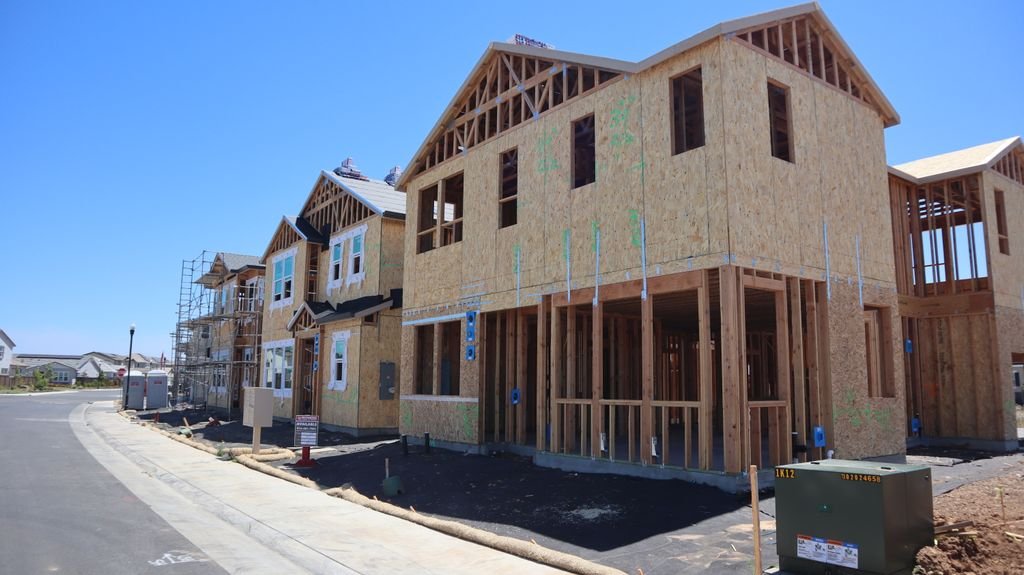
Plan for rebuilding costs beyond the estimate.
Extended replacement cost is additional dwelling coverage that can pay above your home insurance policy’s stated limit after a covered loss. It usually adds a specified percentage to that limit, creating a cushion if the cost of rebuilding your home is higher than expected.
The key word is “extended,” not unlimited. A 25% endorsement can provide a different maximum from a 50% endorsement, and both still come with policy conditions. Understanding those limits before a claim helps you compare coverage without assuming that a larger number protects against every expense.
How extended replacement cost works
Your policy’s dwelling limit, often called Coverage A, is the starting point. If covered rebuilding expenses exceed that amount, an extended replacement cost endorsement may make an additional amount available. Progressive’s explanation of extended dwelling coverage describes percentage-based extensions and notes that available amounts and prices depend on the policy.
This coverage addresses the cost of repairing or rebuilding the insured dwelling. It is not based on what a buyer would pay for the property, how much your mortgage balance is, or the value of the land. A house’s sale price and its construction cost can move differently.
For the underlying structure coverage, our guide to what dwelling insurance protects explains where Coverage A fits within a homeowners policy. The endorsement builds on that coverage rather than replacing the rest of the contract.
A 25% versus 50% coverage example
Imagine a homeowner whose dwelling limit is $400,000. After a covered fire, the estimated cost to rebuild with comparable materials is $550,000. Compare two hypothetical endorsements:
| Illustrative coverage | Extra amount | Combined ceiling | Cost above ceiling |
|---|---|---|---|
| Base limit only | $0 | $400,000 | $150,000 |
| 25% extension | $100,000 | $500,000 | $50,000 |
| 50% extension | $200,000 | $600,000 | $0 |
The extra amount is a percentage of the $400,000 dwelling limit, not of the $550,000 estimate. These figures illustrate available limits before deductibles, exclusions, and other claim conditions. They are not promised claim payments.
With the 50% extension, a $600,000 ceiling does not mean a $600,000 check for a $550,000 rebuilding bill. Insurance pays covered expenses according to the contract and settlement process. Unused capacity is not a cash bonus.
Now change only the rebuilding estimate to $650,000. Even the 50% extension would leave $50,000 above its illustrated ceiling, before considering any other expenses. This second scenario shows why an extension should accompany an accurate base limit.
Why the original rebuilding estimate can fall short
A coverage estimate is made before anyone knows the exact circumstances of a future loss. After widespread damage, many households may need contractors and materials at the same time. Local demand can increase costs and complicate scheduling.
A second problem is an outdated description of the house. A remodeled kitchen, added room, higher-quality finishes, or other improvements may change what a comparable rebuild requires. A policy based on the former house may no longer reflect the current one.
The Insurance Information Institute’s disaster-coverage guide emphasizes the distinction between real-estate value and rebuilding costs. Review the reconstruction estimate with your insurer rather than simply matching Coverage A to the purchase price.
Consider two renewal offers with the same premium. One has a $300,000 base limit plus 50%; the other has $400,000 plus 25%. Their theoretical ceilings are $450,000 and $500,000 respectively. The larger percentage alone does not identify the larger limit or the better contract.
Extended replacement cost versus other settlement methods
| Coverage approach | Main distinction | What to examine |
|---|---|---|
| Actual cash value | Generally accounts for depreciation | How depreciation affects the insured property |
| Replacement cost | Uses comparable repair or replacement cost, subject to limits | Base limit and replacement requirements |
| Extended replacement cost | Adds a specified cushion above the dwelling limit | Percentage, maximum, and eligibility conditions |
| Guaranteed replacement cost | Can cover rebuilding beyond the stated dwelling limit without the same fixed percentage cap | Insurer’s valuation requirements, exclusions, and other terms |
NJM’s guaranteed replacement cost overview illustrates rebuilding above a dwelling limit while also noting limitations and exclusions. “Guaranteed” does not turn an excluded loss into a covered one or automatically fund a more expensive redesigned home.
Our explanation of replacement value and depreciation-based payouts provides context for the settlement basis. Read that basis together with the maximum limit; either can affect a claim.
What the extension does not automatically solve
Excluded causes of damage
The endorsement generally increases funds for a loss the underlying policy covers. Kin’s extended replacement cost guide connects this protection to dwelling coverage and its covered events. It does not mean every disaster is insured.
For example, the National Flood Insurance Program explains that most homeowners policies do not cover flood damage. Adding a dwelling extension is not a substitute for confirming flood coverage. Ask separately about earthquake coverage and other exclusions relevant to the home.
Building-code upgrades
Reconstruction may have to meet current local codes. That can require work beyond restoring the old house with comparable materials. The Insurance Information Institute’s coverage-needs guide identifies ordinance or law coverage as a way to address qualifying code-related costs.
Do not assume an extended replacement endorsement includes all those costs. Ask what the policy provides for required upgrades, demolition of undamaged portions, and related rebuilding expenses. Compare any separate ordinance or law limit with the dwelling extension.
Belongings and temporary housing
The additional dwelling amount does not automatically increase every other coverage. Review personal property, other structures, and loss-of-use limits independently. A lengthy rebuilding project can create a different problem from the construction bill itself.
A deductible or claim-settlement condition
You may still owe a deductible. The insurer may also require documentation and actual repairs or rebuilding before paying certain replacement-cost amounts. Read the loss-settlement clause and endorsement together, including deadlines and any conditions for rebuilding elsewhere.
How to compare endorsements before buying
Start with the base reconstruction estimate
Ask the insurer to check square footage, construction type, roof details, finishes, and recent improvements. Confirm that the estimate describes your home accurately. Choosing a large extension while knowingly understating the house can leave a gap or conflict with policy conditions.
Convert the percentage into dollars
For each quote, write down the base Coverage A amount, extra percentage, and combined ceiling. If an endorsement specifies a dollar amount instead, record that amount. Compare all three figures with the rebuilding estimate being used.
Read the conditions that activate the extra coverage
Ask whether the insurer requires you to accept its replacement-cost valuation, maintain a particular insurance amount, or report improvements within a stated period. Request the actual endorsement form, rather than relying only on a brief quote description.
Compare the rest of the policy
Check covered causes, exclusions, deductibles, roof settlement terms, code coverage, and loss-of-use protection. Our comparison of named-peril and broader dwelling coverage can help you understand why two policies with similar dollar limits may cover different losses.
Ask for the incremental premium
Request the price of the policy without the extension and with each available option, holding the other terms constant. There is no universal price for this endorsement. The meaningful comparison is the actual offer for your home, location, insurer, and coverage choices.
A practical renewal checklist
- Does the dwelling estimate reflect renovations and current home details?
- What percentage or dollar amount is the extension?
- What is the combined dwelling ceiling?
- What conditions must be satisfied to use the extra amount?
- Are code upgrades addressed by a separate coverage?
- Are flood and earthquake risks covered or excluded?
- What limits and time restrictions apply to temporary housing?
- What deductibles and roof-specific settlement terms apply?
Keep the answers with your declarations page and endorsement forms. After a significant renovation, review the policy again rather than waiting for the next renewal. Clear records make it easier to identify which estimate and terms you accepted.
Frequently asked questions
Is extended replacement cost the same as guaranteed replacement cost?
No. Extended coverage generally stops at a specified extra percentage or dollar amount. Guaranteed replacement coverage can provide broader rebuilding protection beyond the dwelling limit, but its eligibility requirements and exclusions still matter.
Does 25% extended replacement cost mean 125% in total?
If the endorsement adds 25% of the dwelling limit, the illustrated combined ceiling is 125% of that limit. Check the actual wording to confirm how the additional amount is calculated and which costs can use it.
Will the insurer pay the entire extended limit?
Not simply because it is available. Payment depends on the covered damage, repair or replacement expenses, deductible, and policy conditions. The maximum is a ceiling rather than a predetermined settlement.
Can I add it to an existing homeowners policy?
Ask your agent or insurer whether an endorsement is available for your policy and location, what underwriting requirements apply, and when it becomes effective. Availability differs; confirm the change in writing before treating it as active coverage.
Use the cushion with an accurate foundation
Extended replacement cost can add valuable room when a covered rebuild exceeds the original estimate. Compare the extra amount in dollars, maintain an accurate dwelling limit, and review exclusions and separate coverages. The useful question is whether the complete policy matches the house and the risks you need it to protect.