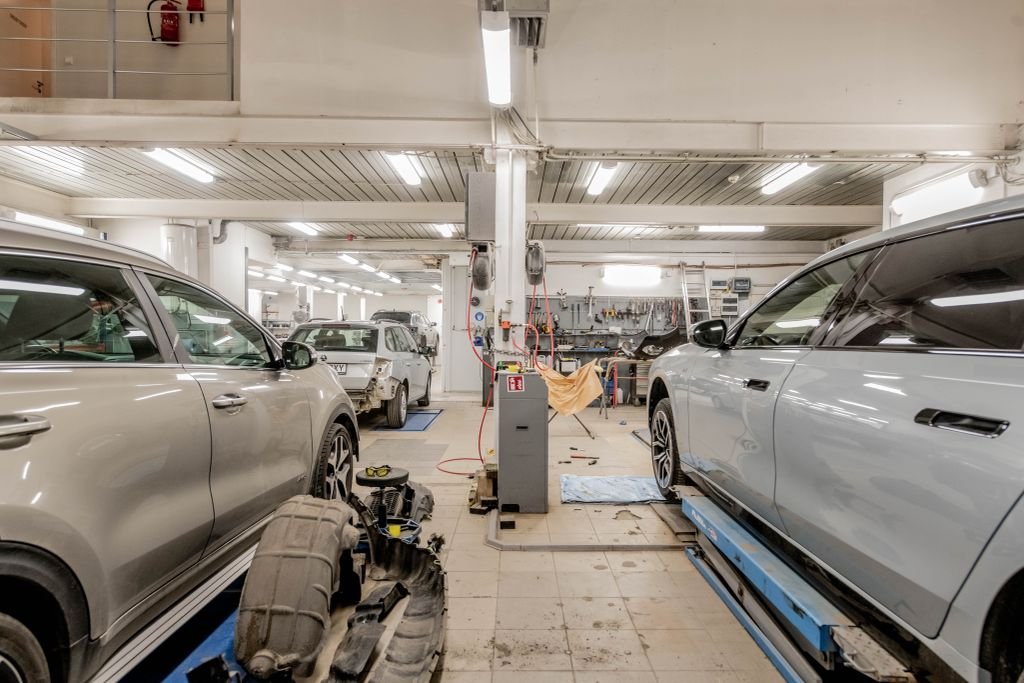
Protect the customer vehicles entrusted to your business.
Garage keepers insurance helps protect a business against covered physical damage to customers’ vehicles while those vehicles are in its care, custody or control. It is commonly relevant to repair shops, body shops, detailers and businesses that park or store customer autos.
The important detail is how the policy responds. A legal liability form generally requires the business to be legally responsible for the damage. Direct coverage can respond differently, including to some covered losses for which the business was not negligent. Neither option covers every event simply because the vehicle was on the premises.
Before comparing premiums, identify the vehicles you handle, the maximum value at risk, the selected causes of loss and the policy’s payment basis.
What Is Garage Keepers Insurance?
Often written as “garagekeepers insurance,” this coverage addresses customer vehicles temporarily entrusted to a business. It is different from insuring the garage building or the business’s own service van.
Travelers’ auto repair business guidance identifies garagekeepers coverage as protection for customer vehicles in the business’s care, custody or control. Its garage business coverage guide also distinguishes direct primary and legal liability options.
The practical question is not just “Do I have business insurance?” It is “Does the policy cover this customer auto, at this location, during this activity, for this particular cause of damage?”
For example, a repair shop’s property insurance may protect its equipment while leaving a separate issue when a customer’s vehicle is damaged. General liability also should not be assumed to cover property entrusted to the business. Progressive explains the role of care, custody and control exclusions.
Who Should Consider This Coverage?
Businesses should discuss garagekeepers protection with an agent when they routinely take possession of customer vehicles. Relevant operations may include:
- Mechanical repair and body shops.
- Auto detailing and some car-wash businesses.
- Vehicle storage or parking operations.
- Dealership service departments.
- Towing businesses that also store customers’ vehicles.
Eligibility and appropriate coverage differ. A valet operation, mobile detailer and collision shop do not necessarily need identical forms. Tell the insurer about overnight storage, vehicle movement, pickup and delivery, road tests and off-site work.
Your own company vehicles present a separate exposure. Our explanation of insuring multiple business vehicles discusses fleet coverage, which should not be confused with protection for customer cars.
What Does Garage Keepers Insurance Cover?
Depending on the form and selections, covered causes may include fire, theft, vandalism and collision. Comprehensive or specified-causes coverage can differ from collision coverage, and weather events must be checked against the actual contract.
Progressive’s garagekeepers overview describes physical damage protection for customer autos and explains that limits and deductibles affect payment.
| Event | What to check |
|---|---|
| Employee backs a customer car into a post | Collision selection, driver eligibility and payment basis |
| Fire damages several stored customer cars | Covered cause, location, total limit and deductibles |
| Vehicle is stolen from an overnight lot | Theft coverage, security conditions and exclusions |
| Hail damages cars outside | Weather coverage and legal liability versus direct coverage |
| Vehicle is damaged during a road test | Authorized activity, driver and applicable auto coverage |
These examples are questions to resolve with the insurer, not promises of payment.
Legal Liability, Direct Primary and Direct Excess
The payment basis can change the outcome even when the physical damage is identical.
Legal liability coverage
The business generally must be legally responsible for a covered loss. Negligence may be relevant—for example, an employee’s careless vehicle movement—but a damaged car alone does not establish liability.
If a sudden hailstorm causes damage despite reasonable precautions, a legal liability form may not respond when the business has no legal responsibility. The policy and facts control.
Direct primary coverage
Direct primary coverage can address covered damage without requiring the business’s legal liability and generally operates on a primary basis. It may offer a different claims experience when damage happens without negligence.
“Primary” does not mean unlimited, exclusion-free or guaranteed replacement with a new vehicle. Valuation, deductibles, limits and other-insurance wording still apply.
Direct excess coverage
Direct excess is not simply another name for umbrella insurance. It may retain legal liability protection while providing coverage on an excess basis for certain losses where the business is not liable, depending on collectible customer insurance and the form.
Ask the agent to explain a claim involving a customer with insurance and one involving a customer without it. Intrepid Direct’s garagekeepers guide compares these structures.
Garage Liability vs. Garagekeepers Insurance
Garage liability and garagekeepers address different exposures. Garage liability can address covered third-party injury or property-damage liability arising from specified business operations. Garagekeepers focuses on covered damage to entrusted customer autos.
A visitor slipping in the waiting area is a different claim from a customer car being damaged in storage. One coverage should not be treated as a substitute for the other.
Likewise, a customer vehicle being towed may need specifically appropriate protection. Progressive separates on-hook towing coverage from stored-vehicle coverage, although terminology varies by state and product.
Exclusions and Gaps to Review
Request the actual policy forms and endorsements. Pay particular attention to:
- Faulty work and defective parts: do not assume this coverage is a warranty for repairs.
- Dishonest or intentional conduct, including theft involving insured persons.
- Liability assumed under contracts beyond otherwise applicable obligations.
- Personal belongings, tools or removable equipment inside a customer vehicle.
- Vehicles, activities or locations outside the insured scope.
- Wear, deterioration or mechanical problems the vehicle already had.
An expensive engine failure after a repair is not automatically a covered garagekeepers loss. Ask whether faulty workmanship, resulting damage and completed-operations liability are addressed elsewhere or remain excluded.
Also distinguish liability protection from merely being named on paperwork. Our guide to insured status and policy rights explains why an endorsement matters more than a casual description.
How Much Does Garage Keepers Insurance Cost?
There is no reliable universal premium for every shop. Compare written quotes for the same coverage basis and limits rather than treating an online starting price as your expected cost.
Factors an insurer may evaluate include:
- Business activities and location.
- Number and value of customer vehicles at peak occupancy.
- Overnight storage and indoor versus outdoor parking.
- Security, key control and fire protection.
- Driver practices, road tests and vehicle transport.
- Loss history and requested deductibles.
- Legal liability versus direct coverage.
Ask whether the quoted premium is for garagekeepers alone or a broader business package. A cheaper quote can reflect a narrower payment basis, different deductibles or excluded activities.
If an insurer uses a non-admitted market, understand how insurer status affects oversight and protection before comparing only the price.
Choosing Limits: Count the Cars and Their Values
Review your maximum exposure, not your average quiet afternoon. One event could damage several cars at the same location.
Suppose a shop can have eight customer vehicles worth $35,000 each on site. Their combined illustrative value is $280,000. If the applicable location or event limit is $150,000, a severe loss could leave a substantial gap even before deductibles and valuation provisions are considered.
This is an exposure illustration, not a recommended limit. Check for per-vehicle caps, location limits, event limits, aggregate provisions, settlement basis and any special conditions for expensive vehicles.
Deductibles may apply to multiple vehicles
Ask whether a deductible applies per auto, per occurrence or under a capped combination. For example, three covered cars each with $5,000 of damage and a $1,000 per-auto deductible could leave $3,000 retained by the business, assuming no different cap or provision applies.
Do not assume the deductible is subtracted only once because the damage occurred in one storm.
Before Buying: Questions for the Agent
- Are all operations, storage locations and road tests disclosed and covered?
- Which physical damage causes are selected?
- What is the legal liability or direct coverage basis?
- How does customer insurance affect payment?
- What are the per-auto, location and event limits?
- How are vehicles valued and deductibles applied?
- What exclusions concern faulty work and customer belongings?
- Does towing, transport or off-site work need separate coverage?
- What must change when the business expands or stores higher-value cars?
If coverage is being arranged, obtain written confirmation of the effective date. Our explanation of temporary evidence of insurance describes the role and limitations of an insurance binder.
What to Do After Damage Occurs
Protect people first, prevent further damage where safe and notify the insurer promptly. Preserve photographs, vehicle intake records, timestamps, surveillance footage, customer authorizations and repair estimates.
Explain the known facts to the customer without promising coverage or agreeing to settlements before checking the policy’s claim conditions. For theft, vandalism or another reportable incident, follow appropriate reporting procedures and retain the report details.
Frequently Asked Questions
Is garage keepers insurance required by law?
There is no single rule covering every U.S. business. Licensing, state rules, contracts and specific operations can impose requirements. Confirm the rules applicable to your business and location.
Does it cover my business’s own vehicles?
Do not assume so. Garagekeepers is generally directed at customer autos. Owned vehicles, dealer inventory and towing exposures may require different coverage.
Does direct primary cover everything regardless of fault?
No. It changes the liability/payment basis for covered losses. Exclusions, eligible activities, limits and deductibles remain important.
Does it cover items stolen from a customer’s car?
Personal belongings may be excluded. Confirm the wording rather than assuming protection for the vehicle extends to everything inside it.
Can one policy cover several locations?
Possibly, but locations and limits must be correctly scheduled or otherwise covered. Ask how a loss affecting more than one location is treated.
Protect the Vehicles You Actually Handle
Garage keepers insurance should match the business’s real custody of customer autos. Review peak vehicle values, selected causes of loss and the payment basis before choosing a premium or limit.
Coordinate it with business liability, property and vehicle coverage. Keep the insurer informed as operations change, and use the policy wording—not the coverage name alone—to evaluate a claim.
This article provides general educational information, not personalized insurance, financial or legal advice. Coverage depends on policy wording, endorsements, claim facts and applicable law. Consult a licensed insurance professional about your business.