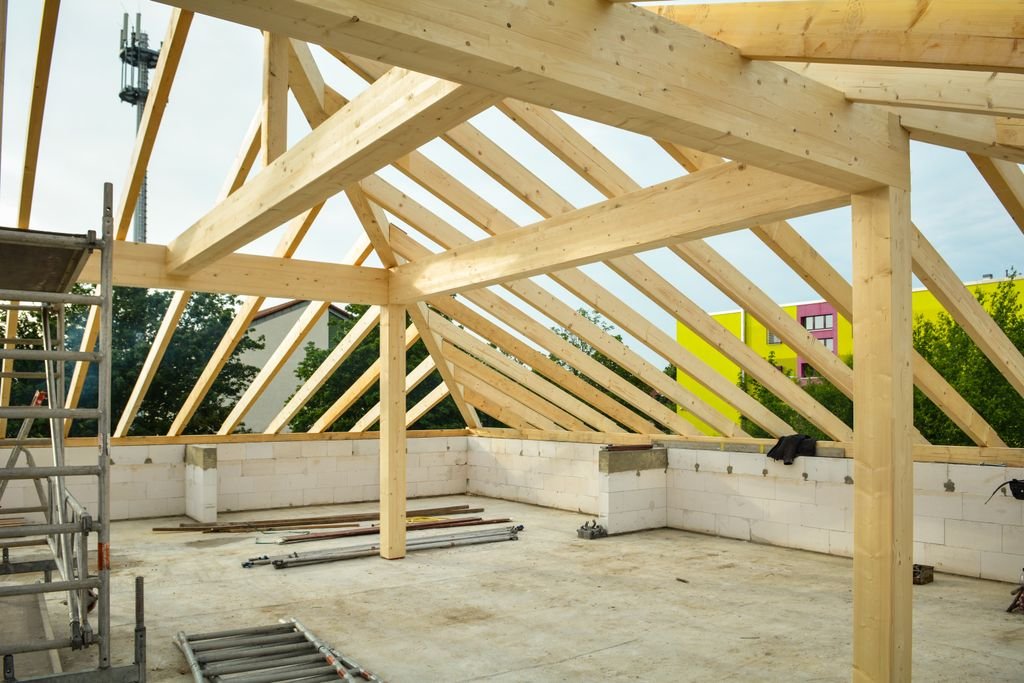
Rebuilding costs can change when building codes do.
Ordinance or law coverage helps pay certain additional costs of repairing or rebuilding damaged property when compliance with building laws or codes is required. It addresses a potential gap between replacing what was there before a loss and constructing what local authorities now require.
For example, a covered fire may damage an older home’s wiring. Repair work can trigger a requirement for a different electrical installation. The ordinary repair cost and the extra cost of complying with that requirement are separate parts of the claim.
Coverage depends on the policy, the cause of loss, the enforced requirement, and the applicable limit. This U.S. guide focuses on homeowners insurance and explains where commercial property forms differ.
What is ordinance or law coverage?
This protection is sometimes called building-code coverage or law-and-ordinance coverage. It may be included at a limited amount or available through an endorsement, depending on the policy and insurer.
The Insurance Information Institute’s glossary describes an endorsement that addresses extra rebuilding expenses required by laws or ordinances. The practical purpose is to help with mandatory changes connected to a qualifying property loss.
Read the complete forms instead of assuming that “replacement cost” covers every construction expense. The amount needed to replace old materials and the amount needed to satisfy a code requirement may be treated differently.
WealthLedger’s guide to insurance endorsements explains how an attached form changes the underlying contract.
How a covered loss can create extra code costs
A house can have components installed under older standards. After damage, the repair permit or inspection process may require work that differs from replacing those components exactly as they were.
Depending on local requirements and the project, questions can arise about electrical systems, structural connections, insulation, roofing, or other construction details. A contractor should identify the actual requirement rather than label every proposed improvement a “code upgrade.”
Three questions help separate the issues:
- Did a covered event cause damage to insured property?
- Which applicable law or code is being enforced because of the repair or reconstruction?
- Does the policy cover the resulting additional expense, and within what limit?
A permit requirement is evidence to review, not a promise of insurance payment. The insurer still applies the policy’s coverage conditions.
What ordinance or law coverage may pay for
| Possible cost | Why it may arise | What to verify |
|---|---|---|
| Increased construction cost | Required materials or methods cost more than a like-for-like repair | The enforced requirement and eligible extra expense |
| Work involving an undamaged portion | Authorities require additional work beyond the visibly damaged area | Whether the form covers that portion and why the work is required |
| Required demolition | A qualifying order requires removal of an undamaged part | Demolition provisions, limits, and exclusions |
These are potential coverage issues, not automatic benefits under every homeowners policy. The exact form determines which costs are included, how they are grouped, and whether payment requires actual repair or replacement.
The Insurance Information Institute’s real-estate insurance overview discusses required demolition of undamaged portions and increased construction costs following covered damage. Obtain your own form before applying those broad descriptions to a claim.
A homeowners insurance example
Assume a hypothetical policy has a $400,000 dwelling limit and an ordinance-or-law limit equal to 10% of that amount. The stated code-coverage limit would be $40,000.
A covered fire results in an estimated $85,000 of ordinary repairs. The contractor separately identifies $18,000 of required code work. If the insurer agrees that the additional work qualifies, the $18,000 can be considered under the applicable ordinance-or-law provisions.
The example does not guarantee a combined $103,000 payout. Deductibles, eligibility, overlapping limits, settlement conditions, and the policy’s treatment of additional insurance must still be applied.
If eligible code work instead costs $55,000, a $40,000 limit may leave a $15,000 gap even though the dwelling limit looks large. That illustrates why the main dwelling limit alone does not answer every rebuilding question.
Progressive’s building-code coverage explanation describes percentage-based limits and the relationship to covered damage. Available limits vary; do not assume the percentages in an example are offered by your insurer.
What it generally does not replace
Routine maintenance and voluntary remodeling
Do not treat this coverage as a renovation allowance. Replacing an aging roof or remodeling a kitchen without a qualifying insured loss generally does not create the same claim as repairing covered damage.
Separate mandatory work from choices such as upgraded finishes, a larger room, or a preferred design. Ask the contractor to itemize them so the insurer can evaluate the correct expenses.
Coverage for an excluded cause of loss
Adding code protection does not automatically make flood, earthquake, wear and tear, or another excluded event covered. Review the underlying cause-of-loss provisions first.
The Texas Department of Insurance’s policy guide explains that even broad homeowners policies have exclusions. The policy’s marketing name does not remove them.
Unlimited reconstruction or every regulatory expense
The form can contain conditions, sublimits, and exclusions affecting demolition, pollution-related requirements, land, or other expenses. Review those provisions before assuming a government requirement is insured.
A building authority decides what construction is permitted. The insurer decides coverage under the contract, subject to applicable law and dispute procedures. Those decisions answer different questions.
Ordinance or law vs. replacement cost and extended replacement cost
These protections address related but distinct issues:
- Replacement-cost settlement addresses the eligible repair or replacement value, rather than automatically subtracting depreciation.
- Extended replacement cost can provide an agreed extension above the dwelling limit for qualifying rebuilding expenses.
- Ordinance or law coverage addresses specified expenses caused by enforcement of building requirements after qualifying damage.
The interaction depends on the wording. Ask whether code costs use a separate amount, reduce another limit, or are subject to a combined cap.
Our guides to replacement value vs. actual cash value and extended replacement cost explain the separate settlement and limit questions.
Commercial Coverage A, B, and C are different labels
Commercial ordinance-or-law endorsements commonly divide protection into three components. Coverage A concerns loss in value of an undamaged portion; Coverage B concerns demolition expenses; Coverage C concerns increased construction costs.
The Hartford’s commercial coverage guide describes these components. They are commercial endorsement labels—not a universal homeowners layout. In a homeowners policy, Coverage A ordinarily means dwelling coverage.
Do not copy a commercial explanation into a home claim without checking the actual policy. Also avoid confusing ordinance-or-law coverage with general debris-removal provisions, which can address different costs.
How much coverage should you consider?
There is no percentage that fits every home. Start with the home’s construction and renovation history, then ask a knowledgeable contractor or local building office which requirements could be triggered during a significant repair.
Compare the insurer’s available limits and premium differences. A modest premium difference may be worth evaluating, but the right amount depends on the potential expense and the coverage offered.
The Insurance Information Institute’s homeowners insurance needs guide recommends considering ordinance-or-law protection where older construction may not meet current codes.
Review the dwelling estimate too. Our explanation of home insurance dwelling coverage helps distinguish rebuilding value from the home’s purchase price.
How to document code work in a claim
- Report the underlying loss promptly. Follow the insurer’s claim and emergency-mitigation instructions.
- Request the relevant coverage forms. Ask the adjuster to identify the ordinance-or-law limit and conditions.
- Obtain the written requirement. Keep permit notices, inspection findings, or the official’s explanation of the applicable code.
- Separate the estimate. Identify ordinary repair, required additional work, demolition, and voluntary improvements.
- Confirm the insurer’s position. Ask about approval, documentation, and payment conditions before committing to major work when feasible.
- Retain records. Keep photographs, estimates, permits, invoices, correspondence, and payment receipts.
If the insurer disputes part of the estimate, ask which policy provision or factual issue controls its decision. A dispute about the amount of damage can differ from a dispute about whether code costs are covered. Our guide to insurance appraisal explains that distinction.
Frequently asked questions
Is ordinance or law coverage included in homeowners insurance?
It depends on the policy. Some forms include limited protection, while others require an endorsement or do not offer it. Check the actual limit and wording.
Does it cover bringing an older home up to code before a loss?
Generally, it is tied to qualifying damaged property and enforcement-related repair costs. It is not a general fund for updating an undamaged home.
Can it apply after roof damage?
Potentially, if the underlying damage is covered and the additional work meets the endorsement’s conditions. The required work and the policy wording determine the result.
Does a newer home need this coverage?
Age is only one consideration. Codes and reconstruction requirements can change after a home is built. Compare the available protection with your property’s circumstances.
Is there a standard cost?
No. Pricing depends on the insurer, location, property, limit, and other factors. Request quotes for the available options and compare their terms.
Ordinance or law coverage can address an easily overlooked rebuilding gap. Check what the policy covers, which requirements may affect your home, and how much protection is available before a loss. During a claim, a clear separation between ordinary repairs and required additional work makes the coverage question easier to evaluate.