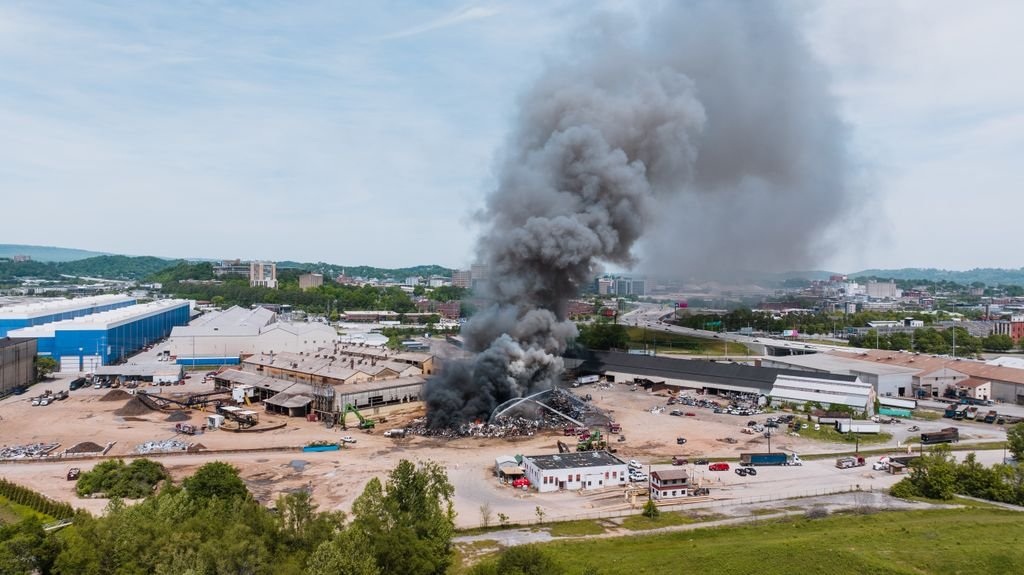
Protect the property—and plan for the financial gap after a fire.
Commercial fire insurance helps protect eligible business property against covered fire losses. It is commonly part of a commercial property policy or a businessowners policy, rather than a completely separate product. What the insurer pays depends on the property listed, covered causes of loss, valuation, limits, deductibles and policy conditions.
For a U.S. business owner, the key question is not simply whether the policy mentions fire. It is whether the building, equipment, stock and recovery costs your business depends on are insured adequately. Lost income and liability claims also need their own coverage review.
What Is Commercial Fire Insurance?
The term usually describes fire protection within business property insurance. A policy may cover a building you own, business personal property such as equipment and inventory, or both. A tenant may need coverage for its own contents and improvements even when the landlord insures the building.
The Hartford’s commercial fire guide describes fire coverage within commercial property insurance or a businessowners policy. It also identifies smoke and damage caused by firefighters among the losses that may be covered. The actual contract controls how those losses are treated.
A businessowners policy, often called a BOP, packages coverages for eligible businesses. A larger or more specialized operation may need a different commercial package or separate policies. Ask for the declarations, coverage forms and endorsements before relying on the product name.
What Can Commercial Fire Insurance Cover?
Check each property category separately. Insuring the structure does not establish that every item inside it has the right limit.
| Property or loss | Possible protection | What to confirm |
|---|---|---|
| Owned building | Covered repair or rebuilding costs | Insured location, valuation, building limit and deductible |
| Equipment and furnishings | Eligible damaged machinery, computers, furniture and fixtures | Ownership, replacement values and special restrictions |
| Inventory | Covered stock damaged by an insured fire | Seasonal peaks, valuation and location limits |
| Tenant improvements | Eligible improvements made to rented space | Lease responsibilities and policy definitions |
| Cleanup and debris | Eligible expenses following covered damage | Additional limits and conditions |
| Lost income and extra expense | Potential recovery under business income coverage | Whether coverage was purchased, its triggers and restoration period |
Travelers’ commercial property overview explains that property insurance protects physical assets and that lost-income protection may also be available. Do not assume an equipment repair payment automatically includes money for interrupted sales.
Who Should Review This Coverage?
Fire exposure can affect retailers, offices, workshops, restaurants, warehouses and other organizations. Ownership of a building is not the only reason to review protection.
- Building owners: estimate reconstruction costs and identify permanently installed equipment.
- Commercial tenants: list the contents and improvements you are responsible for under the lease.
- Businesses with stock: consider the highest likely inventory value during the year.
- Equipment-dependent firms: consider replacement lead times as well as purchase prices.
- Home-based businesses: check business-property and liability restrictions in the homeowners policy.
The Washington insurance regulator’s home-business guidance explains that commercial policies are separate from homeowners coverage. Tell your insurer about the actual activity rather than assuming a business operated from home is fully protected.
A lender or landlord may impose contractual insurance requirements. If another party needs rights to a claim payment, understand the difference between a loss payee and an additional insured before asking the agent to add a name.
Business Interruption Is a Separate Financial Question
Repairing a damaged shop does not replace the revenue lost while the shop is closed. Business income coverage may address eligible lost net income and continuing operating expenses after a qualifying suspension. Extra expense coverage may help with certain additional costs of keeping the business operating.
The Insurance Information Institute’s business interruption guide explains that this protection can be included in a BOP or added to commercial property coverage.
Ask which physical damage triggers apply, when any waiting period begins, how long the restoration period lasts and whether separate dollar limits apply. Also ask about partial shutdowns and a gradual return to normal activity. A customer deciding to shop elsewhere does not, by itself, establish a covered interruption.
Make a recovery timeline before choosing limits. Rebuilding, replacing specialist equipment, securing permits and restocking can take different lengths of time. Your accountant and insurance professional can help connect financial records with an appropriate coverage estimate.
Replacement Cost, Actual Cash Value and Underinsurance
Replacement cost coverage generally values eligible replacement without subtracting depreciation. Actual cash value generally reflects depreciation. Neither label removes the deductible, policy limit or other settlement conditions.
Triple-I’s small-business insurance guide distinguishes these valuation methods. For example, an older machine may cost substantially more to replace today than its depreciated value. A low contents limit can still leave a gap even when replacement-cost valuation applies.
Ask whether replacement must actually occur before the insurer releases the full eligible amount, and what deadlines apply. Our guide to recovering withheld depreciation explains the general two-stage payment concept; verify the specific procedure under your commercial form.
How a Coinsurance Clause Can Reduce a Partial Claim
Some business property policies require insurance equal to a stated percentage of the property’s value. Travelers’ coinsurance explanation notes that a limit below that requirement can reduce the payment proportionately.
For a simplified example, assume a building has a $1 million insured valuation basis and an 80% coinsurance requirement. The required amount is $800,000. If the owner carries $600,000, the ratio is 75%. A covered $100,000 partial loss could therefore be reduced to $75,000 before the deductible, subject to the actual policy calculation and other terms.
This is an illustration, not a universal settlement formula. Ask about agreed-value provisions, valuation updates and whether any coinsurance condition applies to each coverage.
Exclusions and Coverage Gaps to Check
Fire protection does not mean every cause of property damage is insured. Read the exclusions and conditions alongside the covered-perils language.
- Flood: most commercial property policies do not automatically include it. The Washington insurance regulator’s flood guidance explains the need for separate business flood protection.
- Earthquake and equipment breakdown: ask whether separate coverage is needed and how resulting fire damage is treated.
- Wear, maintenance and deterioration: ordinary upkeep and replacing worn equipment are different from insured fire damage.
- Intentional losses: review intentional-act and fraud exclusions and how the contract defines the insured parties involved.
- Vacancy or changes in operations: tell the insurer about extended closures, storage changes or a new business activity.
- Building-code upgrades: confirm ordinance or law protection instead of assuming all compliance costs are included.
- Customer property and off-site items: check whose property is covered and where protection applies.
Property insurance and general liability also answer different questions. A claim for your burned inventory differs from a neighboring business alleging you caused its loss. Review the applicable liability policy with your agent rather than expecting the property limit to address both.
When coverage needs to change, request the actual endorsement modifying the policy. A certificate or informal reassurance is not a substitute for the contract.
How Much Does Commercial Fire Insurance Cost?
There is no single national price for fire protection across all business types. Quotes reflect the location, construction, occupancy, insured values, fire protection, claims history, selected coverage and deductibles.
The Hartford publishes customer averages for broader commercial property coverage, not a universal standalone fire premium. Different pages also describe different averages. A personalized quote with clear coverage assumptions is more useful than using one insurer’s figure as your budget.
Request at least two comparable proposals where practical. Match the valuation method, building and contents limits, business income terms and deductibles. A cheaper quote may transfer more risk back to the owner.
| Quote detail | Why it matters |
|---|---|
| Building and contents limits | They should reflect the property insured and current values |
| Deductible | This is part of the loss your business must fund |
| Valuation and coinsurance | They can change a payment even below the headline limit |
| Business income provisions | Time limits and conditions may matter as much as the dollar amount |
| Endorsements and exclusions | They define significant additions or gaps |
What to Do After a Business Fire
Put people’s safety first, contact emergency services and follow instructions about access. Do not enter a damaged building until the appropriate authorities say it is safe.
Then notify the insurer promptly and request the claim requirements in writing. The Insurance Information Institute’s business claim guide emphasizes records of damaged property, business activity, continuing expenses and temporary operating costs.
- Photograph damage when safe and preserve relevant records.
- Take reasonable steps required by the policy to prevent further damage.
- Keep emergency repair, cleanup and temporary-location receipts.
- Prepare an inventory with values, purchase records and ownership details.
- Retain sales, payroll and expense records for any business income claim.
- Ask before disposing of damaged property or approving major permanent work.
- Track proof-of-loss deadlines, insurer requests and settlement correspondence.
Keep an off-site or secure digital copy of the inventory before a loss. A list stored only on the damaged office computer may be difficult to recover.
Frequently Asked Questions
Does a Landlord’s Policy Cover My Business Equipment?
Do not assume it does. The landlord’s insured building and your equipment are different property interests. Review the lease and arrange the appropriate tenant coverage.
Will Fire Insurance Replace All Lost Revenue?
Not automatically. Business income coverage must apply, and payments depend on its calculation, conditions, limits and covered restoration period. Gross sales alone are not necessarily the insured amount.
Can I Buy Coverage After a Fire Has Started?
A new policy generally will not cover a loss that has already occurred or is already known. Disclose existing damage and obtain coverage before an incident.
Editorial note: This guide provides general information for U.S. business owners. Policies, underwriting and state requirements vary. Review your actual forms with a licensed commercial insurance professional before relying on coverage.