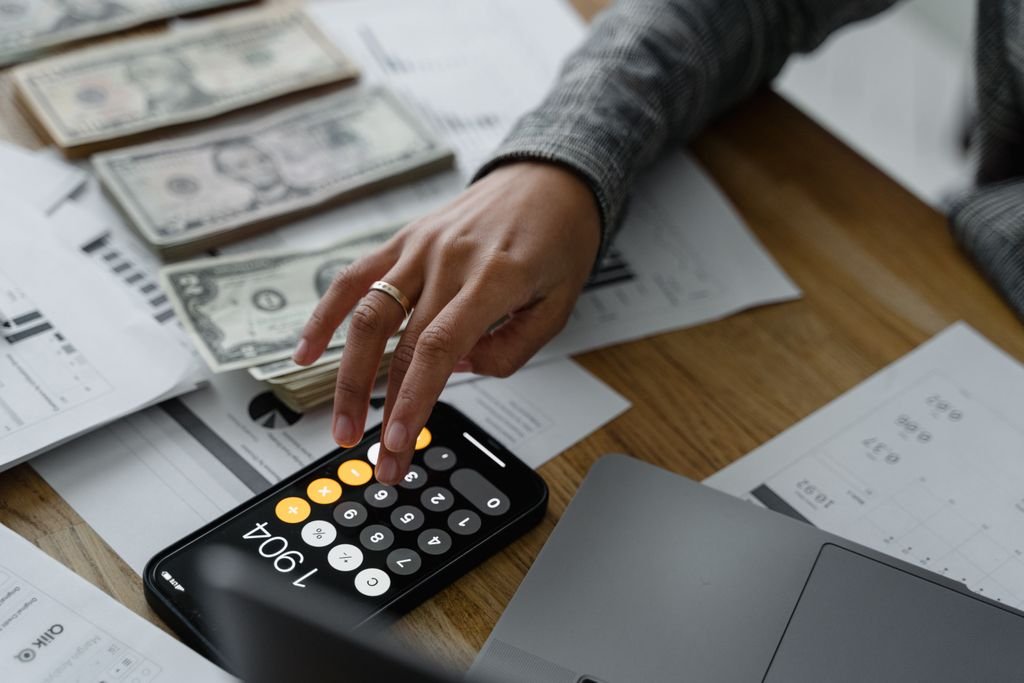
Getting paid every two weeks can make budgeting confusing. Most bills are due monthly, while your paydays move around the calendar. Some months bring two paychecks, and two months usually bring three.
The most reliable way to budget biweekly paychecks is to build your regular monthly budget around two paychecks, assign part of each paycheck to specific expenses, and create a separate plan for the two additional paychecks received during the year.
This approach helps prevent you from depending on money that will not arrive every month.
Below is a complete step-by-step system, including a numerical example and a biweekly budget template you can adapt to your finances.
What Does Getting Paid Biweekly Mean?
Biweekly pay means you receive one paycheck every two weeks, usually on the same weekday.
For example, you may be paid every other Friday.
Because a year contains 52 weeks, a biweekly schedule generally produces:
52÷2=26 paychecks per year52 \div 2 = 26 \text{ paychecks per year}
Most months contain two paydays, but two months normally contain three.
This is different from a semimonthly pay schedule.
| Pay schedule | Typical frequency | Paychecks per year |
|---|---|---|
| Biweekly | Every 14 days | 26 |
| Semimonthly | Twice per month | 24 |
| Weekly | Once per week | 52 |
| Monthly | Once per month | 12 |
Someone paid semimonthly may receive checks on the 1st and 15th. Someone paid biweekly receives a check every 14 days, so the actual calendar dates change.
Before creating your budget, confirm which schedule your employer uses.
Why Biweekly Paychecks Can Be Difficult to Budget
Monthly bills and biweekly income follow different timelines.
Your rent may always be due on the first day of the month, while your paycheck could arrive on the 3rd one month and the 1st the next. Without a plan, this mismatch may cause you to run short even when your total income is technically enough to cover your expenses.
Other challenges include:
- Spending too much immediately after payday
- Forgetting annual or irregular expenses
- Treating three-paycheck months as unlimited spending money
- Assigning an entire large bill to one paycheck
- Depending on the average monthly income instead of the amount received in a normal two-paycheck month
The CFPB describes a cash-flow budget as a method of tracking the timing of income and expenses to ensure money is available from week to week. Its free cash-flow budgeting tools include a bill calendar, spending tracker, and resources for adjusting payment timing.
Step 1: Calculate Your Take-Home Pay per Check
Use the amount deposited into your account—not your gross salary.
Your take-home pay is what remains after deductions such as:
- Federal, state, and local taxes
- Health insurance
- Retirement contributions
- Other payroll deductions
If your take-home paycheck is $1,800, your estimated annual take-home income is:
$1,800×26=$46,800\$1,800 \times 26 = \$46,800
Your mathematical monthly average would be:
$46,800÷12=$3,900\$46,800 \div 12 = \$3,900
However, you will receive only $3,600 during a normal two-paycheck month:
$1,800×2=$3,600\$1,800 \times 2 = \$3,600
The other $300 in the monthly average represents the effect of your two additional annual paychecks.
For regular monthly bills, use $3,600, not $3,900, as the foundation of the budget. This prevents you from committing money that will not arrive during most months.
Step 2: Create a Budget Based on Two Paychecks
Build your normal monthly spending plan around the two paychecks you can expect in every month.
Suppose each paycheck is $1,800. Your standard monthly budget might look like this:
| Monthly category | Amount |
|---|---|
| Rent | $1,300 |
| Utilities | $250 |
| Groceries | $450 |
| Transportation | $350 |
| Insurance and medical costs | $250 |
| Minimum debt payments | $300 |
| Phone and internet | $150 |
| Sinking funds | $200 |
| Emergency savings | $150 |
| Personal spending | $100 |
| Total allocated | $3,500 |
| Monthly buffer | $100 |
This plan uses $3,500 of the $3,600 received during a regular month and leaves a $100 buffer.
Your categories will differ, but total planned spending should not exceed dependable two-paycheck income.
If you have not yet organized your expenses, begin by learning how to create a monthly budget using your actual transaction history.
Step 3: List Every Bill and Due Date
Create a list containing:
- Name of the bill
- Amount normally due
- Due date
- Whether the amount is fixed or variable
- Whether payment is automatic
- Which paycheck will fund it
Next, place your paydays and bill due dates on one calendar.
The CFPB recommends mapping income and expenses on a calendar because this can reveal periods when expenses and income are poorly aligned. Its cash-flow adjustment guide also suggests contacting creditors or providers when changing a due date could improve cash flow.
If rent is due on the first but your nearest paycheck arrives later, you need to reserve rent money from the preceding month’s final paycheck.
Do not assume that a bill must be funded by the paycheck immediately before its due date. The goal is to have the money ready before payment is required.
Step 4: Divide Monthly Expenses Between Both Paychecks
A simple starting method is to reserve half of every monthly expense from each paycheck.
Using the earlier example:
| Category | Monthly amount | Amount per paycheck |
|---|---|---|
| Rent | $1,300 | $650 |
| Utilities | $250 | $125 |
| Groceries | $450 | $225 |
| Transportation | $350 | $175 |
| Insurance and medical | $250 | $125 |
| Minimum debt payments | $300 | $150 |
| Phone and internet | $150 | $75 |
| Sinking funds | $200 | $100 |
| Emergency savings | $150 | $75 |
| Personal spending | $100 | $50 |
| Total per paycheck | $1,750 | |
| Paycheck buffer | $50 |
Each $1,800 paycheck now has a complete assignment.
Even if your $1,300 rent is paid once per month, you reserve $650 from each check. The first $650 remains available until the second half is added.
This prevents one paycheck from carrying nearly the entire rent payment.
Formula for dividing monthly bills
For a monthly expense:
Amount per paycheck=Monthly expense÷2\text{Amount per paycheck} = \text{Monthly expense} \div 2
For example:
$300÷2=$150\$300 \div 2 = \$150
Reserve $150 from each regular paycheck for a $300 monthly debt payment.
Step 5: Handle Weekly and Variable Expenses Separately
Expenses such as groceries, gasoline, and personal spending may not occur monthly in one fixed payment.
You can convert them into weekly limits.
If your monthly grocery budget is $450, an approximate annualized weekly amount is:
($450×12)÷52=$103.85(\$450 \times 12) \div 52 = \$103.85
You could use a weekly grocery limit of approximately $104.
Alternatively, divide the monthly amount equally between the two checks:
$450÷2=$225\$450 \div 2 = \$225
Then use that $225 for groceries during the next two weeks.
Choose the method that is easiest to maintain. The important point is to avoid spending the entire category during the first few days after payday.
Step 6: Use Separate Accounts or Budget Categories
You do not necessarily need many bank accounts, but your bill money should be clearly separated from money available for everyday spending.
A simple account structure might include:
- Bills account: Housing, utilities, insurance, debt payments and subscriptions
- Spending account: Groceries, fuel and personal purchases
- Savings account: Emergency savings and longer-term goals
After every payday, transfer the assigned bill and savings amounts before using money for optional spending.
If you prefer keeping everything in one account, use digital budget categories or a spreadsheet that shows which portion of the balance is already committed.
Your bank balance is not necessarily the amount available to spend. Some of it may belong to next month’s rent, a future insurance premium, or another scheduled expense.
Step 7: Create Sinking Funds for Irregular Expenses
Not every predictable cost appears monthly.
Examples include:
- Vehicle registration
- Routine car maintenance
- Annual insurance premiums
- Holiday expenses
- School supplies
- Property taxes
- Pet care
- Professional fees
- Home maintenance
Estimate the annual amount and divide it by 26 to calculate the amount to reserve from each biweekly paycheck.
Suppose you expect to spend $1,200 per year on vehicle maintenance and registration:
$1,200÷26=$46.15\$1,200 \div 26 = \$46.15
Reserve approximately $46 from every paycheck.
For a $600 annual insurance premium:
$600÷26=$23.08\$600 \div 26 = \$23.08
Setting aside approximately $23 per check turns a large annual bill into a manageable recurring expense.
This money should remain separate from your emergency fund because the expense is expected, even if its precise timing is uncertain.
Step 8: Automate Savings on Every Payday
Schedule savings transfers to occur shortly after each paycheck is deposited.
For example, saving $75 from each of 26 paychecks would produce:
$75×26=$1,950\$75 \times 26 = \$1,950
That excludes any interest earned.
Automatic saving can reduce the temptation to spend first and save whatever remains. The FDIC notes that automatic transfers can help build emergency funds and other savings before the money is spent. See its guidance on saving for unexpected expenses.
Start with an amount that will not cause an overdraft. You can increase it later after reducing an expense, receiving a raise, or paying off debt.
If you currently have little or no reserve, use our guide to build an emergency fund with a realistic starter target.
Step 9: Make a Plan for Three-Paycheck Months
A biweekly schedule generally gives you two additional paychecks per year.
To identify these months, list all 26 paydays on a calendar. Any month containing three paydays is an extra-paycheck month.
Because your normal budget is based on two checks, much of the third check may be available for financial goals. However, it is not automatically “free money.” Review whether the paycheck must cover groceries, transportation, childcare, or other costs until the next payday.
Possible uses include:
- Building emergency savings
- Paying down high-interest debt
- Funding annual expenses
- Making necessary home or vehicle repairs
- Catching up on retirement contributions
- Preparing for upcoming medical costs
- Creating a one-paycheck buffer
Example extra-paycheck plan
For a net paycheck of $1,800:
| Goal | Allocation |
|---|---|
| Emergency savings | $600 |
| Additional high-interest debt payment | $500 |
| Annual expense funds | $400 |
| Home or vehicle maintenance | $200 |
| Optional personal spending | $100 |
| Total | $1,800 |
This is only an example. Someone with overdue essential bills should address those before making optional purchases or extra investments.
Decide how you will use the extra check before it arrives. Otherwise, it may disappear into unplanned spending.
Step 10: Build a One-Paycheck Buffer
A useful longer-term goal is to have one full paycheck already available before the next pay period begins.
If your net paycheck is $1,800, build the buffer gradually:
- Save $100 per paycheck
- Use part of an additional paycheck
- Deposit a tax refund or work bonus
- Redirect payments after eliminating a debt
- Save a portion of overtime or side income
Once established, the buffer allows you to fund expenses earlier rather than waiting for the next deposit.
This can be particularly helpful when rent is due before your first paycheck of the month.
A cash buffer also reduces the likelihood of overdrafts or relying on credit cards between paydays. If you are currently struggling with this cycle, see our practical steps to stop living paycheck to paycheck.
A Copyable Biweekly Budget Template
Use this template for each regular paycheck:
| Paycheck allocation | Planned | Actual |
|---|---|---|
| Housing | $___ | $___ |
| Utilities | $___ | $___ |
| Groceries | $___ | $___ |
| Transportation | $___ | $___ |
| Insurance and healthcare | $___ | $___ |
| Minimum debt payments | $___ | $___ |
| Sinking funds | $___ | $___ |
| Emergency savings | $___ | $___ |
| Other savings goals | $___ | $___ |
| Personal spending | $___ | $___ |
| Buffer | $___ | $___ |
| Total paycheck | $___ | $___ |
Complete the “planned” column before payday and the “actual” column before the next paycheck arrives.
If the actual amount repeatedly exceeds the planned figure, update the budget rather than pretending the original amount is working.
How to Budget When Biweekly Paychecks Vary
Your pay may change because of hourly scheduling, commissions, overtime, unpaid leave, or deductions.
In that situation:
- Review the previous six to twelve months of deposits.
- Identify a conservative normal paycheck.
- Build essential expenses around that amount.
- Treat income above the baseline as variable.
- Prioritize overdue essentials, savings, sinking funds, and debt with higher-than-expected checks.
Do not build fixed commitments around overtime or bonuses unless that income is dependable.
Our guide to budgeting with variable income provides a more detailed system for fluctuating pay.
Common Biweekly Budgeting Mistakes
Budgeting with the monthly average
Multiplying a paycheck by 26 and dividing by 12 gives an accurate annual average, but that entire average is not deposited every month. Regular bills should generally fit within two-paycheck income.
Spending the third paycheck immediately
Some of the check may still need to cover food, gasoline, childcare, or other expenses until the next payday. Check the calendar before assigning it.
Paying the entire rent from one check
Dividing large monthly bills between both checks can make cash flow easier to manage.
Ignoring annual expenses
Registration renewals and insurance premiums are predictable. Fund them gradually rather than treating them as emergencies.
Keeping no buffer
Assigning every dollar without leaving room for small price changes can make the budget fragile. Even a modest paycheck buffer can help.
Confusing biweekly and semimonthly pay
Confirm whether you receive 26 or 24 checks per year before designing your plan.
Frequently Asked Questions
How much should I save from a biweekly paycheck?
There is no universal percentage. Choose an amount that fits after covering essential bills and required payments. Even a small, consistent amount can establish the habit. Increase it as your cash flow improves.
Should I divide every bill between two paychecks?
Dividing monthly bills in half is a useful starting point, especially for large expenses. However, you may need a different split when due dates or paycheck amounts make an equal division impractical.
What should I do with the two extra paychecks?
Use them according to your priorities. Common options include emergency savings, high-interest debt, annual expenses, necessary repairs, retirement savings, or building a paycheck buffer.
How do I budget biweekly paychecks when rent is due on the first?
Reserve half the rent from each regular paycheck. Depending on your payday calendar, the final portion may need to come from the previous month’s last check. Keep the reserved money in your bills account until rent is due.
Is a biweekly budget better than a monthly budget?
They serve different purposes. A monthly budget provides an overall spending plan, while a biweekly budget assigns income and expenses to individual pay periods. Using both together can provide better control over cash flow.
What happens when a year has 27 biweekly paychecks?
A 27-paycheck year can occasionally occur because 365-day years do not divide evenly into 14-day periods. Whether it happens depends on the employer’s payroll calendar and your first payday of the year. Treat the additional check cautiously and confirm its timing with your payroll schedule.
Final Thoughts
Learning how to budget biweekly paychecks begins with separating your regular two-paycheck budget from the two additional checks that usually arrive during the year.
Build recurring expenses around dependable two-check income. Divide major bills between both checks, fund irregular expenses gradually, automate savings, and plan three-paycheck months in advance.
Most importantly, follow your actual payday calendar. A monthly budget may show that you earn enough overall, while a biweekly cash-flow plan shows whether the money will be available when each bill is due.
A clear assignment for every paycheck can turn an awkward pay schedule into a useful system for managing bills, building savings, and making measurable financial progress.
This article is provided for general educational purposes and does not constitute individualized financial, legal, tax, or credit advice. Consider consulting an appropriately qualified professional about your circumstances.