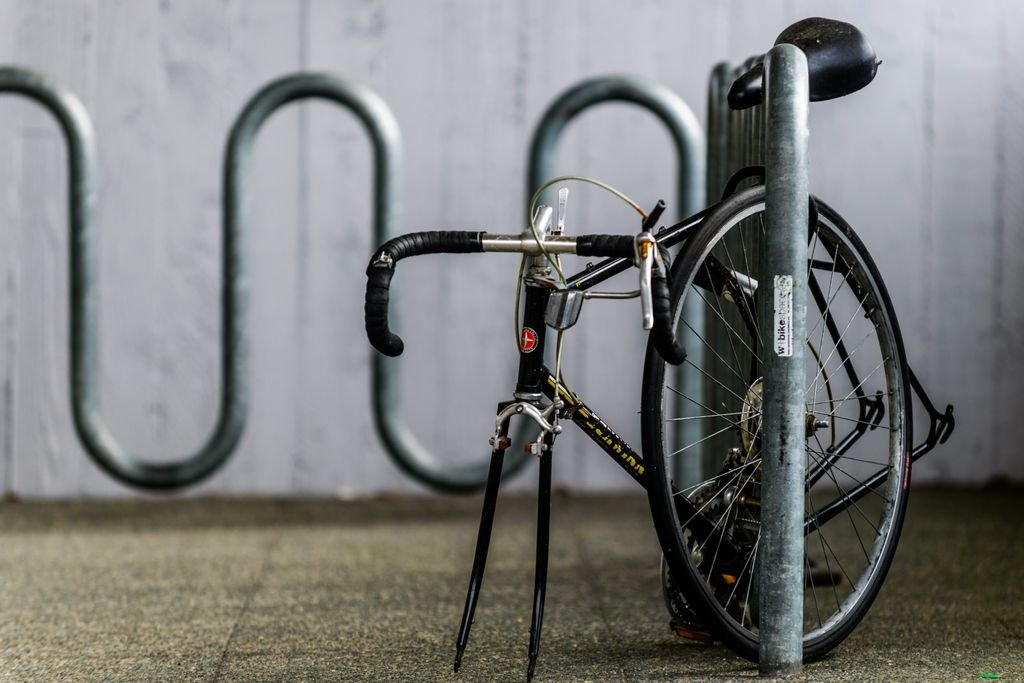
Renters insurance generally covers bike theft through the personal property portion of the policy. Coverage may apply when a bicycle is stolen from your apartment, a storage area or even a location away from home.
However, having coverage does not guarantee that the insurer will pay the full cost of a new bicycle. Your deductible, personal property limit, off-premises coverage, valuation method and any bicycle-specific restrictions can affect the payment.
Electric bicycles can be more complicated. Some renters policies cover certain e-bikes as personal property, while others impose special limits or exclude motorized equipment.
This guide explains when renters insurance may cover a stolen bike, how a claim payment is calculated and what to check before relying on your policy.
When Does Renters Insurance Cover Bike Theft?
A standard renters insurance policy commonly treats a regular bicycle as personal property. Theft is generally one of the events covered by that portion of the policy.
The Insurance Information Institute states that bicycles and other recreational or sporting equipment are covered under renters insurance, subject to the policy’s terms and deductible. Its bicycle insurance guidance also explains that a standard renters policy may reimburse an insured person when a bike is stolen.
Coverage may apply when your bicycle is stolen from places such as:
- Inside your apartment
- A locked garage
- An apartment building’s bike room
- A basement or storage unit
- Your workplace
- A college campus
- Outside a store or restaurant
- A bike rack at a transit station
- A hotel during a trip
- Another location away from your residence
Your policy language ultimately controls the claim. Review the section covering personal property, covered causes of loss and property away from the insured residence.
Does Renters Insurance Cover a Bike Stolen Away From Home?
Many renters insurance policies include off-premises personal property coverage. This means covered belongings may remain protected when they are temporarily outside your home.
For example, your policy might cover a bike stolen while it is:
- Secured outside your office
- Parked at a university
- Attached to a public bike rack
- Stored in a hotel’s bicycle area
- Transported during a trip
- Kept in a vehicle or detached storage location
The Insurance Information Institute explains that most renters policies provide some protection for belongings away from home. However, off-premises coverage may have a lower limit than the amount available for property kept at your residence.
For instance, a policy with $30,000 of total personal property coverage might provide only a percentage of that amount for certain property located away from home. The percentage and any exceptions depend on the individual contract.
Check your policy rather than assuming its entire personal property limit follows the bicycle everywhere.
What If the Bike Is Stolen From an Apartment Storage Area?
A bike stolen from a garage, basement, storage cage or shared bike room may be covered if the location qualifies under your renters policy and theft is a covered event.
The insurer may ask for evidence showing:
- Where the bicycle was stored
- Whether that location was associated with your residence
- When you last saw the bike
- When you discovered the theft
- Whether a lock or storage door was damaged
- Whether you reported the incident to building management
- Whether security footage or witnesses are available
You should report the theft even if there are no visible signs of forced entry. Do not invent or exaggerate details about how the bicycle was secured.
Your landlord’s insurance normally protects the building rather than the personal belongings owned by tenants. A stolen tenant-owned bicycle would therefore generally fall under the tenant’s renters policy, not the landlord’s property insurance.
How Much Will Renters Insurance Pay for a Stolen Bike?
The potential payment depends on several policy features:
- The value of the bicycle
- Your deductible
- Your available personal property limit
- Any limit specifically applying to bicycles
- Whether you have replacement cost or actual cash value coverage
- Any applicable off-premises restriction
A covered claim does not automatically produce a payment equal to the original purchase price.
Simple claim example
Suppose your bicycle has a covered value of $1,400 and your renters insurance deductible is $500.
The basic calculation would be:
Potential payment = Covered value − Deductible
Potential payment = $1,400 − $500
Potential payment = $900
The insurer could potentially pay $900, assuming no lower coverage limit, exclusion or other policy condition applies.
Now suppose the covered value of a stolen bike is only $450 and your deductible is $500:
Potential payment = $450 − $500
Potential payment = $0
In that situation, the loss does not exceed the deductible, so filing the claim would not generate a payment.
Replacement Cost vs. Actual Cash Value
The way your renters policy values personal property can significantly affect a bicycle-theft settlement.
Replacement cost coverage
Replacement cost coverage generally considers the cost of replacing the stolen bicycle with a new item of similar type and quality, subject to the policy’s limits and conditions.
Some insurers initially pay an actual cash value amount and release the remaining replacement cost after you purchase a replacement and provide documentation. Check the claim procedures in your policy.
Actual cash value coverage
Actual cash value normally accounts for depreciation based on the bicycle’s age, condition and expected useful life.
For example, you may have paid $1,500 for a bicycle several years ago. If its estimated depreciated value is $800 at the time of theft and your deductible is $500, the potential payment could be approximately:
$800 covered value − $500 deductible = $300 potential payment
This is only an illustration. Insurance companies use their own valuation methods, and the actual result depends on the policy and supporting documentation.
If you are unsure which method your policy uses, look for “replacement cost” or “actual cash value” in the personal property section or ask your insurer.
Do Renters Policies Have Special Limits for Bicycles?
Some policies cover ordinary bicycles within the overall personal property limit without a separate bicycle sublimit. Others may restrict coverage for high-value sporting equipment, property used for business or property located away from home.
Do not assume that a $30,000 personal property limit means the insurer will pay up to $30,000 for one bike.
Check for:
- A bicycle or sporting-equipment sublimit
- An off-premises property limit
- Restrictions on racing or professional equipment
- Business-use exclusions
- E-bike or motorized-vehicle exclusions
- Requirements for separately scheduled property
An expensive road, racing or custom bicycle may require an endorsement or specialized bicycle policy to receive sufficient protection.
Before choosing a coverage amount, create a complete inventory of your belongings. Our guide explaining how much personal property coverage you may need includes a room-by-room inventory method.
Does Renters Insurance Cover E-Bike Theft?
E-bike coverage requires extra attention because policy definitions vary.
A renters policy may cover some electric bicycles, limit them or exclude them as motorized vehicles. The answer can depend on factors such as:
- Motor power
- Maximum assisted speed
- Whether the bike can move without pedaling
- How state law classifies the e-bike
- The policy’s definition of a motor vehicle
- Whether the e-bike is registered or intended for road use
- Where the theft occurred
Progressive explains that homeowners or renters insurance may provide some protection for an e-bike, but e-bike coverage can be limited by location, sublimits, deductibles and policy language.
Do not rely on the assumption that an e-bike is automatically treated like a regular bicycle. Ask the insurer these questions in writing:
- Is my specific e-bike covered as personal property?
- Is theft covered both at home and away from home?
- Is there a separate e-bike limit?
- Does motor power or maximum speed affect eligibility?
- Are the battery and accessories covered?
- Would I need an endorsement or separate bicycle policy?
- Does the policy cover liability while I am riding it?
A specialized e-bike policy may provide broader protection for theft, accidental damage and riding-related liability, depending on the product.
Are Bike Accessories Covered?
Accessories owned by the policyholder may also qualify as personal property, subject to the policy’s conditions.
These may include:
- Helmet
- Lights
- Lock
- Cycling computer
- Repair kit
- Bags or panniers
- Child seat
- Removable battery
- Custom wheels
- Other installed upgrades
List each stolen accessory separately when submitting the claim. Include receipts, photographs and model information when available.
An insurer may treat permanently installed components as part of the bicycle while valuing removable accessories separately. E-bike batteries and electronic accessories may also be subject to specific limits or exclusions.
What Renters Insurance Usually Does Not Cover
Although renters insurance frequently covers bike theft, it does not cover every bike-related loss.
Common situations that may not be covered include:
Ordinary wear and tear
Insurance is not a maintenance plan. Worn tires, rust, failing brakes and gradual mechanical deterioration are not theft losses.
Accidental crash damage
A standard renters policy may not pay to repair your own bicycle after you fall or collide with an object. Specialized bicycle coverage may be required for accidental damage.
Mysterious disappearance
A missing bicycle is not always treated as proven theft. If you cannot establish when, where or how it disappeared, the insurer may request additional evidence or determine that the loss does not meet the policy’s definition of theft.
Intentional loss
A policy will not cover a loss intentionally caused or arranged by an insured person.
Business or professional use
A bike used for deliveries, rentals, racing or another commercial activity may face restrictions under a personal renters policy.
Certain motorized bikes
An e-bike, moped, electric motorcycle or similar vehicle may fall within a motorized-vehicle exclusion.
Loss exceeding the coverage limit
The insurer will not pay more than the applicable policy limit, even when the documented value of the bike is higher.
Does the Bike Have to Be Locked?
Renters policies do not all use identical requirements. Some may cover theft without imposing a specific type of lock, while specialized bicycle policies may require an approved lock or particular security practices.
Even when the policy does not expressly require a lock, evidence that the bicycle was secured can help document the circumstances surrounding the theft.
Ask your insurer:
- Is a lock required for theft coverage?
- Must the bike be attached to an immovable object?
- Are particular types or ratings of locks required?
- Are there different rules for overnight storage?
- Does coverage change in a shared garage or bike room?
- What proof is required if the lock is also stolen?
Never state that a lock was used unless that is true. An inaccurate claim description can create serious problems.
What to Do Immediately After Your Bike Is Stolen
Take the following steps as soon as reasonably possible.
1. Confirm that the bike was not moved
Check with household members, building management, security personnel or the organization responsible for the location.
2. Preserve evidence
Photograph the empty rack, cut lock, damaged storage door or any other relevant scene. Ask whether security-camera footage is available before it is automatically deleted.
3. Report the theft to the police
Provide the bicycle’s make, model, color, serial number, distinctive features and approximate value.
The Insurance Information Institute recommends reporting theft to law enforcement and obtaining a copy of the police report for an insurance claim.
Record the report number and the contact information of the agency handling the report.
4. Notify the property manager when relevant
If the bike was taken from an apartment building, garage or shared storage area, notify management in writing. Request copies of any incident reports or available footage.
5. Contact your insurer
Ask whether the loss appears covered, which deductible applies and what documentation is required. Do not wait unnecessarily, because policies may require prompt notice.
6. Register the theft with a bicycle database
If you previously registered the bike, mark it as stolen. If permitted by the registry, add the police report number and identifying details.
7. Monitor legitimate resale channels
You can preserve screenshots of a listing that appears to show your bike, but do not confront a suspected thief. Provide relevant information to law enforcement.
Documents That Can Support a Bike-Theft Claim
Prepare as much of the following information as possible:
- Police report
- Original receipt
- Credit card or bank record
- Bicycle serial number
- Manufacturer and model
- Photographs taken before the theft
- Description of upgrades and accessories
- Receipts for replacement components
- Maintenance records
- Comparable replacement prices
- Photographs of a damaged lock or storage area
- Building incident report
- Available security footage
- Witness contact information
A missing receipt does not necessarily make a claim impossible. Photographs, payment records, service documents and comparable products may help demonstrate ownership and value.
A home inventory can make this process much easier. The Insurance Information Institute provides guidance on creating a home inventory before a loss occurs.
Should You File a Claim for Every Stolen Bike?
Compare the likely covered value with your deductible before deciding.
Consider:
- The bicycle’s likely insured value
- Replacement cost or actual cash value treatment
- Your deductible
- Applicable coverage limits
- Whether other items were stolen
- The insurer’s claim requirements
- Your complete claim history
Suppose a bike’s covered value is $700 and the deductible is $500. The potential payment may be only $200.
By contrast, if a $3,000 bicycle and $500 of accessories are stolen and the applicable deductible is $500, a claim may have considerably more financial value—assuming the full loss is covered.
You may contact the insurer or agent to ask general coverage questions before formally submitting a claim. Clarify whether the conversation will be recorded as an inquiry or a claim.
How to Protect a Bicycle Before It Is Stolen
Insurance can reduce a financial loss, but prevention and documentation remain important.
Consider taking these precautions:
- Record the serial number.
- Keep the purchase receipt.
- Photograph the complete bicycle.
- Photograph major upgrades and accessories.
- Use a high-quality lock suited to the location.
- Secure the frame to an immovable object.
- Follow building storage rules.
- Avoid leaving the bike outside overnight when possible.
- Remove valuable lights, batteries and accessories.
- Register the bicycle with an appropriate registry.
- Review policy limits after purchasing an expensive bike.
- Ask the insurer to confirm e-bike coverage in writing.
Store inventory records somewhere other than only on a device that could also be stolen.
Frequently Asked Questions
Does renters insurance cover a bike stolen from a garage?
It may. A tenant-owned bicycle stolen from a garage, basement or apartment storage area may fall under personal property coverage. The result depends on the location, policy terms, deductible and applicable limits.
Does renters insurance cover a bike stolen at work?
Many policies provide off-premises coverage that may apply at work. However, off-premises limits or exclusions may reduce the available payment.
Does renters insurance cover a bike stolen while traveling?
It may cover a bicycle stolen during a trip if the policy provides off-premises protection. Review geographic restrictions, temporary-location provisions and applicable limits.
Does renters insurance cover a bike stolen from a car?
The renters policy may cover the bicycle as personal property, but it generally does not cover damage to the vehicle itself. Auto insurance and renters insurance protect different types of property.
Will renters insurance pay for a new bike?
A replacement cost policy may reimburse the cost of a comparable new bicycle, subject to the deductible and limits. An actual cash value policy generally deducts depreciation.
Is an expensive bicycle fully covered?
Not necessarily. High-value bicycles may exceed policy or off-premises limits. An endorsement or specialized bicycle policy may be needed.
Is an e-bike covered by renters insurance?
Possibly, but e-bike treatment varies significantly. The motor, assisted speed, legal classification and policy definition of a motor vehicle can affect coverage. Obtain confirmation from your insurer.
Does renters insurance cover a stolen bike without a receipt?
A receipt is useful but may not be the only acceptable evidence. Photographs, bank records, maintenance documents, serial numbers and comparable replacement listings may help support ownership and value.
Final Thoughts
So, does renters insurance cover bike theft? In many cases, yes. A standard bicycle is commonly protected by the personal property portion of renters insurance, and coverage may extend to theft away from home.
The final claim payment depends on your deductible, coverage limits, off-premises provisions and whether the policy pays replacement cost or actual cash value. Expensive bicycles and e-bikes require additional attention because special limits or motorized-vehicle exclusions may apply.
Before a theft occurs, record your bike’s serial number, retain proof of purchase, photograph the bicycle and review your policy. If the bike is stolen, report the incident promptly, obtain a police report and provide accurate documentation to the insurer.
Understanding these details in advance can help you determine whether your current renters insurance provides enough protection or whether additional bicycle coverage is appropriate.
This article is for general educational purposes only and does not constitute individualized insurance, financial or legal advice. Coverage varies by insurer, policy and state. Review your policy documents and consult a licensed insurance professional regarding your circumstances.