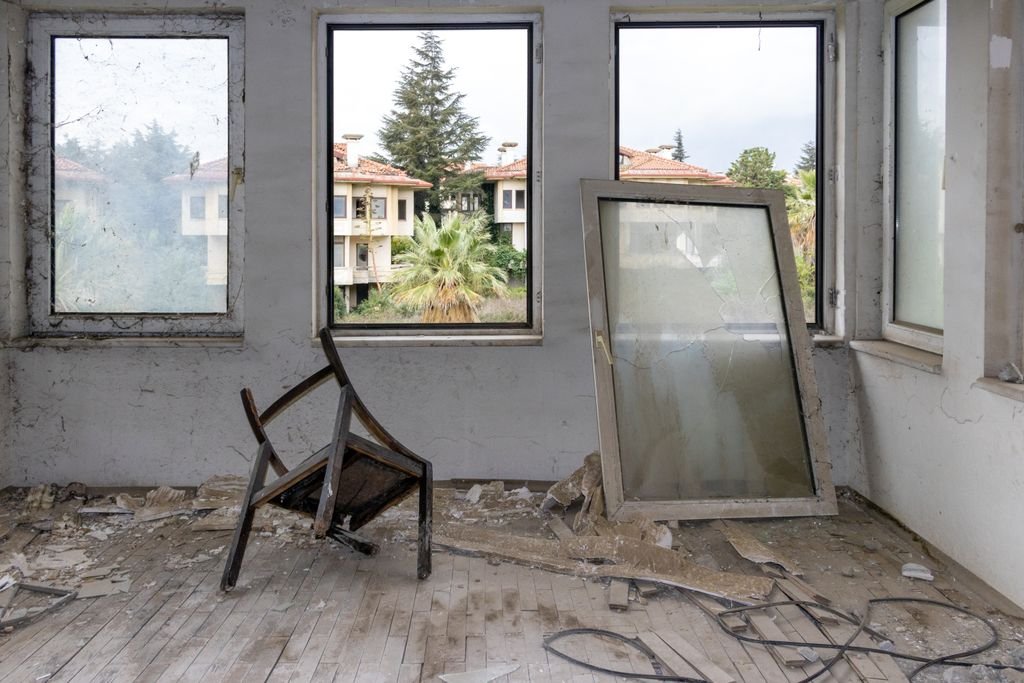
Renters insurance generally does not pay to replace a broken window in the apartment or house you rent because the window is part of the building, not your personal property.
The landlord or property owner is usually responsible for insuring the building’s windows. However, who ultimately pays for a broken window depends on what caused the damage and whether anyone was negligent.
Renters insurance may still help in several related situations. Its liability coverage could apply if you accidentally break someone else’s window, while personal-property coverage may protect belongings stolen or damaged during a covered break-in. Loss-of-use coverage might also help if a covered incident makes your rental temporarily uninhabitable.
Here is how these distinctions work.
Broken-Window Coverage at a Glance
| Cause of broken window | Who may pay? | Important consideration |
|---|---|---|
| Ordinary wear, age, or structural problem | Landlord | The window is part of the rental building |
| Storm, wind, or hail | Landlord’s property insurance | Coverage depends on the landlord’s policy |
| Burglar breaks apartment window | Landlord or landlord’s insurance | Renters insurance may cover stolen belongings |
| Vandal intentionally breaks window | Landlord or landlord’s insurance | A police report may be required |
| Tenant accidentally breaks own rental’s window | Tenant or liability insurer | Lease terms and policy language matter |
| Tenant deliberately breaks window | Tenant | Intentional damage is normally excluded |
| Tenant breaks a neighbor’s window | Tenant’s liability coverage may apply | Tenant must generally be legally responsible |
| Guest breaks window | Guest or landlord may initially handle repair | Responsibility depends on the circumstances |
| Falling tree branch breaks window | Landlord or property insurer | Negligence may affect responsibility |
| Car window is broken | Auto insurance | Renters insurance may cover property stolen from the car |
These are general outcomes. State law, lease provisions, insurance exclusions, deductibles, and the precise cause of damage can change the result.
Why Renters Insurance Usually Does Not Cover the Window Itself
A renters policy primarily protects the tenant rather than the rental structure.
Its main protections generally include:
- Personal property coverage for possessions you own
- Personal liability coverage for covered damage or injuries for which you are legally responsible
- Loss-of-use coverage when a covered loss makes the rental uninhabitable
- Medical payments coverage for certain injuries to guests
A window installed in your apartment is normally part of the building. Other structural property includes:
- Walls
- Roof
- Doors
- Plumbing
- Built-in cabinets
- Installed flooring
- Electrical systems
These items generally belong to the property owner and are insured under the landlord’s property policy.
Policygenius explains that renters insurance does not normally cover a broken window in the renter’s own residence because the window is part of the rental structure. The policy’s liability coverage may apply when the renter is responsible for breaking someone else’s window. Review its broken-window coverage explanation.
When Does the Landlord Pay for a Broken Window?
The landlord will commonly arrange and pay for repairs when the window breaks because of something beyond the tenant’s control.
Possible examples include:
- Window-frame deterioration
- Defective installation
- Ordinary wear and tear
- A building maintenance problem
- Wind or hail
- A falling tree branch
- A break-in or vandalism
- Damage caused by a previous tenant
- Structural movement in the building
The landlord might pay directly or file a claim under a commercial property or landlord insurance policy. Whether insurance pays does not necessarily determine who is legally responsible for providing the repair.
Rental-property laws differ among states and cities. The lease may also contain procedures for reporting damage and requesting repairs.
Notify the landlord promptly and in writing. Include photographs, the time you discovered the damage, and any information you have about its cause.
What If the Tenant Accidentally Breaks the Window?
If you accidentally break a window in your own rental, the landlord may ask you to pay for the repair.
Examples might include:
- Hitting the window with furniture while moving
- Throwing an object indoors
- Damaging the glass while installing a decoration
- Allowing an unsecured item to strike the window
- Breaking the window during an indoor activity
Whether renters insurance will pay is not automatic.
Personal liability coverage generally protects against accidental bodily injury or property damage for which an insured person is legally responsible. However, policies may contain exclusions affecting damage to property rented to, occupied by, used by, or under the control of the insured.
Some policies provide limited exceptions for particular types of damage to rented premises. Therefore, you should not assume the repair is covered merely because the damage was accidental.
If you cause the damage:
- Notify the landlord.
- Photograph the window and surrounding area.
- Explain what happened accurately.
- Review the liability section of your policy.
- Contact your insurer before promising payment.
- Request a written repair estimate or invoice.
Do not arrange an unauthorized permanent repair unless an emergency requires immediate action. Your lease may require the landlord to select the contractor.
When Personal Liability Coverage May Apply
Renters liability coverage is more likely to apply when you accidentally damage property belonging to someone outside your rented premises.
Suppose you accidentally hit a baseball through a neighbor’s window. If you are legally responsible, the personal liability portion of your renters policy might cover the repair, subject to policy terms and liability limits.
Liability coverage may also help with:
- Legal defense costs
- Settlements
- Court judgments
- Covered property-damage claims
- Certain accidental injuries to other people
Coverage normally does not apply to intentional damage. It may also exclude business activities, particular vehicles, and damage involving property under your control.
Report a potential liability claim to your insurer promptly. Do not admit legal liability, negotiate a settlement, or sign an agreement before speaking with the company.
Does Renters Insurance Cover a Window Broken During a Burglary?
The building’s broken window is normally the landlord’s responsibility, even when a burglar caused the damage.
Your renters insurance may cover personal belongings stolen during the burglary. Potentially covered property could include:
- A television
- Computer
- Clothing
- Jewelry
- Furniture
- Gaming equipment
- Small appliances
- Other possessions you own
Payment depends on the deductible, personal-property limit, valuation method, exclusions, and any special limits on expensive property.
The Texas Department of Insurance notes that most renters policies cover losses involving theft or vandalism, along with several other named events. Its renters insurance guidance also recommends keeping an inventory and checking whether the policy pays replacement cost or actual cash value.
After a burglary:
- Do not enter if the intruder may still be present.
- Call the police.
- Avoid touching the damaged area unnecessarily.
- Photograph the window and affected rooms.
- Make a list of missing possessions.
- Notify the landlord.
- Contact your renters insurer.
- Provide receipts, photographs, serial numbers, and other proof of ownership.
The insurer will commonly request the police-report number as part of a theft claim.
Does Renters Insurance Cover a Window Broken by Vandalism?
Vandalism is commonly a covered peril for personal belongings under renters insurance, but this does not necessarily mean your policy pays for the building’s window.
The landlord will normally handle the damaged window. Your renters policy may cover eligible possessions damaged during the same incident.
For example, someone may break a window and then damage your:
- Television
- Furniture
- Electronics
- Clothing
- Artwork
- Other personal property
Report intentional property damage to the police and landlord as soon as possible. Do not discard damaged belongings until your insurer tells you that they may be removed.
What If Wind, Hail, or a Storm Breaks the Window?
A landlord’s property insurance may cover storm damage to the rental building, including its windows, when wind or hail is a covered peril.
Your renters insurance may separately cover possessions damaged by the same covered storm. However, coverage for rain entering through the broken window can depend on how the opening occurred.
For example, personal-property coverage may apply when covered wind damage first breaks the window and rain immediately damages your belongings. It is less likely to apply if you left an undamaged window open during ordinary rain.
If water enters through a damaged window, review our guide explaining when renters insurance covers water damage.
Take reasonable steps to prevent additional damage without exposing yourself to broken glass, electrical hazards, or severe weather. Notify the landlord immediately so the opening can be secured.
What If a Guest or Roommate Breaks the Window?
Responsibility may depend on who caused the damage and that person’s relationship to you.
A guest causes the damage
A guest could be responsible for accidentally breaking the window. Their homeowners or renters liability coverage might apply if they have an eligible policy.
The landlord may still contact you because you are the person named in the lease. Do not assume that another person’s responsibility automatically eliminates your obligations under the rental agreement.
Your roommate causes the damage
A roommate listed on the lease may be responsible to the landlord under the lease terms. Insurance treatment depends on whether the roommate qualifies as an insured under your policy.
Unrelated roommates are not automatically covered by every renters policy. In many cases, each roommate should maintain a separate policy unless both are specifically named and the insurer allows joint coverage.
Your child causes the damage
Liability policies commonly extend some protection to resident relatives, but definitions and exclusions vary. Contact the insurer to determine whether the person who caused the damage is an insured under the policy.
Can the Landlord Deduct Window Repairs from the Security Deposit?
A landlord may attempt to deduct the cost of repairing tenant-caused damage from the security deposit. Whether the deduction is permissible depends on:
- Who caused the damage
- Whether it exceeds normal wear and tear
- Applicable state and local law
- Lease provisions
- Documentation of the repair cost
- Security-deposit notice requirements
Damage caused by age, ordinary deterioration, defective installation, or an event beyond the tenant’s control should not automatically be treated as tenant damage.
Keep:
- Move-in inspection photographs
- Current photographs
- Maintenance requests
- Emails and text messages
- Police or incident reports
- Repair estimates
- Lease documents
- Insurance correspondence
If responsibility is disputed, request the landlord’s explanation and supporting invoice in writing. Seek local tenant-rights or legal assistance when necessary.
Does Renters Insurance Cover a Broken Car Window?
Renters insurance does not normally cover damage to a vehicle, including a broken car window. That damage generally falls under auto insurance.
Comprehensive auto coverage may cover a car window broken by:
- Theft or attempted theft
- Vandalism
- Hail
- A falling object
- Certain weather events
However, renters insurance may cover personal belongings stolen from inside the vehicle.
For example, suppose a thief breaks your car window and steals your laptop:
- Comprehensive auto insurance may cover the broken window.
- Renters insurance may cover the stolen laptop.
- Separate deductibles and claims may apply.
Items permanently installed in the vehicle may be treated differently from ordinary personal property. Cash, expensive jewelry, business equipment, and other categories may also have limited or excluded coverage.
What If the Broken Window Damages Your Belongings?
Although renters insurance generally does not pay for the window, it may cover your possessions when a covered event damages both the window and your property.
Examples could include:
- Wind breaks a window and damages furniture.
- A burglar breaks the glass and steals electronics.
- Vandalism damages the window and your belongings.
- A covered falling object breaks the window and damages personal property.
The claim is evaluated according to the event that caused the damage—not merely the fact that the window broke.
Your personal-property settlement may use either replacement cost or actual cash value.
- Replacement-cost coverage generally pays the eligible cost of replacing an item with a comparable new one.
- Actual-cash-value coverage accounts for depreciation due to age and condition.
Special limits may apply to jewelry, collectibles, firearms, money, and certain electronics. An updated home inventory can make it easier to demonstrate ownership and value.
How the Deductible Works
A deductible normally applies to a personal-property claim. It may or may not apply in the same way to a liability claim, depending on the policy.
Consider this theft example:
Value of eligible stolen belongings: $3,200
Personal-property deductible: $500
Potential insurance payment: $2,700
This is a simplified illustration. The actual payment depends on claim approval, policy limits, valuation, depreciation, and proof of loss.
If eligible damaged or stolen property is worth $400 and the deductible is $500, the policy ordinarily would not provide a personal-property payment.
Our guide to choosing a renters insurance deductible explains how deductibles affect premiums and smaller claims.
Will Renters Insurance Pay for Temporary Housing?
Loss-of-use coverage may help when a covered incident makes your rental uninhabitable.
For example, a severe covered storm might break several windows and make the unit unsafe until repairs are completed. Eligible additional living expenses could include:
- Hotel charges
- A temporary rental
- Additional meal costs
- Extra transportation
- Laundry
- Pet boarding
The broken window alone does not guarantee loss-of-use coverage. The property must generally be unsuitable to occupy because of a covered loss, and expenses remain subject to limits and insurer approval.
Contact the insurer before choosing expensive accommodations when possible. Save all receipts and distinguish additional expenses from costs you normally incur.
Learn how temporary accommodation is handled through renters insurance loss-of-use coverage.
What to Do After Discovering a Broken Window
1. Check for immediate danger
Do not approach an intruder or handle unstable glass. Call emergency services if someone may still be inside or if anyone is injured.
2. Contact the police when appropriate
Report burglary, attempted burglary, or vandalism. Obtain an incident or report number.
3. Notify the landlord
Report the damage immediately so the opening can be secured. Follow an urgent phone call with written notice.
4. Photograph everything
Take wide and close-up photographs of:
- The window
- Broken glass
- The frame
- Damaged belongings
- The surrounding room
- Signs of forced entry
5. Protect your belongings
Move possessions away from rain, wind, or broken glass if it is safe. Avoid permanent repairs unless authorized.
6. Prepare an inventory
List every stolen or damaged item with its approximate purchase date, value, brand, model, and proof of ownership.
7. Contact the correct insurer
Depending on the incident, this might be:
- Your renters insurance company
- The landlord’s insurance company
- A responsible guest’s liability insurer
- Your auto insurance company
8. Keep all documentation
Save police reports, repair estimates, receipts, landlord messages, photographs, claim numbers, and temporary-housing expenses.
Frequently Asked Questions
Does renters insurance pay if I accidentally break my apartment window?
Not necessarily. The window is part of the building, and liability policies may restrict coverage for damage to property you rent or control. Notify your landlord and insurer so they can evaluate the lease and policy.
Who pays when a burglar breaks an apartment window?
The landlord or landlord’s property insurance generally handles the window. Your renters insurance may cover eligible belongings stolen or damaged during the burglary.
Does renters insurance cover a window damaged by a storm?
The landlord’s policy generally covers the building’s window. Your renters policy may cover possessions damaged by a covered storm, subject to its deductible and exclusions.
Does renters insurance cover a window broken by my child?
Liability coverage might apply if the child qualifies as an insured and no exclusion prevents coverage. The insurer must review the specific incident and policy.
Does renters insurance cover a broken window caused by my pet?
Coverage is uncertain and depends on the liability terms, exclusions, and whether damage to rented premises is covered. Some insurers also impose animal-related restrictions.
Should I file a renters insurance claim for a broken window?
If only the rental’s window is damaged and you did not cause damage covered by liability insurance, the matter may belong with the landlord. Contact your insurer when your possessions were also damaged or stolen, you face a liability demand, or temporary housing may be necessary.
Can a landlord make me pay without proving I caused the damage?
Rules differ by state, lease, and circumstances. Ask for the reason, photographs, inspection records, and repair invoice in writing. Consult a local tenant-rights organization or qualified attorney if you dispute responsibility.
Final Thoughts
Does renters insurance cover broken windows? Usually, it does not directly insure a window belonging to your landlord. The landlord is generally responsible for the rental structure and may use landlord insurance when a storm, burglar, vandal, or maintenance issue causes the damage.
Renters insurance can still be important. Personal-property coverage may protect possessions stolen or damaged during a covered incident. Liability coverage may help if you accidentally damage someone else’s property, and loss-of-use coverage may assist when a covered loss makes the rental uninhabitable.
After discovering a broken window, prioritize safety, notify the police when appropriate, contact the landlord, photograph the damage, protect your property, and speak with your insurer before accepting responsibility or arranging permanent repairs.
This article is for general educational purposes and does not provide individualized insurance or legal advice. Coverage depends on the policy, endorsements, exclusions, location, lease, and facts of the loss. Consult your insurer or an appropriately qualified professional about your circumstances.