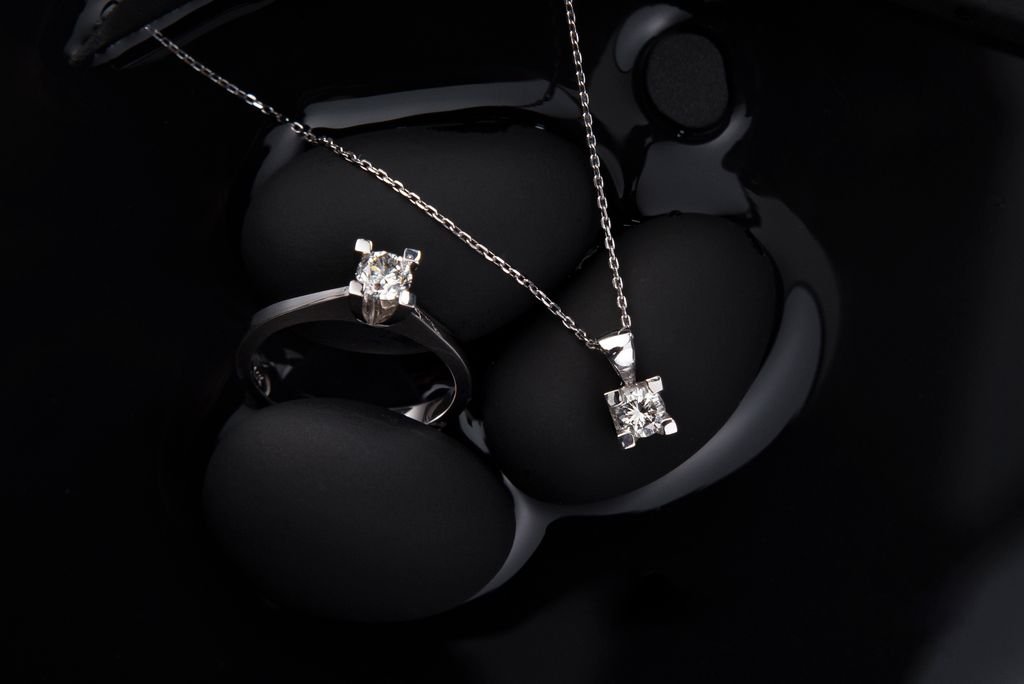
Renters insurance generally covers jewelry under the personal-property section of the policy when it is stolen or damaged by a covered event. However, the amount available for jewelry theft is commonly much lower than your total personal-property limit.
A policy may provide $25,000 or more of total personal-property coverage while limiting jewelry theft claims to approximately $1,000, $1,500, or another specified amount.
Standard renters insurance may also exclude accidental loss, unexplained disappearance, and accidental damage to jewelry. If you own an engagement ring, wedding ring, expensive watch, or valuable collection, you may need scheduled personal-property coverage, a policy endorsement, or standalone jewelry insurance.
Understanding these limits before a loss can prevent an expensive coverage gap.
Renters Insurance Jewelry Coverage at a Glance
| Jewelry-loss scenario | Standard renters insurance may cover it? | Important consideration |
|---|---|---|
| Jewelry stolen during a burglary | Often | A special jewelry-theft limit may apply |
| Ring stolen from a hotel room | Possibly | Off-premises limits and deductible may apply |
| Jewelry damaged in a covered fire | Often | Subject to personal-property coverage terms |
| Jewelry damaged by covered smoke | Often | Insurer may repair or replace eligible property |
| Ring accidentally dropped and broken | Usually not | Broader scheduled coverage may be needed |
| Ring lost while traveling | Usually not | Ordinary loss is commonly excluded |
| Jewelry mysteriously disappears | Usually not | Some scheduled policies cover disappearance |
| Stone falls out of a ring | Usually not | Often treated as accidental damage or maintenance |
| Jewelry damaged by flood | Usually not | Standard renters insurance excludes flooding |
| Jewelry intentionally damaged | No | Intentional loss is generally excluded |
| Roommate’s jewelry is stolen | Usually not | The owner generally needs a separate policy |
| Engagement ring exceeds the theft sublimit | Partially | Additional scheduled coverage may be needed |
Coverage varies by insurer, state, policy form, endorsement, cause of loss, and documentation. Always review your declarations page and full policy.
How Standard Renters Insurance Covers Jewelry
Jewelry is usually included within personal-property coverage alongside possessions such as furniture, clothing, electronics, and appliances.
Standard renters insurance commonly protects personal property against listed events such as:
- Theft
- Fire
- Smoke
- Vandalism
- Certain wind or storm damage
- Certain sudden water damage
- Other covered perils named in the policy
The cause of the loss must be covered. Owning renters insurance does not mean jewelry is protected against every possible form of damage or disappearance.
GEICO explains that renters insurance typically includes jewelry under personal-property coverage, but theft limits and exclusions can prevent full reimbursement. Lost or misplaced jewelry is generally not covered without broader scheduled protection. Review its renters jewelry-coverage guidance.
What Is a Jewelry Sublimit?
A jewelry sublimit is a lower maximum amount the insurance company will pay for a particular category of property or type of loss.
Your overall personal-property limit and jewelry-theft limit are separate figures.
For example:
Total personal-property limit: $30,000
Jewelry-theft sublimit: $1,500
Value of stolen jewelry: $5,000
Even though the $5,000 loss is below the total $30,000 personal-property limit, the jewelry sublimit could restrict the eligible payment to $1,500 before considering the deductible and other claim terms.
The Insurance Information Institute notes that standard homeowners and renters policies commonly impose a relatively low limit for jewelry theft—often approximately $1,500—because jewelry is portable and particularly vulnerable to theft. Read its guidance about coverage for valuables.
Your limit could be higher or lower. Some policies impose:
- A total jewelry-theft limit
- A per-item limit
- Both an item and category limit
- Different limits for theft and other covered losses
- Separate limits for watches, precious stones, or silverware
Look for sections titled “Special Limits of Liability,” “Property Limits,” or “Coverage C—Personal Property.”
Does Renters Insurance Cover Jewelry Theft?
Standard renters insurance commonly covers jewelry stolen during a burglary or another documented theft. The jewelry-theft sublimit and deductible will usually affect the payment.
Consider this simplified example:
Value of stolen jewelry: $4,000
Jewelry-theft sublimit: $1,500
Personal-property deductible: $500
Potential payment: $1,000
Calculation:
$1,500 coverage limit − $500 deductible = $1,000 potential payment
The $4,000 total value does not override the $1,500 jewelry-theft limit.
The actual settlement can also depend on:
- Proof of ownership
- Jewelry valuation
- Actual-cash-value or replacement-cost terms
- Police documentation
- Other property stolen in the same incident
- Whether the deductible is applied once to the entire occurrence
- Whether any endorsements cover the jewelry separately
Report the theft promptly and provide complete, accurate information about the missing pieces.
Is Jewelry Covered Outside the Home?
Renters insurance may cover jewelry stolen away from your rental home, including from:
- A hotel room
- Vehicle
- Workplace
- College
- Gym locker
- Vacation rental
- Another person’s home
- Luggage while traveling
However, an off-premises coverage limit may apply in addition to the special jewelry limit.
Suppose your policy has:
Jewelry-theft limit: $1,500
Off-premises personal-property limit: $2,500
Deductible: $500
If a $4,000 ring is stolen from a hotel, the more restrictive applicable limit may control. In this hypothetical case, the $1,500 jewelry limit is lower than the $2,500 off-premises limit.
After subtracting the $500 deductible, the potential payment could be $1,000.
Policy wording determines how multiple limits interact. Do not simply add the two limits together.
Our complete guide explains when renters insurance covers theft outside the home.
Does Renters Insurance Cover a Lost Ring?
Standard renters insurance usually does not cover jewelry that is lost, misplaced, or cannot be located without evidence of a covered theft.
Examples include:
- Leaving a ring in a restaurant restroom
- Losing an earring while walking
- Forgetting a watch in a hotel room
- Dropping a bracelet during a flight
- Being unable to locate jewelry after moving
- Discovering that a piece is missing without knowing what happened
Insurers may refer to this as mysterious disappearance or unexplained loss.
This differs from documented theft. A police report, broken lock, witness, surveillance footage, or other evidence may help establish that a theft occurred.
Broader scheduled jewelry coverage may include accidental loss or mysterious disappearance, depending on the policy. Never report an item as stolen when the available facts only establish that it is missing.
Does Renters Insurance Cover Accidental Jewelry Damage?
Standard renters insurance usually does not cover ordinary accidental damage to jewelry unless the event falls within a covered peril.
Commonly excluded incidents may include:
- Dropping and cracking a gemstone
- Bending a ring
- Breaking a necklace clasp
- Scratching a watch
- Chipping a diamond
- Losing a stone from its setting
- Damaging jewelry during cleaning
- Gradual deterioration
Wear and tear, corrosion, manufacturing defects, and inadequate maintenance are also commonly excluded.
A scheduled personal-property endorsement or standalone jewelry policy may cover accidental damage, although exclusions still apply.
Ask how the insurer handles repairs. Some jewelry policies allow repair or replacement through approved jewelers, while others provide a cash settlement based on documented value and policy terms.
Are Engagement Rings and Wedding Rings Covered?
Engagement rings and wedding rings generally qualify as jewelry under renters insurance. They are therefore subject to the same standard jewelry limits unless separately scheduled.
A ring worth several thousand dollars can easily exceed a standard theft sublimit.
For example:
Engagement ring value: $6,000
Standard jewelry-theft limit: $1,500
Potential uninsured amount before deductible: $4,500
Calculation:
$6,000 ring value − $1,500 standard limit = $4,500 potential coverage gap
Additional coverage may be worthwhile if replacing the ring without insurance would create financial difficulty.
Clarify who owns the engagement ring and whose policy covers it. Coverage can become complicated during an engagement, marriage, separation, or when the purchaser and wearer maintain different residences and insurance policies.
The person with an ownership interest should discuss the arrangement with a licensed insurance representative.
What Is Scheduled Personal-Property Coverage?
Scheduled personal-property coverage is additional insurance for valuable items individually listed on a policy endorsement.
It may also be described as:
- Scheduled jewelry coverage
- Personal articles floater
- Valuable-items endorsement
- Jewelry rider
- Scheduled property endorsement
For every scheduled item, the policy may record:
- Description
- Appraised value
- Agreed amount or coverage limit
- Serial number
- Gemstone details
- Photographs
- Ownership documentation
Scheduled coverage commonly offers higher limits and may protect against more causes of loss than standard renters insurance. Depending on the insurer, it may cover accidental damage, accidental loss, or mysterious disappearance.
Not every endorsement provides the same coverage. Review the exclusions, deductible, valuation process, repair options, and geographic territory.
Blanket Coverage vs. Individually Scheduled Coverage
Insurers may provide valuables coverage through blanket or itemized arrangements.
Blanket jewelry coverage
Blanket coverage provides one combined limit for a collection without listing every lower-value piece individually.
It may include a per-item maximum.
For example:
Blanket jewelry limit: $10,000
Maximum per item: $2,500
A collection worth $8,000 might fit within the overall limit, but a single ring worth $4,000 could exceed the per-item limit.
Individually scheduled coverage
Itemized coverage lists specific pieces and assigns a separate coverage amount to each one.
This approach may be more appropriate for:
- Engagement rings
- Wedding rings
- Valuable watches
- Diamond necklaces
- Heirloom jewelry
- Rare gemstones
- Individually expensive pieces
Travelers explains that additional protection may be available through a personal articles floater, standalone policy, rider, or endorsement when jewelry exceeds standard renters or homeowners limits. Its valuables insurance guide also notes that broader options can address losses excluded by a standard policy.
Do You Need a Jewelry Appraisal?
An insurer may request an appraisal before scheduling an expensive piece. Requirements vary by company, item value, and coverage option.
A professional appraisal can document:
- Type of jewelry
- Metal
- Gemstone
- Carat weight
- Cut, color, and clarity
- Distinguishing characteristics
- Condition
- Estimated replacement value
- Appraiser’s qualifications
- Date of valuation
An appraisal is not the same as a purchase receipt. A receipt establishes what you paid, while an appraisal estimates value based on the item and relevant market conditions.
Avoid relying on an inflated appraisal. Scheduling an item for more than its realistic value could increase premiums without guaranteeing that the insurer will pay the exaggerated amount.
Jewelry values can change over time. Ask how frequently the insurer recommends a new appraisal, particularly for precious metals, gemstones, rare watches, and heirloom pieces.
How the Deductible Works
A standard renters insurance deductible commonly applies to a personal-property jewelry claim.
For example:
Eligible jewelry loss: $1,200
Renters insurance deductible: $500
Potential payment: $700
Calculation:
$1,200 − $500 = $700
If the eligible loss is $400 and the deductible is $500, the policy ordinarily will not provide a personal-property payment.
Scheduled jewelry endorsements and standalone policies may have:
- No deductible
- A lower deductible
- A separate deductible
- Several deductible options
A lower deductible usually costs more. Compare the additional premium with what you could comfortably pay after a loss.
Learn how different amounts affect claims in our guide to choosing a renters insurance deductible.
Actual Cash Value vs. Replacement Cost
Jewelry claim payments depend partly on the policy’s valuation terms.
Actual cash value
Actual cash value generally considers depreciation, condition, age, and current value. Jewelry does not always depreciate in the same way as electronics or furniture, but the insurer will still follow the policy’s valuation method.
Replacement cost
Replacement-cost coverage generally considers the eligible cost of replacing an item with a comparable piece, subject to applicable limits.
Agreed or scheduled value
Some specialty policies insure jewelry according to an agreed or scheduled amount. However, being scheduled for a stated amount does not automatically guarantee a cash payment of that entire figure under every policy.
The insurer may have the right to:
- Repair the item
- Replace it with a comparable item
- Use a preferred jeweler
- Pay the actual cost of replacement
- Settle according to another valuation clause
Read the loss-settlement section rather than relying only on the declarations-page amount.
Renters Insurance Rider vs. Standalone Jewelry Insurance
You may protect valuable jewelry by adding an endorsement to renters insurance or purchasing a separate jewelry policy.
| Feature | Renters insurance endorsement | Standalone jewelry insurance |
|---|---|---|
| Attached to renters policy | Yes | No |
| May increase jewelry limits | Yes | Yes |
| May cover accidental damage | Possibly | Often available |
| May cover mysterious disappearance | Possibly | Often available |
| Separate deductible options | Depends on insurer | Commonly available |
| Separate claim from renters policy | No | Generally yes |
| Appraisal may be required | Possibly | Possibly |
| Coverage continues if renters policy ends | No | Subject to jewelry policy terms |
Neither option is automatically better. Compare:
- Covered causes of loss
- Exclusions
- Deductible
- Premium
- Repair and replacement process
- Worldwide coverage
- Claim settlement terms
- Appraisal requirements
- Inflation or automatic value adjustments
- Effect of a claim on the underlying renters policy
How Much Jewelry Coverage Do You Need?
Begin by creating an inventory of every piece you would want to replace.
Include:
- Description
- Purchase price
- Current estimated value
- Receipt
- Appraisal
- Photographs
- Serial number
- Gemstone certification
- Date acquired
Next, compare the total value and most expensive individual item with:
- Your total personal-property limit
- Jewelry category limit
- Per-item limit
- Theft limit
- Off-premises limit
- Deductible
If you are still calculating the value of all your possessions, use our guide to determine how much personal property coverage you need.
Consider additional protection when:
- One item exceeds the standard sublimit.
- The total collection exceeds the category limit.
- You regularly travel with jewelry.
- Replacing an item would create financial hardship.
- You want accidental-loss coverage.
- The jewelry has recently increased in value.
- You receive an engagement ring or valuable gift.
- You inherit an expensive piece.
How to File a Jewelry Insurance Claim
1. Report theft promptly
Contact the police and obtain a report number. Report hotel, workplace, gym, storage, or transportation theft to the responsible organization as well.
2. Notify the insurer
Provide accurate details about when and where the loss occurred. Ask what documentation and deadlines apply.
3. Submit proof of ownership
Useful evidence may include:
- Purchase receipt
- Appraisal
- Photographs
- Credit-card statement
- Gemstone certificate
- Warranty registration
- Repair records
- Gift documentation
- Previous insurance schedule
4. Document damaged jewelry
Do not repair, alter, or discard a damaged item before the insurer evaluates it or authorizes work.
5. Review applicable limits
Confirm the deductible, jewelry sublimit, off-premises limit, scheduled amount, and valuation method.
6. Obtain claim decisions in writing
If the claim is limited or denied, ask the insurer to identify the policy language supporting its decision.
Ways to Protect Your Jewelry
Insurance cannot prevent a loss, but careful documentation and storage can make recovery and claims easier.
Consider these steps:
- Photograph every valuable piece.
- Keep receipts and appraisals outside your rental.
- Use a secure safe when appropriate.
- Avoid displaying travel plans publicly.
- Do not leave jewelry visible inside a vehicle.
- Inspect clasps, prongs, and settings regularly.
- Record serial numbers and gemstone reports.
- Update the insurer after purchasing or receiving expensive jewelry.
- Reappraise valuable pieces periodically.
- Confirm coverage before international travel.
Do not store the only copies of photographs, receipts, and appraisals with the jewelry itself.
Frequently Asked Questions
Does renters insurance cover a stolen engagement ring?
It may cover the theft, but the standard jewelry sublimit could be much lower than the ring’s value. Scheduling the ring may provide a higher limit and broader protection.
Does renters insurance cover a diamond falling out of a ring?
Standard renters insurance usually does not cover this type of accidental loss or damage. A scheduled endorsement or specialty jewelry policy might, depending on its terms.
Does renters insurance cover jewelry lost while traveling?
Standard policies usually distinguish losing an item from having it stolen. Scheduled or standalone jewelry coverage may include accidental loss or mysterious disappearance.
Does renters insurance cover inherited jewelry?
Inherited jewelry may be covered if you own it and the cause of loss is covered. You will need evidence of ownership and value, which might include estate records and a professional appraisal.
Does renters insurance cover watches?
Watches are commonly included with jewelry or subject to similar special limits. Smartwatches may be categorized differently, so check the policy definitions.
Is there a separate deductible for jewelry?
Standard personal-property claims commonly use the regular renters insurance deductible. Scheduled endorsements or standalone policies may offer a different or zero deductible.
Will renters insurance pay the full appraisal value?
Not necessarily. The policy may permit repair, comparable replacement, or payment based on the actual replacement cost. Review the loss-settlement language.
Can I insure jewelry that was given to me as a gift?
Generally, yes, if you own the jewelry and meet the insurer’s documentation requirements. An appraisal may be particularly important when no purchase receipt is available.
Final Thoughts
Does renters insurance cover jewelry? Standard policies commonly cover jewelry stolen or damaged by a covered event, but special limits can leave expensive rings, watches, and collections underinsured.
Standard insurance also may not cover accidental damage, ordinary loss, or mysterious disappearance. Scheduled personal-property coverage, a valuable-items endorsement, or standalone jewelry insurance can provide higher limits and broader protection.
Create an inventory, compare each item’s value with your jewelry limits, obtain reliable appraisals when necessary, and understand how the deductible and claim-valuation method work.
Most importantly, review the actual policy rather than assuming your total personal-property limit applies fully to jewelry. A relatively small endorsement arranged before a loss may prevent a substantial out-of-pocket expense later.
This article provides general educational information and does not constitute individualized insurance, financial, or legal advice. Coverage depends on the insurer, policy form, endorsements, exclusions, limits, location, and facts of the loss. Contact a licensed insurance professional regarding your circumstances.