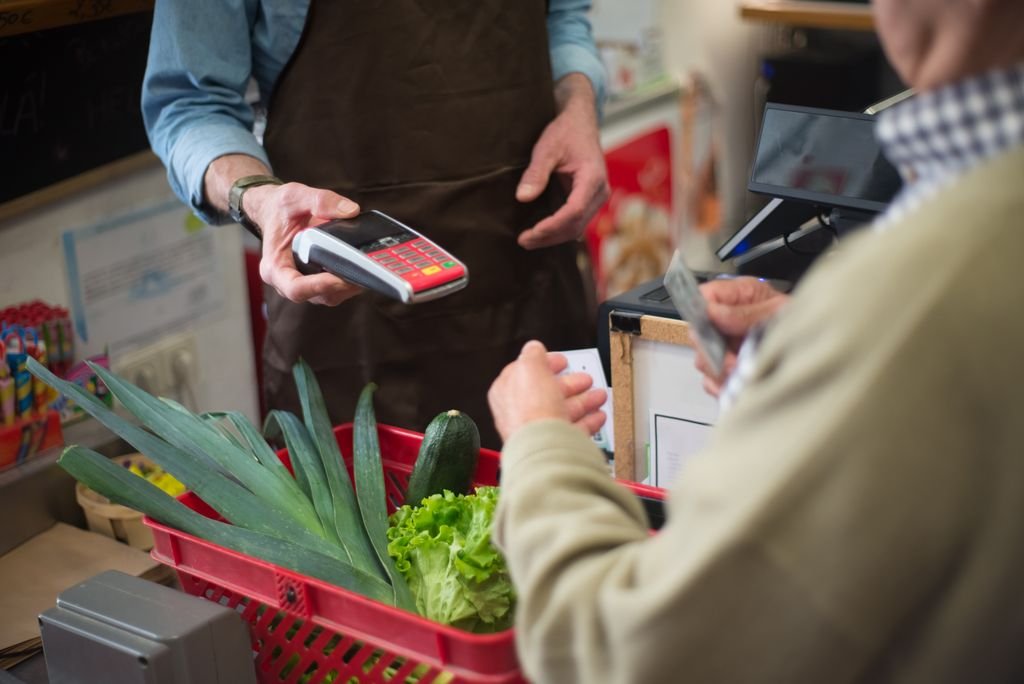
How much should you spend on groceries each month? There is no universal amount or percentage that works for every household.
A realistic grocery budget depends on your household size, ages, location, dietary needs, shopping habits, and how often you eat at home. Your income matters too, but an arbitrary percentage of income may not reflect the actual cost of feeding your family.
A practical approach is to review what you currently spend, separate groceries from restaurant purchases, compare your spending with current food-cost benchmarks, and set a weekly limit you can realistically maintain.
This guide will show you how to do that step by step.
What Counts as Grocery Spending?
Before setting a grocery budget, decide which purchases belong in the category.
Grocery spending usually includes:
- Food prepared and eaten at home
- Beverages purchased for home
- Basic cooking ingredients
- Lunches packed for work or school
- Snacks purchased from grocery stores
- Grocery-delivery purchases before delivery fees and tips
Depending on how detailed you want your budget to be, you may track the following items separately:
- Cleaning supplies
- Paper products
- Toiletries
- Pet food
- Alcohol
- Vitamins and supplements
- Delivery charges
- Restaurant meals and takeout
Separating household supplies and dining out from food purchases gives you a clearer picture of what it actually costs to feed your household.
If you combine groceries, takeout, toiletries, and cleaning products into one number, it becomes difficult to identify where you are overspending.
Start With Your Actual Grocery Spending
Before choosing a new target, calculate what you spent during the previous four to eight weeks.
Review:
- Grocery-store transactions
- Supermarket delivery orders
- Warehouse-club purchases
- Farmers market purchases
- Convenience-store food
- Cash grocery purchases
- Online food orders intended for home preparation
Remove restaurant meals, delivery tips, and nonfood household products if you plan to budget those separately.
Suppose your household spent the following during the past four weeks:
| Week | Grocery spending |
|---|---|
| Week 1 | $184 |
| Week 2 | $231 |
| Week 3 | $196 |
| Week 4 | $219 |
| Four-week total | $830 |
| Weekly average | $207.50 |
A four-week period is slightly shorter than an average calendar month. To convert weekly spending into a more accurate monthly estimate, use:
Monthly grocery spending = Weekly average × 52 ÷ 12
Using the example:
$207.50 × 52 ÷ 12 = approximately $899 per month
This gives you a more useful starting point than guessing what you think groceries should cost.
If you have not yet organized the rest of your household expenses, first create a monthly budget using your actual income and transaction history.
Use USDA Food Plans as a Benchmark
The USDA publishes monthly food-cost estimates through four food plans:
- Thrifty Food Plan
- Low-Cost Food Plan
- Moderate-Cost Food Plan
- Liberal Food Plan
The plans estimate the cost of nutritious meals and snacks prepared at home at progressively higher spending levels. The figures vary by age, sex, household composition, and plan.
You can review the latest figures on the USDA’s monthly Cost of Food reports. Because food prices change, check the date shown on the latest report instead of permanently relying on a table copied from an older article.
At the time of writing, the USDA reporting page provides 2026 monthly food-cost data.
Use these figures as benchmarks—not as mandatory spending limits. Your actual needs may be higher or lower because of:
- Regional prices
- Medical diets
- Food allergies
- Household ages
- Access to supermarkets
- Cultural food preferences
- Time available for cooking
- Transportation limitations
- Food waste
- Restaurant spending
USDA estimates generally assume that meals and snacks are prepared at home. Someone who eats several restaurant meals each week may show lower grocery spending but higher total food spending.
Practical Monthly Grocery Ranges
The following ranges are illustrative starting points, not official limits. Compare them with the USDA’s current report and the prices available where you live.
| Household | Illustrative monthly range |
|---|---|
| One adult | $300–$500 |
| Two adults | $550–$900 |
| Two adults and one child | $700–$1,100 |
| Family of four | $900–$1,400 |
| Family of five | $1,100–$1,700 |
A household that cooks nearly every meal at home, buys specialty foods, or lives in a high-cost area may spend more. A household using a carefully planned low-cost menu, local assistance, bulk staples, or homegrown food may spend less.
The goal is not to force your spending into a particular range. The goal is to determine whether your current spending reflects your needs and priorities—or whether waste and unplanned purchases are inflating it.
How Much of Your Income Should Go to Groceries?
You may see recommendations to spend a fixed percentage of take-home income on groceries. A percentage can provide context, but it should not determine your entire budget.
For example, a household with $6,000 in monthly take-home income might spend $900 on groceries:
$900 ÷ $6,000 × 100 = 15% of take-home income
Another household may earn $3,000 and need $600 for groceries:
$600 ÷ $3,000 × 100 = 20% of take-home income
The second household is not necessarily overspending. Essential food does not become proportionally cheaper merely because income is lower.
If money is limited, start with the cost of nutritionally adequate food and then build the rest of your plan around essential expenses. Our guide to budgeting on a low income explains why rigid percentage rules often fail when necessities consume most of a household’s income.
How Household Size Affects Grocery Costs
Grocery spending does not always increase at exactly the same rate with each household member.
A person living alone may pay more per person because:
- Smaller packages can cost more per unit
- Fresh ingredients may spoil before they are used
- Bulk discounts are harder to use
- Recipes may produce more servings than needed
Larger households may benefit from bulk purchasing and shared meals. However, they also need more storage, more careful meal planning, and enough variety to meet different preferences.
Age matters as well. A household with two adults and two teenagers may spend considerably more than a household with two adults and two young children.
Use household-size estimates as a starting point, then adjust them using your real purchase history.
Location Can Change the Answer
The same grocery list may cost significantly more in one city or neighborhood than in another.
Your spending can be affected by:
- Regional food prices
- Local taxes
- Distance from large supermarkets
- Access to warehouse clubs
- Transportation costs
- Seasonal availability
- Rural or remote delivery costs
- Competition among local stores
Do not assume you are failing merely because your spending exceeds a national benchmark. First compare prices at stores you can realistically access.
Driving a long distance to save a few dollars may not be worthwhile after accounting for gasoline, vehicle wear, and time.
Dietary and Medical Needs Matter
A household may reasonably spend more because of:
- Food allergies
- Diabetes or heart-health recommendations
- Celiac disease
- Texture or sensory requirements
- Religious dietary restrictions
- Pregnancy
- Athletic nutrition
- Higher calorie needs
- Medically prescribed foods
Do not reduce essential nutrition solely to reach an online target.
Instead, ask whether the same dietary needs can be met more efficiently through meal planning, store-brand products, seasonal ingredients, or a different retailer.
Set a Weekly Grocery Limit
A weekly target is often easier to manage than one large monthly amount.
Suppose you decide that $800 per month is realistic. Convert it to a weekly figure:
Weekly grocery budget = Monthly budget × 12 ÷ 52
$800 × 12 ÷ 52 = approximately $185 per week
You could allocate the $185 like this:
| Purpose | Weekly amount |
|---|---|
| Main grocery trip | $145 |
| Fresh-food refill | $25 |
| Price changes or forgotten items | $15 |
| Total | $185 |
Keeping a small margin reduces the chance that one forgotten ingredient will disrupt the plan.
If you receive income every two weeks, reserve two weeks of grocery money from each check. Our guide on how to budget biweekly paychecks explains how to coordinate spending limits with a 26-paycheck schedule.
Separate Groceries From Dining Out
Reducing grocery spending is not helpful if it causes restaurant and delivery spending to rise.
Track at least two categories:
- Groceries and food prepared at home
- Restaurants, takeout, coffee shops, and delivery meals
Suppose a household spends:
- $750 on groceries
- $500 on dining out
- $100 on food-delivery fees and tips
Its total monthly food spending is $1,350—not $750.
A higher grocery budget may actually reduce total food spending if it allows you to prepare convenient meals at home.
For example, spending an additional $40 on frozen vegetables, sandwich supplies, prepared sauces, or quick breakfast foods may prevent several expensive delivery orders.
A Complete Grocery Budget Example
Consider a family of four with monthly take-home income of $5,500.
Its recent food spending is:
| Category | Current monthly spending |
|---|---|
| Groceries | $1,050 |
| Restaurants and takeout | $300 |
| Delivery fees and tips | $75 |
| Total food spending | $1,425 |
After reviewing receipts, the family finds:
- $80 of food was discarded
- $65 went toward impulse snacks and drinks
- $40 came from buying duplicate ingredients
- Several takeout orders occurred because no quick meals were available
Instead of choosing an extreme target, the family sets:
- Grocery target: $950 per month
- Restaurant target: $200 per month
- Delivery target: $25 per month
The monthly grocery target becomes:
$950 × 12 ÷ 52 = approximately $219 per week
The family plans around $220 per week and uses the reduction to free approximately $250 in total monthly food spending.
That money could support an emergency fund, debt payments, or another savings goal.
How to Lower Grocery Spending Without Sacrificing Nutrition
Plan meals around food you already own
Check your refrigerator, freezer, and pantry before shopping. Build several meals around ingredients that need to be used soon.
This reduces duplicate purchases and food waste. USDA SNAP-Ed identifies meal planning, shopping, and budgeting as practical tools for saving money while supporting healthier food choices.
Use a shopping list
A list reduces forgotten items and impulse purchases. Organize it by store section to make shopping faster.
Check quantities before adding routine items. You may already have enough rice, pasta, seasonings, or frozen food for another week.
Compare unit prices
The lowest package price is not always the best value.
Compare the price per ounce, pound, or item. Many stores show the unit price on the shelf label.
However, a lower unit price does not save money if the larger package spoils before you use it.
Use store brands strategically
Store-brand staples are often less expensive than national brands. Test them first with products where brand differences matter less to your household.
You do not have to replace every preferred product. Switching only frequently purchased staples may create meaningful savings.
Build meals around lower-cost ingredients
Possible lower-cost staples include:
- Beans and lentils
- Rice
- Pasta
- Potatoes
- Oats
- Eggs
- Frozen vegetables
- Canned tomatoes
- Seasonal produce
- Less expensive cuts of meat
Balance cost with nutritional needs, preparation time, and foods your household will actually eat.
Reduce food waste
Track what you discard for two weeks.
Common causes include:
- Buying without a plan
- Forgetting leftovers
- Purchasing unrealistic amounts of produce
- Cooking oversized portions
- Storing food incorrectly
- Rejecting usable food solely because of a quality date
Freeze appropriate leftovers, label containers, and schedule one meal each week for using remaining ingredients.
Be selective about bulk purchases
Bulk buying works best for products that:
- You use regularly
- Have a long shelf life
- Cost less per unit
- Fit in your storage space
- Will not cause you to consume more unnecessarily
Do not buy a large package merely because it appears economical.
What If You Cannot Afford an Adequate Grocery Budget?
If your income does not cover sufficient food and other necessities, the problem may be a structural shortfall rather than poor budgeting.
Prioritize:
- Nutritious staple foods
- Housing
- Utilities
- Essential healthcare
- Work-related transportation
- Required insurance and minimum obligations
Check whether your household qualifies for SNAP, WIC, school-meal programs, senior nutrition assistance, local food banks, or community meal programs.
Avoid setting a grocery target so low that it causes inadequate nutrition or repeated credit-card spending later in the month.
If living costs consistently consume your entire paycheck, these steps to stop living paycheck to paycheck may help you review both the income and expense sides of the problem.
A 30-Day Grocery Spending Audit
Week 1: Record everything
- Save every receipt
- Separate food from household products
- Record restaurant spending separately
- Note food discarded at home
Week 2: Identify patterns
- Find your most expensive categories
- Check for duplicate purchases
- Identify impulse items
- Review delivery charges and tips
- Note why food went unused
Week 3: Test a weekly limit
- Choose a realistic weekly target
- Plan meals before shopping
- Leave a small amount for fresh-food refills
- Compare planned and actual spending
Week 4: Adjust the target
- Increase it if the original amount was clearly insufficient
- Reduce it gradually if substantial waste remains
- Create separate limits for restaurants and household supplies
- Set next month’s target using what you learned
One month of real data is more useful than copying someone else’s grocery budget.
Copyable Grocery Budget Worksheet
| Grocery budget item | Planned | Actual |
|---|---|---|
| Weekly grocery trip 1 | $___ | $___ |
| Weekly grocery trip 2 | $___ | $___ |
| Weekly grocery trip 3 | $___ | $___ |
| Weekly grocery trip 4 | $___ | $___ |
| Additional monthly days | $___ | $___ |
| Household supplies | $___ | $___ |
| Restaurants and takeout | $___ | $___ |
| Delivery fees and tips | $___ | $___ |
| Food discarded | $___ | $___ |
| Total food spending | $___ | $___ |
Complete the planned column before the month starts and the actual column as you spend.
Signs Your Grocery Budget May Be Too High
Your target may have room for reduction if:
- Large amounts of food are regularly discarded
- You repeatedly buy ingredients already at home
- Impulse purchases dominate receipts
- You shop without a meal plan
- Bulk purchases expire unused
- Convenience items do not actually replace takeout
- Grocery spending rises while restaurant spending remains unchanged
A high number alone does not prove overspending. Look for avoidable patterns.
Signs Your Grocery Budget May Be Too Low
Consider increasing the target if:
- The household regularly runs out of basic food
- You depend on credit before the next payday
- The budget cannot support medical dietary needs
- An extremely restrictive plan causes frequent takeout
- Household members are skipping appropriate meals
- Normal price changes repeatedly break the budget
- The target is based on outdated food prices
A sustainable grocery budget should support adequate food throughout the month.
Frequently Asked Questions
How much should one person spend on groceries per month?
There is no single correct amount. Use the USDA plan for your age group as a benchmark, compare it with local prices, and review your actual spending. An illustrative starting range for one adult might be $300 to $500 per month, but location and dietary needs can change that substantially.
How much should a family of four spend on groceries?
A family of four might use an illustrative range of approximately $900 to $1,400 per month. The appropriate amount depends on the ages of the household members, local prices, dietary needs, food waste, and how many meals are prepared at home. Consult the latest USDA report for a more specific benchmark.
Should restaurants be included in my grocery budget?
It is usually better to track restaurants and groceries separately. You should still review them together when calculating total food spending because a reduction in one category can cause the other to rise.
Is it better to use a weekly or monthly grocery budget?
Use both. A monthly budget shows the total amount available, while a weekly limit makes day-to-day spending easier to control.
How often should I update my grocery budget?
Review it monthly at first. Once it becomes stable, revisit it whenever your household size, income, dietary needs, or local food prices change.
Should I spend a fixed percentage of my income on groceries?
A percentage can help you evaluate spending, but it should not be treated as an absolute rule. The cost of adequate food does not automatically fall when income is lower.
Final Thoughts
The answer to “how much should I spend on groceries?” depends on more than household income.
Start with your actual spending, separate groceries from restaurants and household supplies, and compare your results with the USDA’s latest food-cost benchmarks. Then convert your monthly target into a weekly amount that is easier to manage.
Review food waste, unit prices, meal planning, and shopping habits before making severe cuts. A successful grocery budget is not simply the lowest possible number. It is an amount that provides adequate food, fits your broader financial plan, and can be repeated month after month.
This article is provided for general educational purposes and does not constitute individualized financial, nutritional, tax, legal, or insurance advice.