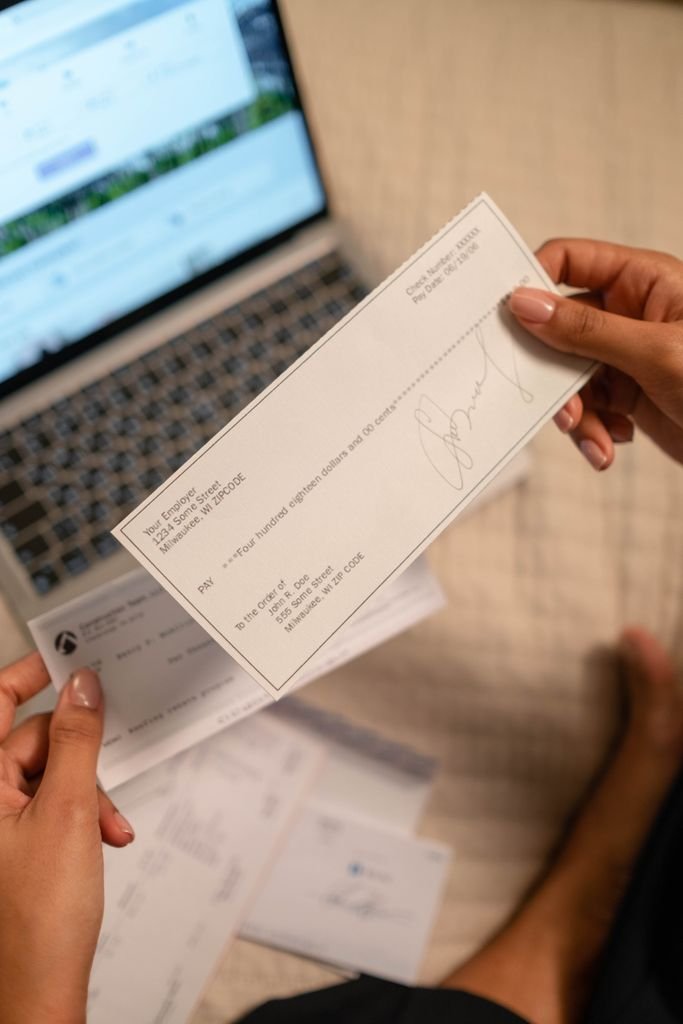
Cashier’s check vs money order are both prepaid payment methods that can be safer and more dependable than a personal check. However, they are designed for different types of transactions.
The main difference between a cashier’s check vs money order is the payment amount and issuer. A cashier’s check is issued by a bank or credit union, is drawn against the financial institution’s funds, and is commonly used for large purchases. A money order is usually limited to a smaller amount—$1,000 per domestic U.S. Postal Service money order—and can be purchased from post offices, retailers, banks, credit unions, and other authorized providers.
A cashier’s check is usually better for a large payment, such as a home closing or car purchase. A money order may be more convenient for rent, deposits, bills, or smaller payments, especially when the buyer does not have a checking account.
Both methods can be counterfeited, so recipients should verify a payment before sending merchandise, issuing a refund, or returning money to the buyer.
Cashier’s Check vs. Money Order at a Glance
| Feature | Cashier’s Check | Money Order |
|---|---|---|
| Typical issuer | Bank or credit union | Post office, retailer, bank, credit union, or authorized provider |
| Source of payment | Drawn on the financial institution’s funds | Prepaid by the purchaser |
| Typical payment size | Better suited to large payments | Better suited to smaller payments |
| Maximum amount | Depends on the issuing institution and its policies | Commonly $1,000 or less per money order; USPS domestic limit is $1,000 |
| Typical fee | Usually higher | Usually lower |
| Bank account required | Usually required, although policies vary | Usually not required |
| Common uses | Home closing, vehicle purchase, large deposit, moving funds | Rent, security deposit, bills, mail payments, smaller purchases |
| Availability | Usually purchased through a bank or credit union | Widely available at post offices and participating retailers |
| Replacement process | Depends on the issuing bank | Depends on the issuer and proof of purchase |
| Fraud risk | Counterfeit cashier’s checks exist | Counterfeit and altered money orders exist |
| Best for | Large or formal transactions | Smaller and more accessible payments |
What Is a Cashier’s Check?
A cashier’s check is an official check issued by a bank or credit union. Instead of being drawn directly against the purchaser’s personal checking account, it is drawn against the financial institution’s funds.
When you request a cashier’s check, the bank generally withdraws the amount from your account or collects the money from you. The bank then issues a check payable to the recipient.
Because the financial institution issues the check from its own funds, recipients may view a legitimate cashier’s check as more dependable than a personal check.
A cashier’s check normally displays:
- The name of the issuing bank or credit union
- The recipient’s name
- The payment amount
- The date of issuance
- A check or serial number
- Security features
- An authorized signature or printed authorization
The purchaser usually receives a receipt or record of the transaction.
Common uses for a cashier’s check
Cashier’s checks are frequently used for:
- A home down payment or closing costs
- Buying a car from a dealership or private seller
- Paying a large security deposit
- Purchasing expensive equipment
- Moving a substantial balance between financial institutions
- Making a payment when a personal check is not accepted
- Completing another high-value transaction that requires guaranteed funds
Before obtaining one, confirm the exact recipient name and amount. Correcting a cashier’s check after it has been issued may require cancellation, replacement, or a new purchase.
What Is a Money Order?
A money order is a prepaid paper payment instrument. The buyer pays the amount in advance, along with any applicable fee, and the issuer creates a money order payable to a named recipient.
Money orders can be purchased from several types of businesses, including:
- U.S. post offices
- Banks and credit unions
- Grocery stores
- Convenience stores
- Check-cashing businesses
- Money-transfer providers
- Participating retail locations
Unlike a personal check, a money order does not depend on the purchaser having enough money in a checking account when the recipient deposits it. The buyer has already supplied the funds.
Money orders can therefore be useful for people who:
- Do not have a checking account
- Do not want to send cash through the mail
- Need proof that a payment was purchased
- Must pay a business that does not accept cash or cards
- Want to avoid revealing personal checking-account information
USPS states that an individual domestic postal money order cannot exceed $1,000. Review the current USPS money-order rules and security guidance.
The Main Differences Between a Cashier’s Check and a Money Order
Although the two payment methods serve a similar purpose, there are important differences in their limits, costs, availability, and ideal uses.
1. Issuer
A cashier’s check is issued by a bank or credit union and drawn on that institution’s funds.
A money order may be issued by a bank, credit union, post office, retail business, or money-transfer company. The issuer and its policies determine where the recipient can cash it, how it can be tracked, and what happens if it is lost.
For an important transaction, ask the recipient whether a particular issuer is required or preferred.
2. Payment Limits
Payment size is often the deciding factor when comparing a money order vs cashier’s check.
A cashier’s check can typically accommodate a much larger payment. Banks may impose their own limits, documentation requirements, account-balance restrictions, or security procedures.
Money orders generally have lower individual limits. A domestic USPS money order is limited to $1,000. A payment exceeding that amount would require multiple USPS money orders or another payment method.
Other money-order providers may apply different limits.
For a $300 rent payment, one money order may be sufficient. For a $20,000 vehicle purchase, a cashier’s check is generally more practical.
3. Fees
Money orders are usually less expensive than cashier’s checks, but actual prices depend on the issuer.
As of August 2026, USPS lists these domestic postal money-order fees:
- $2.65 for a money order from $0.01 through $500
- $3.75 for a money order from $500.01 through $1,000
USPS fees can change, so buyers should verify the current price in USPS Notice 123 before purchasing.
Banks and credit unions set their own cashier’s-check fees. Some institutions waive the fee for customers with certain account packages, while others charge for every check.
When comparing costs, consider the number of instruments required. Multiple money orders may cost more than one cashier’s check and may be less convenient for the recipient.
4. Where You Can Purchase One
Cashier’s checks are usually available at banks and credit unions. Some institutions issue them only to existing customers, while others may accept cash from noncustomers under limited circumstances.
Money orders are more widely available. A person may be able to purchase one at a post office, grocery store, pharmacy, retailer, financial institution, or money-transfer location.
This accessibility makes a money order useful for someone who does not have a traditional bank account.
5. Acceptable Payment Methods
A bank may fund a cashier’s check by withdrawing money from your account. Depending on its policy, it may also accept cash or another verified form of payment.
Money-order sellers may accept:
- Cash
- A debit card
- Traveler’s checks
- Another payment method allowed by the issuer
Many sellers do not permit credit-card purchases. A provider that does accept a credit card may process the transaction as a cash advance, potentially triggering a cash-advance fee and immediate interest.
Check the provider’s payment policy before visiting the location.
6. Security
Both payment methods are safer than mailing cash because the recipient’s name can be written on the instrument and the purchase can be documented.
However, neither method is fraud-proof.
A cashier’s check may be considered more secure for a high-value transaction because a regulated bank or credit union issues it. But criminals can create convincing counterfeit cashier’s checks using the name and routing information of a real financial institution.
Money orders also include security features, but they can be forged, copied, washed, or altered.
Security depends on both the authenticity of the document and the behavior of the parties using it.
7. Replacement and Cancellation
Replacing a cashier’s check can be complicated because the issuing bank has taken responsibility for paying it. If the check is lost, stolen, or destroyed, the purchaser may need to:
- Submit a written declaration of loss
- Provide the receipt and check details
- Purchase an indemnity bond
- Pay a replacement or stop-payment fee
- Wait for the bank’s required claim period
- Follow the institution’s specific procedure
A cashier’s check generally cannot be canceled as easily as an ordinary personal check.
A lost money order may also be replaceable if the buyer retains the receipt. The issuer may charge an inquiry or replacement fee and require a waiting period.
USPS provides a tool for purchasers to check the status of a postal money order.
Always keep the receipt separate from the check or money order. Photographing the document and receipt before delivery may also help preserve important details.
Which Is Safer: A Cashier’s Check or a Money Order?
A legitimate cashier’s check is generally preferred for a high-value payment because it is issued by a bank or credit union and drawn on the institution’s funds.
For a smaller payment, a money order may provide sufficient security at a lower cost.
The larger concern is whether the instrument is genuine. The words “cashier’s check” or “money order” do not guarantee that a document is authentic.
Recipients should take these precautions:
- Examine the document for alterations, missing security features, spelling errors, or unusual printing.
- Contact the issuing institution using a telephone number obtained independently—not a number printed on a suspicious check.
- Confirm that the bank or credit union exists and that the check details are consistent with its records.
- Do not send goods or return money merely because a deposit appears in the account.
- Be suspicious of an overpayment followed by a request to refund the difference.
- Avoid buyers who pressure you to act immediately.
- Meet at the issuing bank for a high-value private sale when practical.
The FDIC warns that scammers use fake cashier’s checks and ask victims to return part of the supposed payment. Read the FDIC’s guidance on fake-check scams.
Available Funds Do Not Prove a Check Is Genuine
One of the most dangerous misconceptions is that a check must be genuine if the bank makes the funds available.
Funds availability and final collection are not the same thing.
A bank may make some or all of a deposit available before discovering that the cashier’s check or money order is fraudulent. If the item is later returned, the bank may remove the money from the depositor’s account.
The Consumer Financial Protection Bureau confirms that a bank or credit union may take back money from a fraudulent check even after the funds were made available and withdrawn. The customer may also face an overdrawn account. See the CFPB’s explanation of fraudulent check deposits.
Do not refund an overpayment, send cryptocurrency, purchase gift cards, wire money, or release valuable merchandise until the payment has been independently verified.
How Long Does a Cashier’s Check Take to Clear?
A deposited cashier’s check may receive faster availability treatment than an ordinary personal check when applicable requirements are satisfied. However, this does not mean every cashier’s check will be immediately available or finally verified.
Availability may depend on:
- The deposit amount
- Whether it is deposited in person or through an ATM
- Whether the account is new
- The customer’s account history
- The bank’s hold policy
- Whether the check raises fraud concerns
- Applicable federal rules and exceptions
The CFPB explains that deposit holds can vary and that exceptions may apply to large deposits, new accounts, repeatedly overdrawn accounts, emergencies, and checks the institution reasonably believes may not be paid. Review the CFPB’s funds-availability guidance.
Ask your bank two separate questions:
- When will the funds be available for withdrawal?
- Has the issuing institution confirmed that the check is authentic and finally paid?
How Long Does a Money Order Take to Clear?
Clearing time depends on the issuer, where the money order is deposited, the recipient’s financial institution, and whether the transaction is flagged for review.
A bank may make deposited funds available before completing every fraud check. A recipient should not treat quick availability as proof that the money order is genuine.
If you receive a USPS money order, examine its security features and verify that a domestic instrument does not exceed the $1,000 limit. USPS publishes guidance for identifying and verifying postal money orders.
When Should You Use a Cashier’s Check?
A cashier’s check may be the better choice when:
- The payment exceeds a money order’s limit.
- The recipient specifically requires an official bank check.
- You are purchasing a vehicle or other expensive asset.
- You need to pay certain home-closing costs.
- You are transferring a large sum between accounts.
- The recipient wants the financial institution to be directly responsible for the check.
- One payment instrument is more convenient than several money orders.
Before using a cashier’s check for a property transaction, follow the closing agent’s instructions precisely. Real-estate transactions are frequent targets of wire and payment fraud.
People buying property with another person should also understand the differences between tenants in common and joint tenants before deciding how the deed will be structured.
When Should You Use a Money Order?
A money order may be the better choice when:
- The amount is below the issuer’s limit.
- You do not have a checking account.
- You need to send a payment through the mail.
- A landlord does not accept personal checks.
- You want a payment receipt and tracking information.
- You prefer not to share bank-account details.
- A nearby retailer or post office is more accessible than a bank.
- The lower purchase fee makes it more economical.
Money orders can be useful for occasional payments, but repeatedly buying them adds fees to your budget. Include those fees when reviewing your fixed and variable expenses.
Cashier’s Check vs. Money Order for Rent
A money order is generally more practical for rent when the amount is within the provider’s limit and the landlord accepts that issuer.
If monthly rent exceeds $1,000, the tenant may need multiple postal money orders. Multiple purchase fees and documents could make a cashier’s check, electronic payment, or another landlord-approved option more convenient.
When paying rent by money order:
- Write the landlord or management company’s correct legal name.
- Complete the purchaser information.
- Add the apartment number or account reference where permitted.
- Keep the receipt.
- Record the date and amount.
- Obtain confirmation that the landlord received it.
Do not leave the payee line blank. A blank money order may be usable by whoever possesses it.
Cashier’s Check vs. Money Order for Buying a Car
A cashier’s check is generally the better choice for a vehicle purchase because the amount often exceeds common money-order limits.
For a private sale:
- Verify the seller’s identity.
- Confirm the vehicle title and identification number.
- Check for liens.
- Agree on the exact payment method before the meeting.
- Consider completing the transaction at the issuing bank.
- Obtain a signed bill of sale and all required title documents.
- Do not hand over the check until you are satisfied with the transaction.
A seller accepting a cashier’s check should independently verify it with the issuing institution.
Cashier’s Check vs. Money Order for a Home Closing
A cashier’s check may be accepted for certain closing costs or down-payment amounts, but buyers must follow the title company, escrow agent, lender, or attorney’s instructions.
Some closings require a wire transfer instead. Others may limit the amount that can be paid by cashier’s check.
Always confirm payment instructions using a trusted telephone number. Do not rely solely on last-minute emailed instructions, especially if the account details suddenly change.
Homebuyers should build closing costs and emergency reserves into their plan when they start a savings plan.
Cashier’s Check vs. Certified Check
A cashier’s check and certified check are not identical.
A cashier’s check is issued and drawn on the bank’s own funds. A certified check is generally a personal check for which the bank verifies the customer’s signature and confirms or sets aside sufficient funds.
Both may be described as official checks, but availability and terminology vary by institution.
If a recipient requests a certified check, do not assume a cashier’s check will automatically satisfy the requirement. Ask which instrument is acceptable before paying the fee.
Are Cashier’s Checks and Money Orders Insured?
A payment instrument is not the same as a deposit account held by the purchaser.
FDIC insurance may cover certain official items issued by an FDIC-insured bank, including cashier’s checks and money orders, if the bank fails and the applicable insurance requirements are met. That coverage does not protect a consumer from accepting a counterfeit instrument or voluntarily sending money to a scammer.
Similarly, National Credit Union Share Insurance Fund rules may apply to qualifying official instruments issued by federally insured credit unions.
Always verify whether the issuing institution is insured and understand that deposit insurance does not authenticate a particular check.
How to Get a Cashier’s Check
The general process is:
- Contact your bank or credit union to confirm availability and fees.
- Ask whether an appointment or branch visit is required.
- Confirm the exact payee name and payment amount.
- Make sure sufficient funds are available.
- Bring acceptable identification.
- Review every detail before the check is issued.
- Keep the receipt and check number.
- Deliver the check using a secure method.
Some financial institutions may allow customers to order a cashier’s check online, but delivery times and transaction limits vary.
How to Get a Money Order
The typical process is:
- Choose an authorized provider.
- Confirm the provider’s limit and fee.
- Bring an accepted form of payment.
- Purchase the money order for the exact amount.
- Write the recipient’s name immediately.
- Complete the purchaser or address fields.
- Add the relevant account or reference number.
- Sign where the purchaser’s signature is required.
- Keep the receipt in a safe place.
- Deliver or mail the money order securely.
Do not sign the back of the money order. That section is generally for the recipient’s endorsement.
How to Verify a Cashier’s Check
If you receive a cashier’s check:
- Find the bank’s official website independently.
- Call the bank using the number from its official website or another trusted directory.
- Do not rely on a telephone number printed on a potentially fraudulent check.
- Ask whether the institution issued the check and whether the details appear valid.
- Check the bank’s routing information.
- Examine security features.
- Be cautious if the check amount exceeds the agreed price.
- Wait for reliable verification before transferring property or returning funds.
A bank may decline to disclose certain information, but it can explain its verification process.
How to Verify a USPS Money Order
USPS recommends checking that:
- A domestic money order does not exceed $1,000.
- The printed and written amounts match.
- Required security features are present.
- The document does not show discoloration or disturbed paper fibers around the amount.
- The money order’s status can be confirmed through official USPS channels.
Take a suspicious postal money order to a post office rather than relying on the sender’s explanation.
Common Cashier’s Check and Money Order Scams
Overpayment scam
A buyer sends a check for more than the purchase price and asks the seller to refund the difference. The original payment later turns out to be fraudulent.
Mystery-shopper scam
The victim receives a check, is instructed to deposit it, and is told to use part of the money to buy gift cards or test a money-transfer service.
Prize or inheritance scam
A criminal sends a counterfeit check and claims the recipient must return money to cover taxes, processing fees, or legal costs.
Online-sale scam
A supposed buyer sends a fake cashier’s check for a vehicle, electronics, furniture, or another item and pressures the seller to release it quickly.
Rental scam
A fraudulent tenant overpays a deposit and requests a refund, or a fake landlord demands a money order for a property they do not own.
Remote-work scam
A fake employer sends a check for equipment and tells the new employee to send part of the money to a designated vendor.
A request to deposit a check and quickly send some of the money elsewhere is a major warning sign.
Advantages and Disadvantages of a Cashier’s Check
Advantages
- Suitable for large transactions
- Issued by a bank or credit union
- Does not reveal the purchaser’s checking-account number
- Often preferred when a personal check is unacceptable
- Usually requires only one instrument for a large payment
- Provides a transaction record
Disadvantages
- Usually costs more than a money order
- May require a bank or credit-union account
- Can be difficult and slow to replace
- Counterfeit cashier’s checks are common
- Usually cannot be canceled like a personal check
- Availability of deposited funds does not prove authenticity
Advantages and Disadvantages of a Money Order
Advantages
- Usually inexpensive
- Widely available
- A checking account is usually unnecessary
- Useful for smaller payments
- Safer than sending cash
- Provides a receipt and potential tracking information
- Does not reveal a personal checking-account number
Disadvantages
- Low maximum amount
- Multiple money orders may be needed
- Each money order may require a separate fee
- Replacement may take time
- Fraudulent and altered money orders exist
- Some recipients restrict acceptable issuers
- Filling it out incorrectly may cause problems
How to Choose Between Them
Ask these questions before selecting a payment method:
- How much are you paying?
- Does the recipient require a particular method?
- Do you have a bank or credit-union account?
- How much does each option cost?
- Is the payment being mailed or delivered in person?
- How quickly must it arrive?
- What documentation will you receive?
- How would a lost payment be replaced?
- Can the recipient verify the issuer?
- Is an electronic payment safer or more convenient?
For a smaller payment, a money order is often sufficient. For a large or formal payment, a cashier’s check is usually the more practical option.
Frequently Asked Questions
Is a cashier’s check the same as a money order?
No. A cashier’s check is issued by a bank or credit union and drawn on the institution’s funds. A money order is a prepaid payment instrument available from postal facilities, retailers, financial institutions, and other providers.
Which is cheaper, a money order or cashier’s check?
A money order is usually cheaper. However, fees vary, and purchasing several money orders can cost more than obtaining one cashier’s check.
What is the maximum amount for a money order?
The limit depends on the issuer. A single domestic USPS money order cannot exceed $1,000.
Is there a maximum amount for a cashier’s check?
There is no universal limit that applies to every cashier’s check. Banks and credit unions may establish their own limits, account requirements, and security procedures.
Can I buy a money order without a bank account?
Usually, yes. Many post offices and participating retailers sell money orders without requiring the buyer to have a bank account.
Can I get a cashier’s check without a bank account?
Some financial institutions may issue one to a noncustomer who pays cash, but many restrict cashier’s checks to account holders. Contact the institution first.
Can I buy a money order with a credit card?
Many issuers do not accept credit cards. If a credit card is accepted, the transaction may be treated as a costly cash advance. Verify the payment method and fees beforehand.
Can a cashier’s check bounce?
A legitimate cashier’s check issued by a real financial institution is backed by that institution. However, a check may be counterfeit, altered, subject to a valid stop-payment-related claim, or otherwise unpaid. Do not confuse provisional availability with final verification.
Can a money order bounce?
Because a money order is prepaid, it should not be returned for insufficient funds in the same manner as a personal check. It can nevertheless be fraudulent, altered, canceled under an issuer’s rules, or rejected for another reason.
What happens if I lose a cashier’s check?
Contact the issuing institution immediately. It may require a declaration of loss, an indemnity bond, fees, and a waiting period before issuing a replacement.
What happens if I lose a money order?
Contact the issuer and use the receipt to begin an inquiry or replacement request. Requirements, fees, and processing times vary.
Is a cashier’s check considered cash?
No. It is an official check issued by a financial institution. Recipients should not treat an unverified cashier’s check as physical cash.
Which is better for paying rent?
A money order is often convenient when rent falls within the issuer’s limit. A cashier’s check may be more practical if the payment is large or the landlord specifically requires one.
Which is better for buying a car?
A cashier’s check is generally better because vehicle prices commonly exceed money-order limits. Both parties should confirm the payment details and verify the check before completing the title transfer.
Final Verdict
The best choice between a cashier’s check vs money order depends primarily on the transaction amount, the recipient’s requirements, accessibility, and cost.
Choose a cashier’s check when you need to make a large or formal payment and the recipient wants an official check issued by a bank or credit union.
Choose a money order for a smaller payment when affordability, convenience, or access without a checking account is more important.
Whichever option you use, verify the recipient’s exact name, retain the receipt, understand the replacement process, and remain alert to counterfeit-payment scams. Most importantly, remember that funds appearing in a bank account do not necessarily prove that a deposited check or money order is genuine.
Disclaimer: This article is for general educational purposes only and does not constitute financial, legal, banking, or tax advice. Fees, limits, availability schedules, security procedures, and replacement policies vary by issuer and may change. Confirm current requirements directly with the bank, credit union, USPS, retailer, closing agent, or other payment provider before completing a transaction.