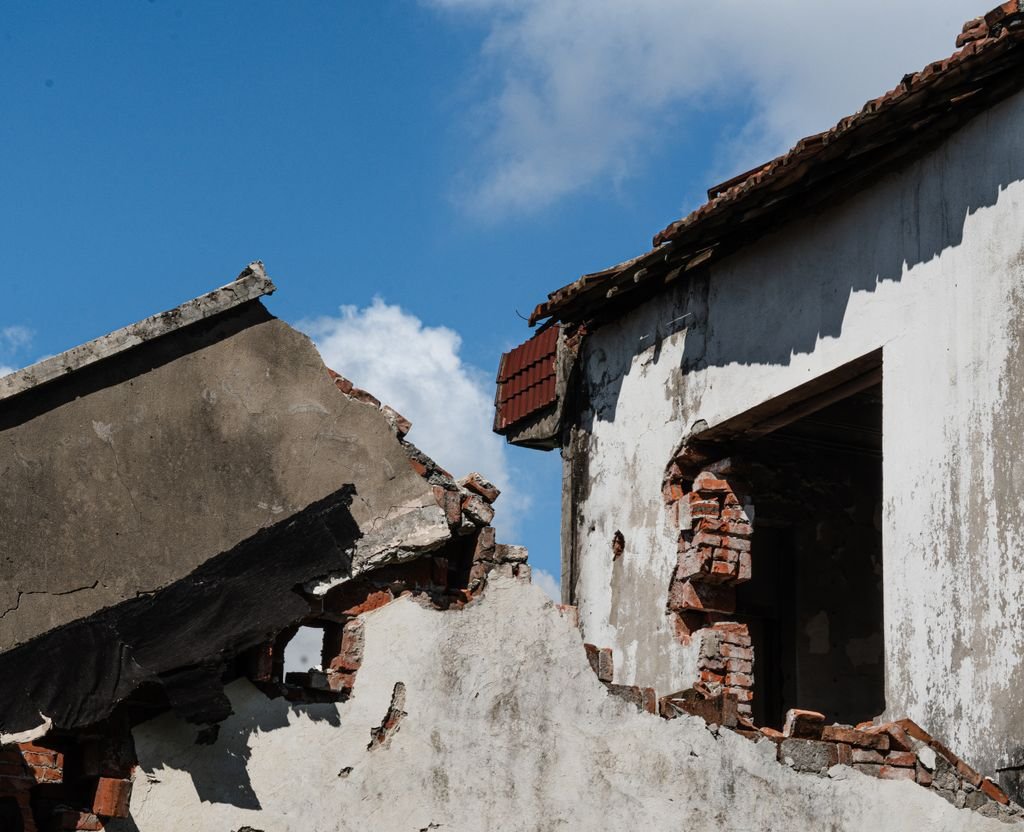
The main difference between hazard insurance vs homeowners insurance is scope. Hazard insurance generally refers to the part of property insurance that protects a home’s physical structure against covered causes of loss, such as fire, wind or hail. Homeowners insurance is a broader policy that can combine dwelling protection with coverage for other structures, personal belongings, loss of use, personal liability and medical payments to others.
In everyday mortgage communications, a lender or servicer may use “hazard insurance,” “homeowners insurance” and “property insurance” to describe the coverage a borrower must maintain on the mortgaged home. That does not necessarily mean the homeowner must buy two separate policies. A standard homeowners policy will often provide the required hazard coverage, provided its insurer, limits, covered property, deductible and other terms satisfy the loan agreement.
However, neither term guarantees protection against every disaster. Flood, earthquake, wear and tear, maintenance problems and other losses may be excluded or require separate coverage. Always compare the policy and mortgage requirements rather than relying on the label alone.
Hazard Insurance vs. Homeowners Insurance at a Glance
| Feature | Hazard insurance | Homeowners insurance |
|---|---|---|
| What the term usually means | Property protection against specified or nonexcluded causes of physical loss | A package policy containing property and liability coverages |
| Dwelling coverage | Usually the central purpose | Commonly included |
| Other structures | May be included, depending on the policy | Commonly included, subject to limits |
| Personal belongings | Not necessarily implied by the term | Commonly included |
| Loss of use | Not necessarily implied | Commonly included for qualifying covered losses |
| Personal liability | Usually outside the narrow hazard concept | Commonly included |
| Medical payments to others | Usually outside the narrow hazard concept | Commonly included |
| Required by mortgage lenders | Property coverage is generally required | A qualifying homeowners policy commonly satisfies the requirement |
| Flood coverage | Generally not included in a standard homeowners policy | Usually requires separate flood insurance |
| Earthquake coverage | Often excluded or separately added | Usually requires an endorsement or separate policy |
| Separate policy always needed? | No; often provided within homeowners insurance | It is normally the broader policy purchased by an owner-occupant |
Insurance terminology, forms and requirements vary by company, state, property and loan. Your declarations page and full policy control the actual coverage.
What Is Hazard Insurance?
Hazard insurance is a broad, sometimes informal term for insurance protecting real property from covered hazards or perils. A peril is the direct cause of a loss—such as fire, lightning, wind or theft. A hazard is technically a condition that increases the probability or severity of a loss, although mortgage and consumer communications often use “hazard insurance” as shorthand for property insurance.
For a mortgaged house, the lender’s interest is straightforward: the home secures the loan, so major physical damage could reduce the value of that collateral. The lender therefore generally requires the borrower to keep acceptable property coverage in force.
Hazard coverage may respond when a covered event damages:
- The dwelling
- Attached structures
- Built-in fixtures
- Sometimes detached structures, depending on the policy
Coverage depends on whether the cause of loss is covered, the applicable limit and deductible, exclusions, endorsements and the policyholder’s compliance with policy conditions.
What Is Homeowners Insurance?
Homeowners insurance is a package designed primarily for an owner-occupied home. According to the National Association of Insurance Commissioners, common homeowners coverages include:
- Dwelling coverage: Helps pay for covered damage to the house and attached structures.
- Other structures coverage: Protects qualifying detached structures, such as a shed or detached garage.
- Personal property coverage: Helps pay for covered loss or damage to belongings.
- Loss-of-use coverage: May pay certain additional living expenses when a covered loss makes the home uninhabitable.
- Personal liability coverage: May help with covered claims for bodily injury or property damage for which an insured is legally responsible.
- Medical payments coverage: May pay certain medical expenses when someone is injured, subject to the policy’s terms.
These coverages have separate limits, deductibles, conditions and exclusions. Some property may be subject to special sublimits, and certain risks require endorsements or separate policies.
Is Hazard Insurance the Same as Homeowners Insurance?
Not exactly, but the terms frequently refer to overlapping protection.
Think of hazard coverage as the property-damage component, while homeowners insurance is the larger package. If a lender asks for evidence of hazard insurance, a qualifying homeowners policy will often be the document supplied.
The Consumer Financial Protection Bureau’s current interpretation of federal mortgage-servicing rules illustrates this overlap: model force-placed insurance notices may substitute the term “hazard insurance” with “homeowners’ insurance” or “property insurance.” This does not make every product identical; it shows that the words can be used interchangeably in a specific mortgage-servicing context.
You may need additional coverage when:
- The homeowners policy excludes a hazard required by the loan or property location.
- The home is vacant, under construction or not owner-occupied.
- The property is a condominium, manufactured home or rental property requiring a different form.
- Flood insurance is required for the property.
- Windstorm or earthquake coverage must be purchased separately.
- The homeowners limit, deductible or insurer does not meet the mortgage agreement.
What Does Hazard Insurance Usually Cover?
A homeowners policy’s property section may cover damage caused by certain events, but the covered-peril structure depends on the form.
Common covered causes may include:
- Fire and smoke
- Lightning
- Windstorm or hail, subject to geographic restrictions and deductibles
- Explosion
- Theft or vandalism
- Damage caused by vehicles or aircraft
- Falling objects
- Certain sudden and accidental water losses
This list is not universal. A loss must satisfy the actual policy language.
Some policies use named-perils coverage, which applies only when a listed peril causes the damage. Others use open-perils coverage, under which direct physical loss is generally covered unless its cause is excluded or limited. WealthLedger’s guide to open peril vs. named peril coverage explains how these approaches differ.
What Does Homeowners Insurance Add Beyond Hazard Coverage?
The broader homeowners package commonly adds protection that the phrase “hazard insurance” does not fully describe.
Personal property
This may cover furniture, clothing, electronics and other belongings when a covered peril causes damage or theft. Coverage away from the residence may be limited, and categories such as jewelry, cash, collectibles or business property may have special sublimits.
Loss of use
If a covered loss makes the residence unfit to live in, the policy may pay qualifying additional living expenses, such as the reasonable increase in housing and meal costs, subject to limits and conditions.
Personal liability
Liability coverage may help pay defense costs, settlements or judgments arising from certain covered bodily-injury or property-damage claims. It does not cover every legal dispute or intentional act.
Medical payments to others
This coverage may pay limited medical expenses for certain injuries to guests, often without requiring a liability lawsuit, subject to policy terms.
These protections are important because rebuilding the structure is only one financial risk of homeownership.
Named Perils, Open Perils and Policy Forms
The phrase “hazard insurance” does not tell you whether losses are evaluated on a named-perils or open-perils basis.
Policy forms can differ substantially:
- HO-2: Generally uses named-perils coverage for the dwelling and personal property.
- HO-3: Generally provides open-perils coverage for the dwelling while covering personal property for named perils.
- HO-5: Generally provides open-perils coverage for both the dwelling and personal property, subject to exclusions.
Our comparisons of HO-2 vs. HO-3 insurance and HO-3 vs. HO-5 insurance explain these differences in greater detail.
Do not assume that “open perils” means every possible event is insured. Exclusions, limitations, deductibles and conditions still apply.
What Hazard and Homeowners Insurance Usually Do Not Cover
Common exclusions or limitations may include:
Flooding
FEMA states that most homeowners policies do not cover flood damage. Flood insurance is generally purchased separately through the National Flood Insurance Program or a private insurer. A mortgage lender may require flood insurance when applicable federal rules or the loan terms apply.
Earth movement
Earthquake, landslide, earth sinking and related earth movement are often excluded. Earthquake protection may be available through an endorsement or separate policy, depending on the market.
Wear, deterioration and maintenance
Insurance is not a home-maintenance contract. Damage caused by age, corrosion, rot, insects, neglected repairs or long-term seepage may be excluded. A sudden covered event involving an older component can still require a fact-specific claim analysis.
For example, whether a policy covers water entering through a roof usually depends on what caused the opening—not simply the presence of a leak. See WealthLedger’s guide to homeowners insurance and roof leaks.
Sewer or drain backup
Water backup is commonly limited or excluded unless an endorsement is purchased. It is different from external flooding.
Intentional damage
Policies generally exclude intentional loss caused by an insured.
Certain business activities
Home-based business property and liability may have low limits or exclusions. Separate business coverage may be necessary.
Ordinance or law costs
The additional cost of rebuilding to current codes may be limited unless sufficient ordinance-or-law coverage applies.
Why Mortgage Lenders Require Hazard Insurance
A mortgage lender has a financial interest in the house until the loan is repaid. If a fire, storm or other covered event severely damages the property, insurance can help fund repairs or reconstruction and preserve the collateral securing the debt.
The CFPB explains that lenders generally require proof of homeowners insurance when a property has a mortgage. Your loan documents may specify:
- The minimum amount of dwelling coverage
- Acceptable deductibles
- Required covered hazards
- How the lender must appear on the policy
- When proof of renewal must be provided
- Requirements for flood or other additional coverage
The lender’s minimum requirement is not necessarily the ideal amount for the homeowner. A policy should also be evaluated for rebuilding cost, belongings, liability exposure, temporary housing and relevant local hazards.
What Is Force-Placed Hazard Insurance?
If a servicer has a reasonable basis to believe that required hazard coverage has lapsed or does not satisfy the mortgage contract, it may obtain force-placed insurance and charge the borrower, after following applicable rules.
The CFPB warns that force-placed insurance is usually more expensive than coverage a homeowner obtains independently. In many cases, it primarily protects the lender and may provide less protection for the borrower’s belongings or liability exposures.
If you receive a force-placed insurance notice:
- Do not ignore it.
- Confirm whether your policy is active and adequate.
- Contact your insurer or agent promptly.
- Send the servicer the requested declarations page, certificate or other evidence of coverage.
- Keep proof of submission and delivery.
- Review escrow records if the servicer was responsible for paying the premium.
- Use the servicer’s error-resolution process or CFPB complaint channel when appropriate.
Maintaining continuous coverage can avoid a costly gap and disputes over the effective date.
Hazard Insurance vs. Mortgage Insurance
Hazard insurance and mortgage insurance protect against different risks.
| Question | Hazard/homeowners insurance | Mortgage insurance |
| Main risk addressed | Covered damage to the property and other policy exposures | Borrower default on the mortgage |
| Primary beneficiary | Homeowner and other insured interests; lender’s property interest is also protected | Mortgage lender or guarantor |
| Pays to repair a covered fire loss | Potentially, subject to policy terms | No |
| Pays the mortgage because the borrower cannot afford it | No | Generally protects the lender rather than making ordinary payments for the borrower |
| Common reason required | Property secures the loan | Loan program or down-payment/equity requirements |
Paying private mortgage insurance, FHA mortgage insurance or another mortgage-insurance charge does not replace homeowners insurance.
Hazard Insurance vs. Flood Insurance
Flood insurance is also distinct. A standard homeowners policy may cover certain sudden water losses from inside the home but usually excludes flooding as defined by the policy.
Flood insurance may cover qualifying flood damage to:
- The insured building
- Certain systems and appliances
- Contents, if contents coverage is purchased
Building and contents coverage may be separate, and limits, exclusions and waiting periods can apply. Do not assume the word “water damage” answers whether a loss is insured; the source and policy definition matter.
How Much Hazard Insurance Do You Need?
There is no universal dollar amount. Start with the estimated cost to rebuild the dwelling—not the property’s purchase price, market value, land value or outstanding mortgage balance.
Rebuilding cost can be affected by:
- Local construction labor and material prices
- The home’s size and design
- Roofing and exterior materials
- Custom finishes
- Debris removal
- Building-code upgrades
- Demand surges after a regional disaster
Also review:
- Other-structures limits
- Personal-property limits and settlement method
- Loss-of-use limits
- Personal-liability limits
- Special sublimits
- Ordinance-or-law coverage
- Extended or guaranteed replacement-cost options
- Wind, hail, hurricane or earthquake deductibles
Update the policy after renovations, additions or major purchases. Your insurer or licensed agent can help produce a replacement-cost estimate, but you should review the assumptions for accuracy.
Deductibles: The Amount You Pay First
A deductible is generally the portion of a covered property loss the policyholder must absorb before insurance pays the remaining covered amount.
Policies may have:
- A flat dollar deductible
- A percentage deductible based on the insured dwelling amount
- Separate deductibles for wind, hail, hurricane, earthquake or other hazards
A percentage deductible can create a much larger out-of-pocket amount than it initially appears. For example, a 2% deductible on a $400,000 dwelling limit equals $8,000.
Compare deductibles alongside premiums and exclusions. A low premium does not represent good value if the deductible makes likely claims unaffordable.
How to Confirm Whether Your Policy Satisfies the Lender
Use this checklist:
- Read the insurance section of the mortgage agreement.
- Compare the named insured and property address.
- Verify the policy effective and expiration dates.
- Confirm the dwelling limit and required coverage form.
- Check whether the mortgagee clause correctly identifies the lender or servicer.
- Review all property deductibles.
- Determine whether separate flood, windstorm or earthquake coverage is required.
- Send the requested evidence before the deadline.
- Retain written confirmation that the servicer accepted the coverage.
When a lender’s request is unclear, ask it to identify the specific missing requirement in writing.
How to Shop for Homeowners Insurance
The CFPB recommends contacting several insurers and comparing quotes in writing. Do not compare price alone.
For each quote, compare:
- Policy form and covered-peril basis
- Dwelling and other-structures limits
- Replacement cost versus actual cash value
- Personal-property coverage and sublimits
- Loss-of-use coverage
- Liability and medical-payments limits
- Deductibles, including percentage deductibles
- Flood, earthquake, wind or water-backup gaps
- Ordinance-or-law coverage
- Discounts and protective-device requirements
- Claim service and complaint history
Use the same major limits and deductibles for each quote so the comparison is meaningful. Ask a licensed agent to explain any exclusion or endorsement you do not understand.
Frequently Asked Questions
Is hazard insurance included in homeowners insurance?
Usually, yes. A standard homeowners policy generally includes dwelling coverage against covered hazards and often satisfies a mortgage lender’s property-insurance requirement. Confirm this with the lender and policy documents.
Do I need both hazard insurance vs homeowners insurance?
Most owner-occupants do not need two duplicative policies. A qualifying homeowners policy commonly supplies the required hazard coverage. Separate insurance may still be needed for flood, earthquake, windstorm or another excluded risk.
Why does my mortgage statement say hazard insurance?
Mortgage documents often use “hazard insurance” as a general term for the property coverage the borrower must maintain. The premium may appear in an escrow analysis even though the actual policy is labeled homeowners insurance.
Does hazard insurance cover the contents of my home?
The narrow term does not guarantee contents coverage. A homeowners policy commonly includes personal-property protection, but limits, covered perils and settlement methods apply.
Does hazard insurance cover hurricanes?
It may cover certain wind damage, but flood is generally excluded and hurricane or wind deductibles may apply. In some coastal markets, separate windstorm coverage may be required. Review the policy and state-specific arrangements.
Does hazard insurance cover roof replacement?
It may cover roof damage caused by a covered sudden event, subject to the deductible, roof age, settlement method and policy limitations. Wear, deterioration and neglected maintenance are generally not covered.
Is hazard insurance tax-deductible?
Homeowners insurance on a personal residence is generally not a personal federal income-tax deduction. Different rules may apply to qualifying rental or business use. Consult current IRS guidance or a tax professional.
Can a lender choose my homeowners insurer?
Borrowers can generally shop for their own coverage, provided it meets the loan requirements. If compliant coverage lapses or proof is not supplied, the servicer may be able to obtain force-placed insurance under applicable rules.
Is hazard insurance the same as mortgage insurance?
No. Hazard or homeowners insurance addresses covered property losses. Mortgage insurance primarily protects the lender against borrower default.
Final Takeaway
Hazard insurance vs homeowners insurance are closely related, but they are not perfect synonyms.
Hazard insurance usually describes protection for the home’s physical structure against covered causes of loss. Homeowners insurance is the broader package that can also protect belongings, temporary living costs, personal liability and medical payments to others. In mortgage communications, a lender may use “hazard insurance” as shorthand for the qualifying homeowners coverage it requires.
For most owner-occupied homes, one properly structured homeowners policy can meet both needs. The important questions are whether the policy satisfies the mortgage contract, insures the home for an appropriate rebuilding amount and addresses the risks you actually face. Verify the limits, deductibles, exclusions and additional policies instead of buying coverage based on its name.
This article is for general educational purposes and does not constitute insurance, legal, mortgage, tax or financial advice. Coverage forms, definitions, exclusions, deductibles, lender requirements and state laws vary. Review your complete policy and loan documents and consult a licensed insurance professional, mortgage servicer or other qualified adviser about your circumstances.