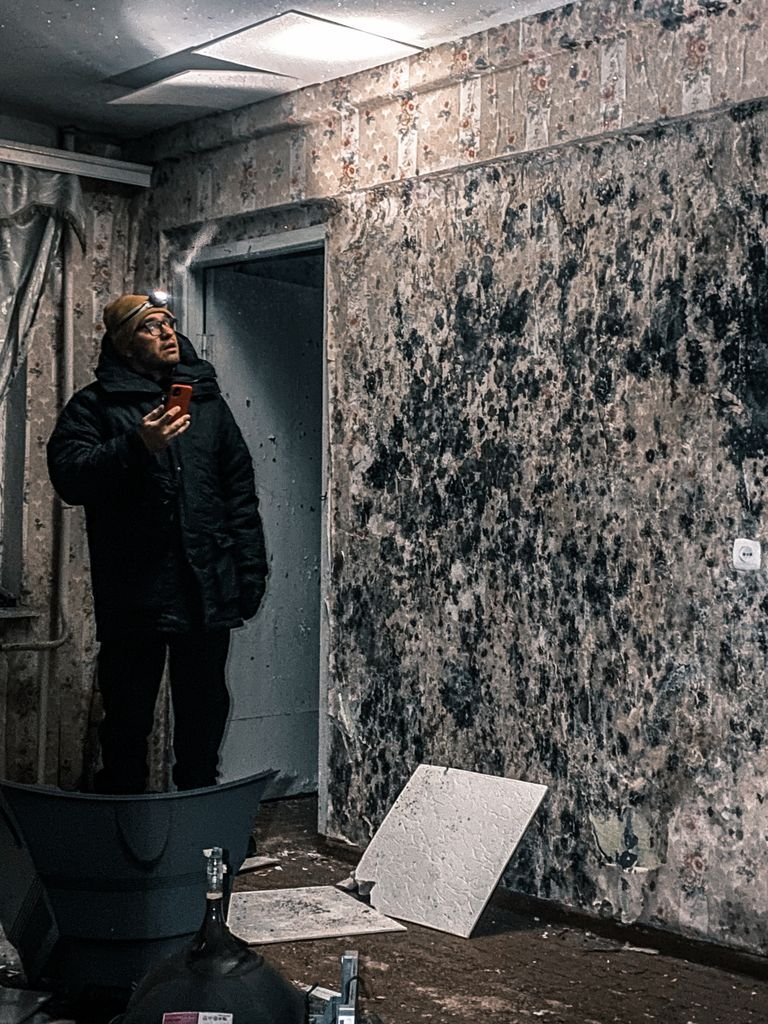
Renters insurance may cover mold damage when the mold results directly from a sudden event covered by the policy, such as a burst pipe or an overflowing appliance.
However, standard renters insurance generally does not cover mold caused by long-term moisture, repeated leaks, high humidity, flooding or a failure to report an obvious water problem.
It is also important to separate three different expenses:
- Damage to the rental building
- Damage to the tenant’s personal belongings
- Additional living expenses if the property becomes temporarily uninhabitable
A landlord may be responsible for repairing the building, while the tenant’s renters insurance may cover damaged possessions and qualifying temporary living costs. The exact result depends on the source of the mold, policy language, lease and applicable state or local law.
When Does Renters Insurance Cover Mold?
Mold damage is most likely to be covered when it is the direct result of a sudden and accidental event already covered by the renters policy.
GEICO explains that renters insurance may cover mold damage resulting from incidents such as burst pipes, overflowing appliances, fire-related water damage and certain storm-related leaks.
Possible covered situations include:
- A pipe suddenly bursts and soaks your furniture.
- A washing machine hose unexpectedly breaks.
- A water heater suddenly fails.
- Firefighters use water to extinguish a covered apartment fire.
- A covered windstorm damages the building and rain enters.
- Water from a neighboring unit suddenly leaks into your apartment.
- A sprinkler system unexpectedly activates during a covered incident.
The underlying event must normally qualify for coverage. The insurer will then determine whether the resulting mold damage is covered, excluded or subject to a separate limit.
Prompt action also matters. If the original water damage was covered but the tenant knowingly allowed wet belongings to remain untreated for weeks, the insurer may dispute some of the later mold damage.
When Is Mold Usually Not Covered?
Renters insurance commonly excludes mold associated with maintenance problems, gradual deterioration or events that are not covered by the policy.
Gradual or repeated leaks
A slow leak behind a sink, wall or appliance may continue for months before mold becomes visible. Because the damage developed gradually rather than from one sudden incident, it is less likely to be covered.
Progressive states that mold resulting from neglect—such as an unaddressed leaking fixture—typically is not covered by renters insurance. See its explanation of mold coverage and exclusions.
High humidity or condensation
Mold caused by ongoing humidity, condensation or insufficient ventilation is usually considered a maintenance or environmental problem instead of a sudden insured loss.
Examples include:
- Repeated condensation around windows
- A consistently damp bathroom
- Wet clothing left in an enclosed area
- Moisture accumulating in a poorly ventilated room
- Furniture pressed against a chronically damp wall
Tenant negligence
Coverage may be denied when the tenant’s actions—or failure to act—caused or worsened the damage.
Possible examples include:
- Regularly allowing a bathtub to overflow
- Leaving a window open during heavy rain
- Failing to report a visible leak
- Ignoring water around an appliance
- Disabling necessary ventilation
- Failing to take reasonable steps to protect belongings after water damage
Whether particular conduct qualifies as negligence depends on the facts and policy language.
Wear and tear or poor maintenance
Renters insurance is designed for covered accidental losses, not routine property maintenance. Mold caused by aging plumbing, deteriorated seals or a long-standing building defect may not be covered under the tenant’s policy.
Responsibility for correcting the building problem may instead fall to the property owner, subject to the lease and applicable law.
External flooding
Standard renters insurance generally does not cover water or mold damage caused by an external flood.
Examples may include:
- A river overflowing
- Storm surge
- Surface water entering the building
- Rapid accumulation of rainwater at ground level
- Mudflow associated with flooding
The Insurance Information Institute notes that flood damage is excluded from standard homeowners and renters policies. Separate contents coverage may be available through the National Flood Insurance Program or a private flood insurer. Review this overview of disasters covered by property insurance.
Sewer or drain backup
A standard renters policy may exclude water and mold damage caused by a sewer or drain backup. Some insurers offer optional water-backup endorsements.
An endorsement must normally be purchased before the loss occurs.
A Quick Mold-Coverage Decision Test
Ask these questions when evaluating a possible mold claim:
- What introduced the moisture?
- Did the water arrive suddenly or accumulate gradually?
- Is the original cause listed as a covered event?
- Did you report the problem promptly?
- Did you take reasonable steps to prevent additional damage?
- Is the claim for the building, your possessions or temporary living costs?
- Does the policy contain a mold exclusion or sublimit?
- Did flooding, sewer backup or neglect contribute to the loss?
The stronger the connection between a sudden covered event and the mold damage, the more likely there may be coverage. The final decision belongs to the insurer after reviewing the evidence and policy.
Does Renters Insurance Pay for Mold-Damaged Belongings?
The personal property portion of renters insurance may cover tenant-owned belongings damaged by mold when the mold resulted from a covered event.
Potentially affected belongings include:
- Clothing
- Furniture
- Mattresses
- Rugs
- Books
- Electronics
- Kitchen items
- Musical instruments
- Sporting equipment
- Tenant-owned appliances
Coverage remains subject to:
- The personal property limit
- The deductible
- Any mold sublimit
- Replacement cost or actual cash value
- Special limits for particular property
- The underlying cause of damage
- Policy exclusions
Our guide to estimating how much personal property coverage you need explains how to inventory belongings and compare their replacement value with the policy limit.
Replacement Cost vs. Actual Cash Value
The valuation method can substantially affect a mold-damage payment.
Replacement cost coverage
Replacement cost coverage generally considers the amount needed to replace a damaged item with a comparable new one, subject to policy limits and claim conditions.
Some policies initially pay the item’s depreciated value and provide the remaining recoverable amount after you replace it and submit receipts.
Actual cash value coverage
Actual cash value generally deducts depreciation based on an item’s age, condition and expected useful life.
Suppose a mold-damaged sofa originally cost $1,600. The insurer determines that its actual cash value immediately before the loss was $900. If the applicable deductible is $500, the simplified calculation would be:
Potential payment = $900 covered value − $500 deductible
Potential payment = $400
If replacement cost coverage applies and a comparable replacement costs $1,700, the claim may be handled differently. The insurer may initially pay the actual cash value and later consider additional reimbursement after replacement.
This example is illustrative. Actual payments depend on policy terms, limits, depreciation and documentation.
Will Renters Insurance Pay for Mold Removal?
Renters insurance does not automatically pay to remove mold from the building.
A renters policy primarily protects the tenant’s personal property, liability exposure and additional living expenses. The landlord’s property insurance generally applies to the structure, although coverage under the landlord’s policy is a separate question.
Mold-removal expenses may fall into different groups:
| Expense | Possible responsible party |
|---|---|
| Removing mold from walls or ceilings | Landlord or property owner |
| Repairing building plumbing | Landlord or property owner |
| Replacing tenant-owned furniture | Tenant’s renters insurer, if covered |
| Cleaning tenant-owned belongings | Tenant’s renters insurer, if covered |
| Hotel and additional meal expenses | Loss-of-use coverage, if applicable |
| Mold caused by tenant negligence | Tenant may be responsible |
| Testing requested by the insurer | Depends on policy and claim approval |
This table provides general guidance only. Leases and landlord-tenant laws differ by state and locality.
Is the Landlord Responsible for Mold?
A landlord may be responsible for investigating and correcting leaks, building defects or other conditions contributing to mold. However, the precise legal duty varies by jurisdiction, lease terms, notice requirements and the cause of the problem.
Notify the landlord or property manager in writing as soon as you discover:
- Visible mold
- Water stains
- A plumbing leak
- A damp wall or ceiling
- Unusual moisture
- A persistent musty odor
- Water entering from another unit
Keep a copy of the notification and any response. Written records can help establish when the problem was reported and what action was taken.
Do not assume the landlord’s insurance will replace your belongings. The landlord’s policy usually protects the building and the landlord’s property—not the tenant’s furniture, clothing or electronics.
If the landlord does not address a serious problem, contact the appropriate local housing, building-code or tenant-assistance agency. Avoid withholding rent, terminating a lease or arranging major repairs without first obtaining guidance about the laws applying in your location.
Does Renters Insurance Cover Temporary Housing Due to Mold?
Loss-of-use coverage may help with additional living expenses if:
- The rental becomes uninhabitable;
- A covered event caused the condition; and
- Temporary relocation is necessary while covered repairs are completed.
Possible reimbursable expenses include:
- A reasonable hotel or short-term rental
- Additional meal costs
- Temporary storage
- Laundry costs
- Additional transportation or parking
- Certain pet-boarding expenses
Coverage generally applies only to the increase above normal living costs.
For example, if you normally spend $400 per month on groceries but spend $650 on meals while staying in a hotel without a kitchen, the potentially additional expense is:
$650 temporary meal cost − $400 normal food cost = $250 additional expense
The entire $650 would not necessarily qualify.
If the mold arose from an excluded event such as flooding or a long-term maintenance condition, loss-of-use coverage may also be unavailable.
Our guide to renters insurance loss-of-use coverage explains qualifying expenses and documentation in more detail.
Does Renters Insurance Pay for Mold Testing?
Standard renters insurance does not necessarily pay for mold testing merely because mold is suspected.
Testing may be considered when:
- The insurer requests it during a covered claim
- A professional assessment is necessary to evaluate damaged property
- Testing forms part of an approved remediation process
- An endorsement provides specific mold coverage
Do not order an expensive test on the assumption that it will automatically be reimbursed. Ask the insurer and property owner first.
The EPA states that when visible mold is present, sampling is often unnecessary and that there are no federal limits for mold or mold spores. The more immediate priority is normally identifying the moisture source and correcting it.
What to Do When You Discover Mold
1. Protect your health and avoid disturbing a large area
Avoid touching, brushing or spreading extensive mold growth. People with health concerns should seek guidance from an appropriately qualified healthcare professional.
2. Photograph the affected area
Take clear photographs and videos showing:
- The mold
- The surrounding room
- Water stains or leaks
- Damaged belongings
- Dates when possible
- The condition before anything is moved
Do not exaggerate or alter the scene.
3. Identify a possible moisture source
Look for visible leaks, recent water incidents, overflowing appliances or storm damage. Do not open walls or perform unsafe inspections.
4. Notify the landlord in writing
Describe the location, approximate size, when you noticed it and any related water problem. Request an inspection and retain a copy of the message.
5. Contact the renters insurer
Explain what happened and ask:
- Does the apparent cause qualify as a covered event?
- Is mold subject to a special limit?
- What deductible applies?
- Are cleaning and testing covered?
- Should damaged items be retained?
- Is professional remediation required?
- Could loss-of-use coverage apply?
6. Prevent further damage when safe
Take reasonable steps such as moving unaffected belongings away from moisture. Do not dispose of damaged property until the insurer says it is acceptable, unless retaining it would be unsafe.
7. Keep all receipts
Save receipts for:
- Emergency lodging
- Meals above normal spending
- Laundry
- Storage
- Transportation
- Cleaning supplies
- Professional services
- Replacement items
Evidence That Can Support a Mold Claim
Useful documentation may include:
- Photographs and videos
- A written incident timeline
- Lease and renters policy
- Maintenance requests
- Messages exchanged with the landlord
- Plumbing or repair reports
- Weather records when relevant
- Receipts for damaged belongings
- Earlier photographs showing their condition
- A home inventory
- Professional inspection reports
- Hotel and additional-expense receipts
- Names of witnesses
- Claim and incident numbers
Your timeline should identify:
- When the water event occurred
- When you discovered moisture
- When mold first became visible
- When you notified the landlord
- When you contacted the insurer
- What steps you took to protect the property
Accurate timing can help distinguish sudden damage from a long-standing problem.
Common Mold-Claim Mistakes
Waiting to report the problem
Delaying notification may allow the damage to worsen and make it harder to establish the original cause.
Cleaning everything before documenting it
Photograph the condition first when it is safe to do so. The insurer may need evidence of the extent and source of the damage.
Throwing away belongings immediately
Ask the insurer whether damaged items must be inspected. If something must be removed for safety, photograph it thoroughly and keep identifying information.
Assuming all water damage is covered
Water from a burst pipe, an external flood and a sewer backup may be treated very differently.
Focusing only on visible mold
The moisture source must be identified and corrected. Cleaning a surface without fixing the leak may allow mold to return.
Assuming the landlord’s policy covers everything
The building and tenant-owned belongings are generally handled under different insurance policies.
Making repairs without authorization
Emergency steps may be necessary, but major work arranged without approval may not be reimbursed.
Safe Cleanup Considerations
The EPA emphasizes that moisture control is the key to controlling mold. Its basic mold-cleanup guidance recommends fixing water problems and drying affected materials.
Hard surfaces may sometimes be cleaned with detergent and water and then dried completely. Porous materials such as carpet, ceiling tiles and some upholstered items may be difficult or impossible to clean fully.
Large contamination, sewage involvement, structural damage or health concerns may require professional assistance. Tenants should coordinate building-related cleanup with the landlord rather than removing walls, ceilings or permanent fixtures themselves.
How to Reduce the Risk of Mold Damage
Practical prevention steps include:
- Report leaks immediately in writing.
- Use bathroom and kitchen ventilation.
- Dry spills promptly.
- Avoid blocking air vents.
- Keep furniture slightly away from persistently cold or damp walls.
- Inspect areas beneath sinks and around appliances.
- Do not leave wet clothing or towels in enclosed spaces.
- Monitor humidity when the home is consistently damp.
- Save copies of maintenance requests.
- Photograph valuable belongings.
- Review renters insurance exclusions and limits.
- Ask about water-backup or additional mold coverage.
Tenants cannot prevent every plumbing or building failure, but prompt reporting and documentation can reduce damage and clarify responsibility.
Frequently Asked Questions
Does renters insurance cover black mold?
The color or common name of the mold does not by itself determine coverage. The insurer generally focuses on what caused the moisture, whether that cause was covered and whether an exclusion or limit applies.
Does renters insurance cover mold from a burst pipe?
It may. Mold resulting directly from a sudden covered pipe burst may qualify, provided the tenant reports the loss promptly and takes reasonable steps to prevent further damage.
Does renters insurance cover mold from a leaking roof?
Possibly, if a covered event such as wind damages the roof and rain enters suddenly. Mold caused by a long-standing, poorly maintained roof leak is less likely to be covered.
Does renters insurance cover mold caused by flooding?
Standard renters insurance usually excludes external flooding. Separate flood insurance may cover eligible personal property, subject to its own terms and limits.
Does renters insurance cover mold on furniture?
Mold-damaged furniture may be covered when the mold results from a covered event. The deductible, valuation method and property limits will affect reimbursement.
Does renters insurance cover mold in a storage unit?
Mold and mildew in a storage unit are commonly excluded, particularly when caused by humidity or gradual moisture. Review both the renters policy and the storage agreement.
Can I receive hotel coverage because of mold?
Possibly, if a covered event caused the mold and the residence is considered uninhabitable. Obtain authorization from the insurer and retain receipts.
Who pays to remove mold from apartment walls?
The landlord or property owner may be responsible for building-related remediation, depending on the cause, lease and local law. Renters insurance primarily protects the tenant’s belongings and qualifying additional living expenses.
Can a mold claim be denied because I reported it late?
Late reporting can make coverage more difficult, especially if the delay allowed the damage to worsen. Report water and mold problems promptly.
Final Thoughts
Does renters insurance cover mold? Sometimes—but usually only when the mold is a direct consequence of a sudden event covered by the policy.
Mold caused by a burst pipe or unexpectedly overflowing appliance may qualify. Mold caused by gradual leaks, humidity, poor maintenance, external flooding or tenant negligence is commonly excluded.
Determine what caused the moisture before assuming coverage. Document the damage, notify the landlord in writing, contact the insurer promptly and preserve receipts and other evidence.
Most importantly, separate the building problem from damage to your belongings and temporary living expenses. Different policies and parties may be responsible for each part of the loss.
This article is for general educational purposes only and does not constitute individualized insurance, legal, medical or financial advice. Coverage, landlord obligations and tenant rights vary by policy and jurisdiction. Review your documents and consult appropriately qualified professionals regarding your circumstances.