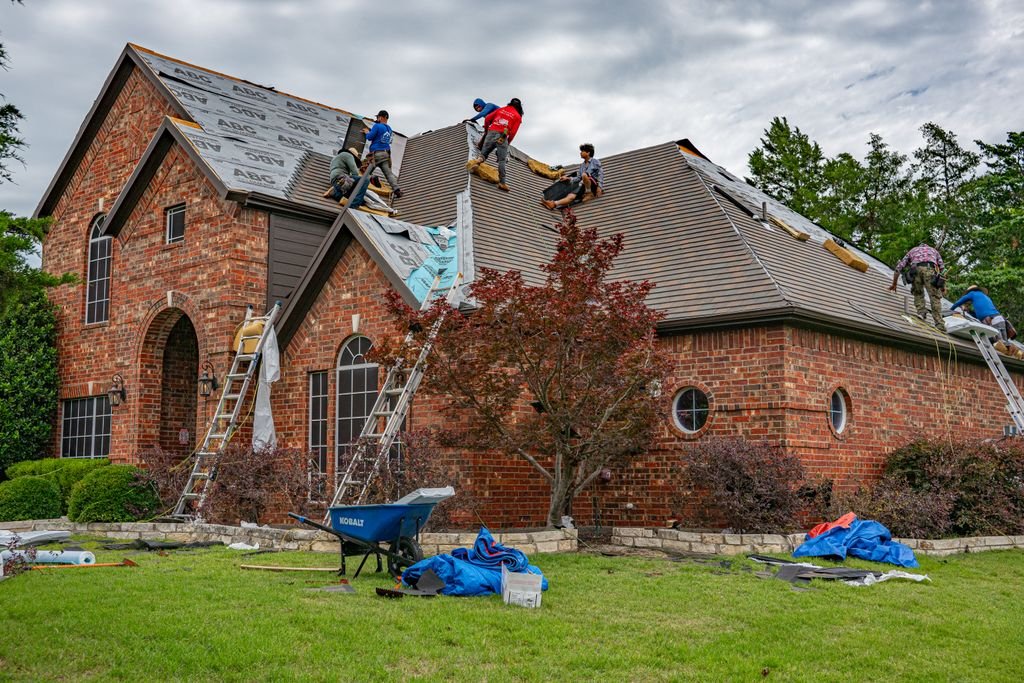
Homeowners insurance may pay to repair or replace a roof when a sudden event covered by the policy—such as wind, hail, fire, or a falling tree—causes the damage. It generally will not pay for a roof simply because it is old, worn out, improperly installed, or poorly maintained.
That distinction is the foundation of a successful roof claim. The goal is not to persuade an insurer to buy you a new roof regardless of the facts. It is to document a covered loss, follow the policy’s claim requirements, obtain a complete damage assessment, and make sure the settlement reflects the coverage you purchased.
If you want to know how to get insurance to pay for roof replacement, begin with the cause of damage—not the cost of a new roof. Then review the policy, protect the property, preserve evidence, notify the insurer promptly, and compare the adjuster’s scope with a detailed contractor estimate.
Quick answer: Insurance is most likely to help when a covered event caused direct physical roof damage during the policy period. Take photos and video before cleanup, prevent additional damage without making extensive permanent repairs, file the claim promptly, keep every receipt, attend the inspection, and request a written, itemized coverage decision. Coverage, deductibles, roof age provisions, depreciation, exclusions, and state law determine the actual payment.
When Will Homeowners Insurance Pay for a Roof?
A standard homeowners policy typically protects the dwelling from specified causes of loss, often called perils. Whether a roof qualifies depends on the policy form, endorsements, exclusions, the cause of damage, and the evidence.
Common potentially covered causes include:
- Wind that lifts or tears off shingles
- Hail that physically damages roofing materials
- A tree or large branch falling on the roof
- Fire or smoke damage
- Lightning
- Weight of ice or snow, if covered by the policy
- A sudden accidental event listed or not excluded by the policy
Common reasons a roof may not be covered include:
- Normal aging and deterioration
- Long-term leaks, rot, mold, or repeated seepage
- Deferred maintenance
- Insect or animal damage excluded by the policy
- Faulty workmanship or defective materials, depending on policy wording
- Cosmetic damage exclusions
- Wind or hail exclusions
- Damage below a separate wind/hail deductible
- A cause covered only by a separate policy, such as flood
Coverage for the roof itself is part of dwelling protection, but the details matter. Our guide to home insurance dwelling coverage explains what Coverage A generally protects and why the dwelling limit is not a guaranteed payout for every loss.
First, Confirm What Caused the Damage
The insurer does not replace a roof solely because it failed. It investigates why the failure happened.
Suppose water enters through missing shingles after a severe windstorm. The policy may cover repairing the storm-created opening and resulting interior damage, subject to its terms. If water has slowly entered around neglected flashing for several years, the insurer may classify the problem as deterioration or maintenance rather than a sudden covered loss.
Multiple causes can also exist at once. A roof may be old but still sustain new hail damage. Age does not automatically eliminate coverage, yet it can affect whether the policy pays replacement cost or depreciated value. The inspection must distinguish recent event damage from ordinary wear.
If the immediate issue is water intrusion, see Does Homeowners Insurance Cover Roof Leaks? for a focused explanation of covered causes and maintenance exclusions.
1. Protect the Property and Put Safety First
After a storm or other event, keep everyone away from unstable areas, fallen power lines, broken trees, and wet electrical systems. Do not climb onto a damaged or steep roof to collect evidence.
Most policies require the policyholder to take reasonable steps to prevent additional damage. Appropriate temporary measures may include:
- Moving belongings away from active leaks
- Catching water in containers
- Covering exposed property
- Hiring a qualified contractor for emergency tarping
- Boarding a storm-created opening when safe and permitted
Photograph the damage before temporary work begins whenever it is safe to do so. Save invoices, receipts, and the contractor’s written description of the emergency work. Temporary repairs usually count toward the total claim settlement; they are not unlimited extra funds.
Avoid extensive permanent repairs until the insurer has had a reasonable opportunity to inspect, unless waiting would create a safety hazard or cause further loss. Never delay emergency action merely to preserve evidence—document it first if possible and keep removed materials when safe.
2. Read the Roof Provisions in Your Policy
Review the declarations page, coverage form, exclusions, and endorsements. Do not rely only on a sales summary or what a neighbor’s insurer paid.
Look for these terms:
| Policy item | Why it matters |
|---|---|
| Covered causes of loss | Identifies which events can trigger coverage |
| Wind/hail exclusion | May eliminate coverage for common storm damage |
| Named-storm or wind/hail deductible | Can be larger than the standard deductible and may be a percentage |
| Replacement cost value (RCV) | May pay the cost of comparable new materials without depreciation once conditions are met |
| Actual cash value (ACV) | Subtracts depreciation based on age, condition, and other factors |
| Roof-surface payment schedule | May limit payment according to roof age and material |
| Cosmetic damage exclusion | May exclude appearance-only dents or marks that do not affect function |
| Matching rules or limitations | Affects whether undamaged materials must be replaced to achieve a reasonably uniform appearance |
| Ordinance or law coverage | May help with added costs required by current building codes |
| Duties after loss | Lists notice, documentation, inspection, proof-of-loss, and cooperation requirements |
| Claim deadline | Sets a time limit that may also be affected by state law |
If a term is unclear, ask the insurer or agent to identify the exact policy language that applies. Request answers in writing when possible.
The difference between RCV and ACV can be substantial. Review Replacement Value vs. Actual Cash Value before comparing a contractor’s full replacement estimate with the insurer’s first check.
3. Document the Roof Damage Thoroughly
Strong documentation connects a specific event to specific physical damage. Create a claim folder and preserve:
- Wide photos showing each affected roof slope from a safe location
- Close-up photos taken by a qualified inspector or contractor
- Video of leaks, damaged ceilings, or water entry
- Date-stamped photos from before the event, if available
- Weather alerts or local storm reports
- Tree-removal or emergency-service records
- Maintenance and prior repair records
- Roof installation invoice, permit, warranty, and material details
- Receipts for temporary repairs
- Photos of damaged shingles or components removed during emergency work
- A room-by-room list of related interior damage
Do not edit images in a way that changes the damage. Keep original files and make copies for annotations if needed.
Write a short timeline: when the event occurred, when you first observed damage, what emergency action you took, and whom you contacted. Avoid guessing about technical causes. State what you personally observed and let qualified professionals evaluate the roof.
4. Notify the Insurance Company Promptly
Contact the insurer using the claim number, website, or app listed in your policy documents. Ask:
- Is the reported cause potentially covered?
- Which deductible applies?
- Is the roof settled at RCV, ACV, or under a payment schedule?
- What is the claim number?
- What documents and estimates are required?
- Will an adjuster inspect the property?
- Is there a proof-of-loss deadline?
- May emergency repairs proceed before inspection?
- Are there deadlines for completing repairs or recovering depreciation?
Give accurate facts without exaggerating or minimizing the loss. Report the date, general cause, affected areas, and emergency action. Do not state that an entire replacement is required unless a qualified assessment supports it.
Record the representative’s name, the date and time, and the next step. Confirm important conversations by email or through the insurer’s claim portal.
5. Get a Detailed Roof Inspection and Written Estimate
Obtain an assessment from a licensed, insured roofing contractor where licensing is required. For a complex structural question, an engineer or independent roof consultant may be appropriate.
A useful estimate should be itemized rather than showing one total. It may include:
- Roof measurements and affected slopes
- Roofing type and material specification
- Tear-off and disposal
- Underlayment and ice/water barrier
- Flashing, drip edge, vents, valleys, and pipe boots
- Decking replacement where damage is documented
- Labor rates
- Permit costs
- Required code upgrades
- Overhead and profit when applicable
- Photos tied to specific line items
Ask the contractor to separate storm damage from maintenance issues. An estimate does not determine coverage; the policy does. But a clear scope gives the adjuster concrete items to review.
Be cautious if a contractor promises to “get you a free roof,” tells you damage exists before inspecting, offers to manufacture damage, or asks you to sign over all insurance rights immediately.
6. Attend the Insurance Adjuster’s Inspection
Arrange for you or a trusted representative to be present. If practical, coordinate with your roofer so the contractor and adjuster can examine the same areas.
Before the inspection:
- Prepare your damage timeline
- Organize photos and receipts
- Mark interior leak locations
- Have the contractor’s report ready
- List every affected component you want inspected
During the inspection, point out observable damage without coaching the adjuster toward a predetermined conclusion. Ask whether the adjuster inspected every roof slope, flashing area, vent, gutter, and affected interior room.
Afterward, request the adjuster’s estimate and the insurer’s written coverage explanation. The estimate should show quantities, prices, depreciation, deductible, and any non-covered line items.
7. Understand How the Roof Payout Is Calculated
The replacement estimate is not necessarily the first payment. The basic components are:
Actual Cash Value
ACV generally means replacement cost minus depreciation. An older roof can therefore receive a much smaller payment than the cost of installing a new one.
Replacement Cost Value
With RCV coverage, the insurer may initially pay ACV, less the deductible, and hold back recoverable depreciation. After you complete repairs and submit required invoices or proof, it may release eligible depreciation up to the covered replacement cost and policy limits.
For example, if the insurer agrees that covered replacement costs $18,000, calculates $6,000 in recoverable depreciation, and applies a $2,000 deductible, the initial payment might be based on $12,000 ACV minus the deductible. The remaining eligible amount may be released after documented completion. This is only an illustration; policy wording controls the real settlement.
Deductible
You are responsible for the applicable deductible. Some policies have a separate percentage deductible for wind, hail, hurricanes, or named storms. A 2% deductible may be calculated from the dwelling limit rather than from the roof-repair amount, producing a larger out-of-pocket cost than expected.
Nonrecoverable Depreciation
Some policies settle the roof only at ACV or make some depreciation nonrecoverable. If so, completing the work does not automatically create an additional payment.
Code Upgrades
Modern codes may require materials or methods not present on the old roof. Ordinance or law coverage may help, but only within its terms and limit. Ask the adjuster to identify code-related line items separately.
8. Compare the Insurer’s Scope With the Contractor’s Scope
Do not compare only the bottom-line totals. Review the two estimates line by line.
Differences often involve:
- Roof measurements
- Number of damaged slopes
- Repair versus full replacement
- Shingle type and quality
- Flashing and ventilation
- Underlayment
- Starter strips and ridge caps
- Labor or disposal rates
- Steep or high-roof charges
- Decking
- Permits and code requirements
- Matching of discontinued materials
Ask your contractor to prepare a supplement with photos, measurements, code citations where appropriate, and itemized costs. Send it through the insurer’s approved channel and ask for a written response to each material difference.
A contractor’s higher estimate does not automatically prove underpayment, and an insurer’s estimate is not automatically complete. Evidence should resolve the disagreement.
9. Respond to an Underpaid or Denied Roof Claim
If the insurer denies the claim or approves only a repair, request a written decision that cites the relevant policy provisions and factual findings.
Then take these steps:
- Check the stated cause. Did the insurer attribute damage to wear, faulty installation, or an excluded event? Compare that conclusion with your evidence.
- Correct factual errors. Supply missing photos, dates, maintenance records, measurements, or professional reports.
- Request reinspection. Explain why another inspection is warranted and ask whether a different adjuster or specialist can attend.
- Submit an itemized supplement. Connect each requested cost to documented covered damage.
- Escalate internally. Ask for a claim supervisor or formal appeal/review process.
- Review the appraisal clause. Appraisal usually addresses the amount of loss, not whether the policy covers the cause. Costs and rules vary.
- Contact the state insurance department. It can explain consumer rights and accept complaints, though it generally does not replace a court or decide every factual dispute.
- Consider qualified legal advice. A policyholder attorney may be appropriate for a substantial claim involving disputed coverage, missed deadlines, or alleged bad faith.
Before hiring a public adjuster, check licensing with your state insurance department, understand the fee, and read the cancellation and payment provisions. Public adjusters represent policyholders for a fee; they do not guarantee coverage or a larger settlement.
Repair Versus Full Roof Replacement
Insurance may approve a localized repair rather than replacement of the entire roof when the damaged area can be restored with materials of like kind and quality. A full replacement may be more supportable when:
- Covered damage affects multiple slopes or a large portion of the roof
- Repair would not restore the roof’s function
- Compatible materials are unavailable
- Local building code requires broader replacement
- Removing damaged material necessarily affects adjacent roofing
- A qualified report documents that spot repair is impractical
Matching rules vary by state and policy. A color difference alone does not always require full replacement, especially if the policy has a cosmetic-damage limitation. Document availability, compatibility, and code issues instead of relying only on appearance.
Common Mistakes That Weaken a Roof Claim
Waiting Too Long to Report Damage
Delay can make it harder to connect damage to the reported event and may violate policy deadlines. Report promptly, even if you are still collecting estimates.
Making Permanent Repairs Before Inspection
Removing all damaged material can destroy evidence. Perform necessary emergency work, document it, and preserve materials where safe.
Filing a Claim Without Checking the Deductible
If the covered damage is below or only slightly above the deductible, a claim may produce little or no payment. Ask a qualified person to assess damage and review the deductible before deciding, while still respecting notice deadlines.
Treating Maintenance as Storm Damage
Old granule loss, brittle shingles, rot, and long-term flashing problems are not transformed into covered damage by a recent storm. Misrepresenting the cause can jeopardize the claim.
Accepting an Unitemized Contractor Proposal
A one-page price provides little basis for resolving scope differences. Ask for measurements, materials, quantities, and labor details.
Letting a Contractor Waive the Deductible
Deductible-waiver arrangements may be illegal or fraudulent in some states, particularly when a contractor inflates an invoice or conceals the waiver from the insurer. Pay the required deductible and keep transparent records.
Signing Broad Documents Without Reading Them
Assignment-of-benefits, direction-to-pay, contingency, and authorization forms can transfer significant control or payment rights. Understand the document and state rules before signing.
What Insurance Usually Does Not Pay For
Even when a claim includes covered damage, homeowners insurance usually does not function as a roof maintenance plan. It may not pay for:
- Replacement solely due to age
- Routine maintenance
- Better or more expensive materials than necessary to restore like kind and quality
- The deductible
- Excluded causes
- Undocumented upgrades
- Damage exceeding policy limits
- Work unrelated to the covered event
The Texas Department of Insurance explains that insurers do not pay for a new roof simply because the existing one is old or worn out. It also notes that older roofs may be covered at ACV rather than replacement cost and that a separate wind/hail deductible can increase out-of-pocket expense.
How to Avoid Roof-Claim Scams
Storms often attract aggressive contractors. Watch for anyone who:
- Appears uninvited and demands an immediate signature
- Claims to be “sent by” your insurer without verification
- Promises the insurer will buy a roof before reviewing the policy
- Offers to waive or hide your deductible
- Requests a large cash payment upfront
- Refuses to provide licensing or insurance information
- Suggests creating, enlarging, or mislabeling damage
- Pressures you to assign the entire claim
- Provides no written scope, warranty, or cancellation terms
Verify the business, license requirements, insurance, local address, references, and complaint history. Obtain more than one estimate when feasible. Do not pay the full contract price before satisfactory completion and required inspections.
Frequently Asked Questions
Will insurance replace a 20-year-old roof?
It may pay for covered event damage, but age can affect the settlement. The policy might pay ACV, apply a roof-surface schedule, limit coverage, or exclude a deteriorated roof. Insurance generally does not replace a roof merely because it reached the end of its expected life.
Does homeowners insurance cover a leaking roof?
It may cover a leak and resulting damage when a covered sudden event created the opening. It generally does not cover leakage caused by long-term wear, neglect, rot, or an excluded event. Policy wording and the documented cause control.
How many shingles must be damaged before insurance replaces the roof?
There is no universal shingle count. The decision depends on the extent and type of covered damage, repairability, material availability, building code, state matching rules, and policy terms.
Should I call a roofer or insurance company first?
Protect the property first. You may obtain a safe preliminary inspection, but notify the insurer promptly and do not allow extensive permanent work before it can inspect. Avoid contractors that promise coverage or pressure you to sign immediately.
Can I keep extra money from a roof claim?
The settlement must be used and documented according to the policy, repair contract, mortgage requirements, and state law. RCV policies often require proof of completed repairs before releasing withheld depreciation, and lenders may control structural claim funds.
What if my roofing estimate is higher than the adjuster’s estimate?
Compare the scopes line by line. Ask the contractor for measurements, photos, material specifications, labor details, and code support, then submit a supplement. A difference in total price alone does not establish the correct amount.
Can an insurer deny a claim because the roof is old?
An old roof can still sustain covered damage, but deterioration itself is generally not covered. Age can also change the valuation method. Ask the insurer to identify the damage findings and exact policy language supporting its decision.
What is recoverable depreciation on a roof claim?
It is an amount withheld from an initial ACV payment that may become payable after eligible repairs are completed and documented under an RCV policy. Deadlines and proof requirements vary, and depreciation is not recoverable under every policy.
Can I challenge a denied roof claim?
Yes. Request the written reason and cited policy provisions, correct factual errors, supply additional evidence, request reinspection, and use the insurer’s review process. Depending on the dispute, appraisal, a state insurance complaint, or legal advice may be appropriate.
Bottom Line
The best way to get insurance to pay for roof replacement is to prove that a covered event—not ordinary age or maintenance—caused the loss. Review the policy before assuming replacement is covered, document the damage safely, report it promptly, obtain an itemized professional estimate, and compare that scope with the insurer’s written assessment.
If the claim is underpaid or denied, focus on facts, policy language, measurements, photographs, and qualified reports. A complete record is far more useful than a promise from a contractor or claims company that every damaged roof qualifies for a free replacement.
This article provides general educational information and is not insurance, legal, construction, or financial advice. Coverage depends on the complete policy, endorsements, exclusions, loss facts, insurer investigation, and applicable state law. Contact your insurer, licensed insurance professional, qualified contractor, state insurance department, or attorney for guidance about a specific claim.