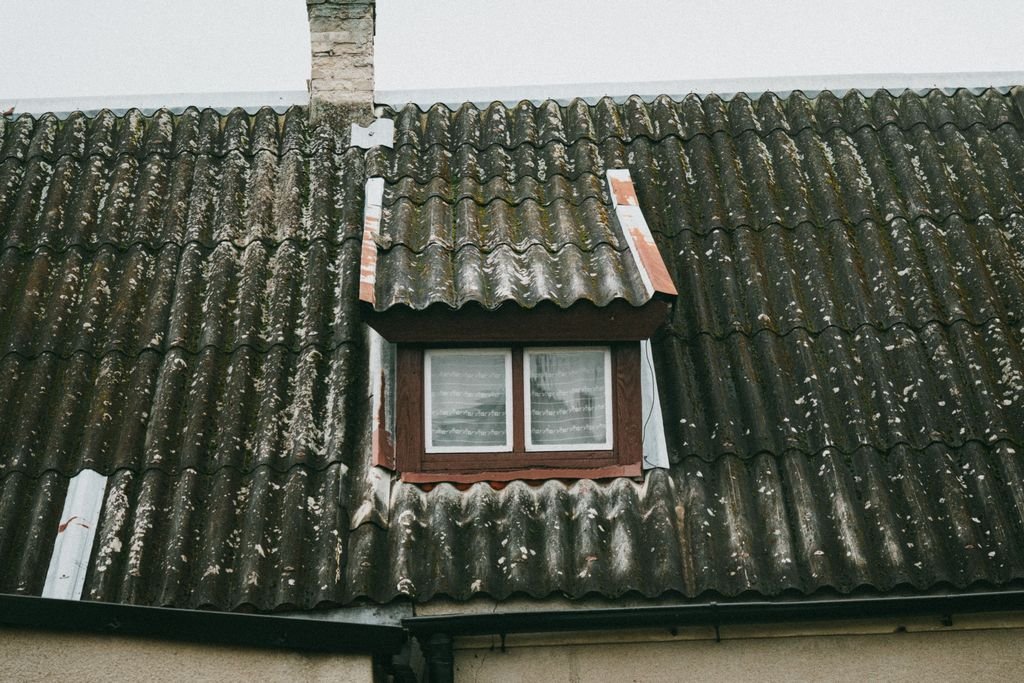
Homeowners insurance may cover a roof leak when it results from a sudden event covered by your policy, such as wind, hail, fire, or a falling tree. It generally will not pay to repair a roof that leaks because it is old, deteriorated, improperly maintained, or gradually worn out.
The cause of the leak matters more than the fact that water entered your home.
A claim may also have two separate parts: damage to the roof and resulting damage inside the house. An insurer could handle these differently. For example, it might deny replacement of an aging roof while covering certain interior water damage caused by a sudden storm-created opening.
Coverage ultimately depends on your policy, roof condition, deductible, endorsements, and the insurer’s investigation.
When Does Homeowners Insurance Cover Roof Leaks?
Homeowners insurance commonly covers direct physical damage caused by perils listed in the policy or not specifically excluded by an open-perils policy.
A roof leak is more likely to be covered when all the following are true:
- A covered event caused the roof damage
- The damage was sudden and accidental
- The roof was reasonably maintained
- You reported the loss promptly
- You took reasonable steps to prevent further damage
- The repair cost exceeds the applicable deductible
- No exclusion or coverage limitation applies
The Insurance Information Institute explains that standard homeowners insurance commonly protects a home against events such as fire, windstorms, hail, and lightning, while excluding routine wear and tear. Its overview of standard homeowners insurance coverage provides a useful summary of these distinctions.
Covered Causes of Roof Leaks
The following situations may result in a covered claim, subject to your policy.
Windstorm damage
Strong wind can lift, crack, loosen, or remove roof shingles. If rain then enters through the storm-created opening, the policy may cover damage to the roof and affected areas inside the home.
The insurer may examine weather records and the condition of surrounding roofs to determine whether wind caused the reported damage.
Hail damage
Hail can crack shingles, damage flashing, expose the underlying roof material, or reduce the roof’s ability to keep out water.
Coverage may depend on:
- The size and intensity of the hail
- The roof’s age and condition
- Whether the marks represent functional or cosmetic damage
- The policy’s wind-and-hail provisions
- Any separate hail deductible
- Whether the roof is insured at replacement cost or actual cash value
Some policies limit cosmetic hail damage that does not prevent the roof from performing its intended function.
A fallen tree or branch
If a tree or large branch falls during a storm and punctures the roof, homeowners insurance may cover the resulting roof and interior damage.
Coverage for removing the tree itself can depend on where it fell, whether it damaged an insured structure, and the policy’s debris-removal limit.
Fire damage
A fire may damage roof decking, shingles, insulation, framing, and other structural components. Water used to extinguish the fire may cause additional damage.
A standard homeowners policy generally covers fire unless a specific exclusion applies.
Lightning
Lightning may directly damage roofing materials or start a covered fire. Resulting water entry could be included in the same claim if the damage is otherwise covered.
Ice and snow damage
The weight of accumulated snow or ice may damage certain roofs. Ice dams can also allow water to enter beneath shingles.
Coverage varies considerably. Insurers may evaluate whether the loss resulted from a covered event or from inadequate maintenance, long-term deterioration, or failure to prevent repeated ice buildup.
Vandalism
If someone intentionally damages the roof and creates an opening that allows rain inside, the policy may cover the resulting loss. Vacant-home restrictions may apply if the property was unoccupied for an extended period.
When Are Roof Leaks Not Covered?
Homeowners insurance is not a roof-maintenance plan. It generally does not pay for deterioration that occurs gradually or for replacement merely because the roof has reached the end of its useful life.
The Insurance Information Institute’s roof protection guidance emphasizes that homeowners remain responsible for roof maintenance and replacement due to normal wear and tear.
Common reasons for denial include the following.
Normal wear and tear
Shingles gradually lose granules, curl, crack, or become brittle. Flashing may deteriorate, and sealants can fail over time.
These aging-related conditions are usually considered maintenance issues rather than sudden insured losses.
An old roof
A roof is not automatically excluded because of its age. However, age can affect:
- Whether an insurer agrees to issue or renew the policy
- Whether the roof receives replacement-cost or depreciated coverage
- The amount of the claim payment
- Whether special roof restrictions apply
- Whether the insurer attributes the leak to deterioration instead of a storm
The Texas Department of Insurance explains that an insurer will not ordinarily pay for a new roof simply because the existing one is old or worn out. Its current roof and insurance guidance also recommends routine maintenance and careful review of roof coverage.
Gradual leaks
A small leak that develops over several months may cause stained drywall, damaged insulation, rotted wood, or mold.
Policies frequently exclude leakage or seepage that occurs gradually. The Texas Department of Insurance notes that home policies commonly cover sudden and accidental water damage but generally exclude damage caused by gradual leaks.
Neglected maintenance
A claim could be denied when the homeowner:
- Ignored missing shingles
- Failed to repair known flashing damage
- Allowed gutters to remain blocked
- Did not address visible sagging or decay
- Ignored previous leaks
- Failed to make reasonable temporary repairs after a storm
Maintenance records can become important when an insurer investigates whether damage was sudden or long-term.
Faulty workmanship
A roof installed or repaired incorrectly may leak because of defective workmanship.
The cost of correcting the contractor’s faulty work may be excluded. However, some policies may cover separate resulting damage caused by the defect. Policy wording varies, so do not assume either outcome.
A contractor warranty or workmanship guarantee may provide another possible remedy.
Manufacturer defects
Defective shingles or roofing materials may not be covered as an insured peril. A manufacturer’s warranty could apply instead.
Coverage for separate ensuing damage depends on the policy.
Flooding
Standard homeowners insurance generally does not cover flood damage. Flood coverage is normally purchased separately through the National Flood Insurance Program or a private flood insurer.
This distinction matters when water rises from the ground and enters the home, even if damage is discovered near the roof or upper walls during the same storm.
Insects, pests, and rot
Damage from termites, insects, rodents, dry rot, or long-term moisture is commonly excluded because it develops gradually.
Our guide explaining whether homeowners insurance covers termite damage examines how insurers usually treat pest-related structural deterioration.
Roof Repair and Interior Water Damage May Be Evaluated Separately
A claim is not always an all-or-nothing decision.
Suppose an aging roof has deteriorated around the flashing, allowing water to enter during ordinary rain. The insurer may conclude that replacing the worn flashing and roof materials is the homeowner’s responsibility.
Depending on the policy and circumstances, the insurer may still evaluate resulting interior damage separately. However, gradual leakage exclusions could also prevent coverage for the ceiling, insulation, drywall, flooring, or mold.
Consider another example: strong wind tears shingles from a well-maintained roof, and rain damages the attic and ceiling that night. In that situation, both the roof opening and resulting interior damage are more likely to be treated as part of a sudden covered loss.
The key questions are:
- What caused the original opening?
- When did the damage occur?
- Was it sudden or gradual?
- Was the roof reasonably maintained?
- Did the homeowner prevent further damage?
- Does the policy cover rain entering under these circumstances?
Does Homeowners Insurance Cover Water Damage From a Leaking Roof?
It may, when the water damage directly results from a covered event.
Potentially covered interior damage can include:
- Wet drywall and ceilings
- Damaged insulation
- Electrical components
- Flooring
- Built-in cabinets
- Personal belongings
- Necessary tear-out to access covered damage
Coverage may be unavailable when water entered because of long-term roof deterioration, repeated seepage, poor maintenance, or an excluded cause.
Most policies also apply different limits and settlement methods to the building and personal property. Review both dwelling and personal-property coverage.
Does Homeowners Insurance Cover Mold From a Roof Leak?
Mold coverage is often limited or excluded.
If mold develops shortly after a sudden covered roof loss, the policy may provide limited remediation coverage. If it results from a leak that continued for weeks or months, coverage is less likely.
The Texas Department of Insurance explains that gradual leaks and associated mold damage are commonly excluded, while some insurers may offer additional mold-cleanup coverage. See its guidance on water damage and mold claims.
Act quickly when moisture enters the home. Delaying water removal can increase both the damage and the possibility of a coverage dispute.
Replacement Cost vs. Actual Cash Value for Roof Damage
Your settlement can depend heavily on whether the damaged roof is insured at replacement cost value or actual cash value.
Replacement cost value
Replacement cost value, or RCV, generally pays the reasonable cost of repairing or replacing covered damaged property with material of similar kind and quality, without permanently subtracting depreciation.
Some insurers initially issue a payment based on depreciated value and release recoverable depreciation after repairs are completed and documented.
Actual cash value
Actual cash value, or ACV, generally subtracts depreciation based on the roof’s age, condition, and expected useful life.
An older roof can therefore produce a substantially smaller payment even when the underlying loss is covered.
The National Association of Insurance Commissioners provides a detailed explanation of replacement cost and actual cash value for roofs.
Simple claim example
Assume:
- Covered roof repair cost: $14,000
- Applicable deductible: $2,000
- Depreciation under ACV coverage: $5,000
A simplified calculation would be:
$14,000 repair cost − $5,000 depreciation − $2,000 deductible = $7,000 estimated payment
Actual claim settlements may include coverage limits, partial repairs, contractor pricing, endorsements, matching restrictions, and other policy provisions.
How Your Deductible Affects a Roof-Leak Claim
A deductible is the amount of a covered property claim you are responsible for paying.
Suppose covered repairs total $6,500 and your deductible is $2,500. A simplified estimated payment would be $4,000.
If covered damage totals less than the deductible, the policy generally will not produce a payment.
Check for more than one deductible. Your policy might contain:
- A standard all-peril deductible
- A separate wind-and-hail deductible
- A named-storm deductible
- A hurricane deductible
- A special roof deductible
Some storm deductibles are calculated as a percentage of the dwelling limit rather than a fixed amount. The NAIC explains that named-storm deductibles can range from 1% to 10% of the insured value in some policies and locations.
For example, a 2% deductible on a home insured for $350,000 would equal $7,000.
Should You File a Claim for a Roof Leak?
A roof leak does not automatically mean that filing a claim is the best choice.
Before filing, consider:
- The suspected cause of damage
- Estimated repair costs
- Your deductible
- Whether the loss appears sudden
- The age and condition of the roof
- Whether you recently filed other claims
- Whether temporary repairs are urgently required
- Whether the policy provides ACV or RCV coverage
Do not delay necessary emergency measures while deciding. Preventing additional damage is usually part of the policyholder’s responsibility.
You may contact the insurer or agent to understand the policy, but ask whether the conversation will be recorded as a formal claim. Insurer practices differ.
What to Do Immediately After Discovering a Roof Leak
Take these steps when it is safe to do so:
- Move people and valuable belongings away from the affected area.
- Place containers beneath active drips.
- Turn off electricity to affected areas if water creates an electrical hazard.
- Photograph and record video of the leak and visible damage.
- Record the date, time, weather, and when you first noticed the problem.
- Contact the insurer promptly if a covered event may be responsible.
- Arrange reasonable temporary protection, such as professional tarping.
- Keep damaged materials unless the insurer authorizes disposal.
- Save receipts for emergency work and temporary repairs.
- Avoid permanent repairs until the insurer has had an opportunity to inspect, unless delay would cause additional damage.
Do not climb onto a wet, icy, storm-damaged, or structurally unsafe roof. Hire a qualified professional.
State insurance regulators commonly recommend taking photographs or video as soon as it is safe and retaining damaged items until an adjuster provides instructions.
How to File a Roof-Leak Insurance Claim
1. Review the policy
Look for:
- Covered perils
- Water-damage exclusions
- Roof endorsements
- Wind-and-hail provisions
- Deductibles
- ACV or RCV settlement terms
- Duties after a loss
- Claim-reporting deadlines
2. Notify the insurer
Provide basic facts without guessing:
- When you discovered the leak
- Recent weather conditions
- The affected rooms
- Known roof damage
- Emergency steps already taken
Avoid presenting an uncertain cause as established fact.
3. Document everything
Create a claim file containing:
- Photographs and videos
- Roof inspection reports
- Maintenance records
- Previous repair receipts
- Contractor estimates
- Weather reports
- Damaged-property inventory
- Emails and claim correspondence
- Receipts for temporary repairs
4. Obtain a professional assessment
A qualified roofer can identify missing shingles, damaged flashing, punctures, deteriorated decking, and likely entry points.
Avoid contractors who promise that insurance will automatically pay for a complete roof replacement.
5. Meet the adjuster
Show the adjuster:
- All affected areas
- Roof and interior damage
- Before-and-after photographs
- Inspection and maintenance documentation
- Emergency repair receipts
- Damaged personal property
Ask for a written explanation of the estimate, depreciation, deductible, and coverage decision.
6. Review the settlement
Compare the insurer’s estimate with contractor proposals. Differences can arise from measurements, labor rates, material quality, code requirements, or the identified scope of damage.
Do not assume the first estimate is necessarily final.
What If the Roof-Leak Claim Is Denied?
First, request the denial in writing. It should identify the policy language and reason supporting the decision.
Common reasons include:
- Wear and tear
- Long-term deterioration
- Gradual leakage
- Improper installation
- Lack of maintenance
- Damage below the deductible
- An excluded peril
- Insufficient evidence of storm damage
- Failure to report promptly
Next:
- Review the cited policy provisions.
- Ask the adjuster to explain the evidence used.
- Submit additional photographs, maintenance records, or contractor findings.
- Request a reinspection when appropriate.
- Follow the insurer’s internal appeal process.
- Contact your state department of insurance if you believe the claim was handled improperly.
- Consult a qualified attorney or licensed claims professional when the amount justifies it.
Disagreeing with an estimate is different from proving that a loss is covered. Focus first on the cause of damage and applicable policy language.
How to Reduce the Risk of Roof Leaks
Regular maintenance can prevent damage and strengthen your documentation if a sudden loss occurs.
Homeowners should consider:
- Inspecting the roof after major storms
- Replacing missing or damaged shingles
- Checking flashing around chimneys, vents, and skylights
- Keeping gutters and downspouts clear
- Trimming branches near the roof
- Repairing damaged seals
- Monitoring attic moisture and ventilation
- Addressing ceiling stains immediately
- Keeping dated inspection photographs
- Retaining roofing invoices and warranties
Insurance may cover sudden damage, but routine maintenance remains the homeowner’s responsibility.
The same distinction applies to other home systems. For example, coverage for a damaged water heater or sewer line replacement generally depends on the cause rather than simply on which component failed.
Frequently Asked Questions
Does homeowners insurance cover a leaking roof caused by rain?
Rain alone is not usually the deciding factor. Coverage is more likely when a covered event, such as wind or hail, first damages the roof and allows rain to enter. Leakage caused by deterioration or poor maintenance is commonly excluded.
Will homeowners insurance pay for a complete roof replacement?
It may pay for necessary replacement when a covered loss causes sufficient damage. It generally will not replace a roof merely because it is old. The payment can also depend on ACV or RCV terms, deductibles, and roof endorsements.
Does homeowners insurance cover an old leaking roof?
Coverage is less likely when the leak results from age, wear, or deterioration. An old roof can still suffer covered storm damage, but depreciation or special roof provisions may reduce the payment.
Does homeowners insurance cover ceiling damage from a roof leak?
It may cover ceiling damage when it results from a sudden covered roof loss. Damage caused by gradual leakage, seepage, or neglected maintenance may be excluded.
Are missing shingles covered by insurance?
Missing shingles may be covered if a covered windstorm or another insured event removed them. Shingles that deteriorated or detached because of age and poor maintenance are generally not covered.
Does homeowners insurance cover roof flashing leaks?
It depends on why the flashing failed. Sudden covered damage may qualify, while corrosion, defective installation, aging sealant, or gradual deterioration may not.
Does homeowners insurance cover a roof leak around a chimney?
It may when a covered event damaged the roof or chimney. Leaks caused by deteriorated flashing, masonry, or sealant are usually treated as maintenance problems.
Can filing a roof claim increase the premium?
Claims history is one factor insurers may use when determining premiums or renewal eligibility, subject to state law. A claim does not guarantee an increase, and practices vary by insurer and location.
How quickly should a roof leak be reported?
Report a potentially covered loss promptly and follow the deadline in your policy. Immediate documentation and temporary protection can help establish the cause and prevent additional damage.
Final Thoughts
So, does homeowners insurance cover roof leaks? It often does when a sudden covered event—such as wind, hail, fire, lightning, or a falling tree—damages the roof and allows water to enter.
It generally does not cover roof replacement or water damage caused by age, normal wear and tear, poor workmanship, neglected maintenance, or gradual leakage.
Document the damage, prevent additional water entry, check your deductible and roof settlement terms, and notify your insurer promptly when a covered event may be responsible. Most importantly, review the actual policy because exclusions, deductibles, and roof endorsements differ significantly among insurers and states.
This article is for general educational purposes only and does not constitute individualized insurance, financial, legal, construction, or claims advice. Coverage depends on the specific policy, endorsements, exclusions, facts of the loss, and applicable law. Consult licensed professionals regarding your circumstances.