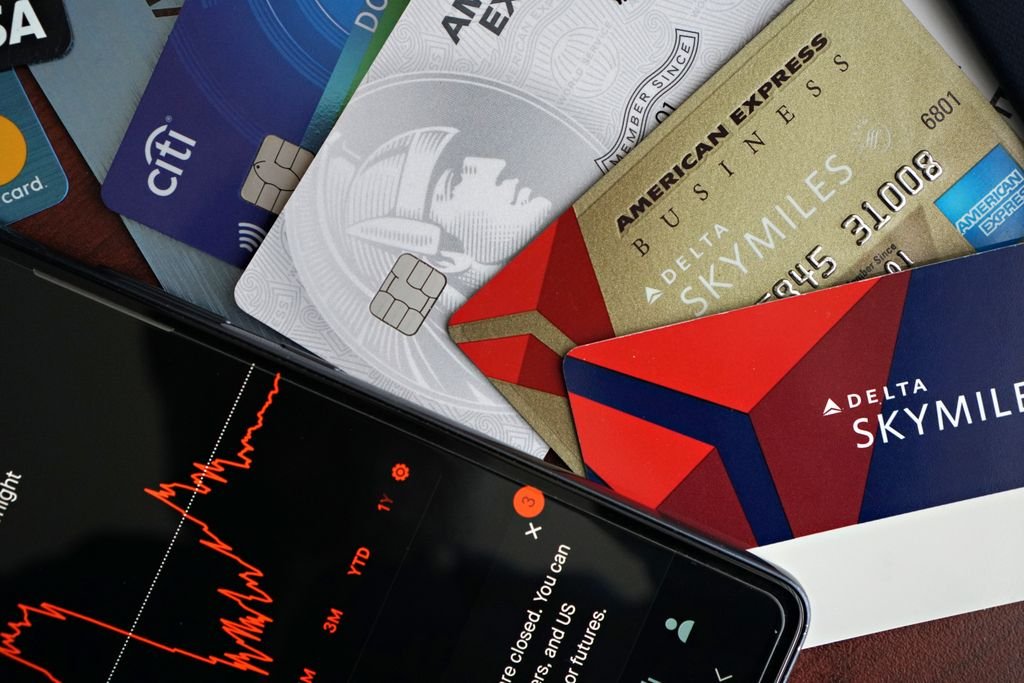
A line of credit and a credit card both let you borrow repeatedly up to an approved limit. As you repay the balance, the available credit generally becomes usable again. However, they differ in how you access the money, when interest begins, the fees you may pay, and the expenses for which each product is best suited.
The practical difference is that a personal line of credit usually provides flexible access to cash through account transfers or special checks. A credit card is designed primarily for purchases and may offer a grace period, rewards, fraud protections, and broader acceptance at stores and online.
A credit card may be more suitable for routine purchases that you can repay in full each billing cycle. A personal line of credit may be more useful for a larger or unpredictable expense when you need direct access to cash and expect to repay the amount over time.
Neither option is automatically cheaper. Compare the annual percentage rate, variable-rate provisions, access fees, annual fees, repayment requirements, and total borrowing cost before deciding.
Line of Credit vs. Credit Card at a Glance
| Feature | Personal line of credit | Credit card |
|---|---|---|
| Credit type | Usually revolving credit | Revolving credit |
| Primary use | Flexible access to cash | Everyday purchases |
| Access method | Transfers, checks or withdrawals | Physical or virtual card |
| Interest | Commonly begins when funds are borrowed | Purchases may receive a grace period |
| Rewards | Uncommon | Available on many cards |
| Annual or maintenance fee | Possible | Possible |
| Transaction fee | Some lenders charge a draw or access fee | Normal purchases typically have no transaction fee, but other fees may apply |
| Repayment | Minimum periodic payments may be allowed | Minimum monthly payment required |
| Credit limit | Based on income, creditworthiness and lender policies | Based on income, creditworthiness and issuer policies |
| Availability | Offered by some banks and credit unions | Widely available |
| Best suited for | Larger or irregular expenses requiring cash | Purchases repaid within the billing cycle |
| Main risk | Immediate interest and possible variable rates or access fees | High interest when balances are carried |
Product terms vary considerably. The agreement and required disclosures control the actual rate, fees, repayment rules, and access methods.
What Is a Personal Line of Credit?
A personal line of credit is a loan that allows you to borrow money as needed instead of receiving the entire approved amount at once.
For example, if you receive a $10,000 credit line, you do not necessarily borrow $10,000 immediately. You might transfer $2,500 to your checking account for an expense. You would generally pay interest on the outstanding $2,500 rather than the unused portion of the limit.
After repaying some or all of that balance, you may be able to borrow again, subject to the agreement and account status.
According to the Consumer Financial Protection Bureau’s explanation of personal lines of credit, funds may be accessed through special checks or a transfer to a checking account. The borrower receives a monthly bill, makes at least the required minimum payment and pays interest based on the outstanding balance.
This article focuses primarily on an unsecured personal line of credit. A home equity line of credit, or HELOC, uses a home as collateral and presents the additional risk of foreclosure if the borrower fails to repay.
How can you access a line of credit?
Depending on the lender, access methods may include:
- An online transfer to a bank account
- Special checks linked to the credit line
- Telephone transfer requests
- In-person withdrawals
- Automatic overdraft transfers
- A lender-provided access card
Not every lender offers every method. Some may also impose a minimum withdrawal or charge a fee each time you access the line.
How does interest work?
Interest on a personal line of credit usually begins when you borrow the money. Unlike qualifying credit-card purchases, there may be no interest-free grace period.
Rates are often variable, meaning the APR can change according to an index and margin specified in the agreement. A change in the benchmark rate can therefore increase or decrease the cost of an existing balance.
Before opening an account, the CFPB recommends comparing:
- The APR
- Whether and how the APR can change
- Fees for accessing the line
- Annual or maintenance fees
- Late-payment fees
- Other available forms of credit
Review the CFPB’s complete personal line of credit shopping guidance before accepting an offer.
What Is a Credit Card?
A credit card provides access to a revolving credit limit through a physical or virtual payment card.
You can use it for purchases at participating stores, websites, service providers, and other merchants. Some cards also allow balance transfers and cash advances, although these transactions may carry separate fees and APRs.
At the end of each billing cycle, the issuer produces a statement showing information such as:
- The statement balance
- Minimum payment
- Payment due date
- APRs
- Interest charged
- Fees
- Transactions during the billing period
- Available credit
WealthLedger’s guide to the minimum payment and statement balance explains how these amounts differ and why paying only the minimum can extend repayment and increase interest costs.
How does the credit-card grace period work?
Many credit cards provide a grace period on purchases. It is the time between the end of a billing cycle and the payment due date.
The CFPB explains that credit-card issuers are not required to offer a grace period, although most cards provide one for purchases. When the account qualifies, paying the full required balance by the due date may allow you to avoid interest on those purchases.
A grace period may not apply when you carry a balance. It also commonly does not apply to cash advances, which may begin accruing interest immediately and carry a transaction fee.
Check the card agreement instead of assuming every transaction receives the same treatment.
Seven Key Differences Between a Line of Credit and Credit Card
1. How you access the money
A personal line of credit is generally designed to provide cash through a transfer or special check. This can make it useful when an expense cannot conveniently be paid by card.
A credit card is primarily a purchasing tool. It can be tapped, inserted, swiped, or entered online and may offer stronger transaction-management features.
Although a credit card may permit cash advances, using one as a source of cash can be expensive because of cash-advance fees, a separate APR, and the possible absence of a grace period.
2. When interest begins
A personal line of credit normally starts charging interest after you draw funds.
A credit card may allow you to avoid purchase interest by paying the required balance in full within the applicable grace period. This makes a credit card potentially less expensive for short-term purchases when you consistently pay in full.
If you carry the balance, however, a credit card’s higher APR could make it more expensive than a lower-rate line of credit.
3. Interest rates
A personal line of credit may offer a lower APR than a credit card, particularly to a borrower with strong credit. This is not guaranteed.
Both products may carry variable rates. Compare the actual offers available to you rather than relying on general averages.
Ask these questions:
- What is the current APR?
- Is the rate fixed or variable?
- Which index and margin determine a variable rate?
- Is there an introductory rate?
- When does a promotional rate expire?
- Can a penalty rate apply?
- Does each transaction type have a different APR?
The Truth in Lending Act requires creditors to disclose applicable credit costs so consumers can compare offers. The Office of the Comptroller of the Currency’s Truth in Lending overview provides additional information about these protections.
4. Fees
A line of credit could charge:
- Annual or maintenance fees
- Origination fees
- Access or transaction fees
- Late fees
- Returned-payment fees
- Overdraft-transfer fees
A credit card could charge:
- Annual fees
- Late fees
- Balance-transfer fees
- Cash-advance fees
- Foreign-transaction fees
- Returned-payment fees
A product with the lower advertised APR is not necessarily cheaper after fees are included.
5. Rewards and purchase benefits
Many credit cards offer cash back, points, travel rewards, extended warranties, purchase protection, or other benefits.
Personal lines of credit rarely provide comparable rewards because they are designed as borrowing accounts rather than payment products.
Rewards should not determine the decision if carrying the balance will produce interest charges greater than the value of the rewards.
6. Qualification and availability
Credit cards are offered by a wide range of banks, credit unions, and card issuers. Options may exist for consumers across different credit profiles, although rates, limits, deposits, and fees vary.
Unsecured personal lines of credit are less widely advertised. According to the CFPB, many lenders offering them require strong creditworthiness. Limits may be based on the applicant’s credit profile and income.
Applying for either product may result in a hard credit inquiry. Learn how a hard pull differs from a soft pull before submitting multiple applications.
7. Account duration and repayment structure
A credit card can typically remain open while the account is in good standing and the issuer continues offering it.
A personal line of credit may have a defined draw period during which you can borrow. Some agreements may later enter a repayment phase or require renewal. Others operate more like an ongoing revolving account.
Because structures vary, determine:
- How long the draw period lasts
- Whether the lender can require renewal
- What happens when access ends
- How the minimum payment is calculated
- Whether the balance must be repaid by a specified date
Cost Example
Suppose you need to borrow $5,000 and are considering:
- A personal line of credit with a 12% variable APR and a $50 annual fee
- A credit card with a 22% variable purchase APR and no annual fee
If you expect to carry the balance for several months, the line of credit may produce less interest despite its annual fee.
However, if you can charge the expense to the credit card and repay the entire eligible purchase balance during its grace period, the credit card might charge no purchase interest. In that situation, it could cost less than drawing from the credit line.
This simplified example does not account for compounding, daily balance methods, changing rates, minimum-payment calculations, transaction fees, or loss of a credit-card grace period. Use the actual disclosures to calculate the likely cost.
When Might a Line of Credit Be Better?
A personal line of credit may be worth considering when:
- You need direct access to cash
- The expense cannot be paid by card
- The total cost is uncertain
- You expect several related expenses over time
- The offered APR is meaningfully below your credit-card APR
- You need more flexibility than a fixed personal loan provides
- You understand the variable-rate and fee provisions
- You have a dependable repayment plan
Possible uses include phased home repairs, temporary cash-flow gaps, or irregular necessary expenses. Borrowing should not replace an appropriate emergency fund or a sustainable budget.
If you know the exact amount needed and prefer predictable installments, compare the credit line with a fixed personal loan. Our guide to a personal loan versus a personal line of credit explains that distinction.
When Might a Credit Card Be Better?
A credit card may be more suitable when:
- The merchant accepts cards
- You can pay the statement balance in full
- The card offers an applicable purchase grace period
- You want rewards or purchase protections
- You need a convenient payment method for everyday spending
- You want to track purchases through monthly statements
- You do not need direct access to cash
- The card has no annual fee or its benefits justify the fee
A credit card can be useful for convenience, but it should not be treated as free money. A balance that remains unpaid can accumulate interest and make the original purchase substantially more expensive.
A charge card and credit card also follow different repayment structures, so verify which type of account you are considering.
When Neither Option May Be Appropriate
Neither product may be suitable when:
- You cannot afford the expected minimum payments
- Borrowing is being used repeatedly to cover ordinary expenses
- The APR or fees are excessive
- Income is too uncertain to support repayment
- The lender will not clearly disclose the terms
- You are borrowing to repay another debt without addressing the underlying shortfall
- A secured credit line would place an essential asset at risk
- The expense can safely wait while you save
If existing debts have become difficult to manage, additional revolving credit may postpone rather than solve the problem. Compare borrowing with hardship programs, nonprofit credit counseling, or other legitimate debt-management options.
Practical Comparison Checklist
Before applying, obtain the disclosures for both products and compare:
- APR for each transaction type
- Whether the APR is variable
- Index and margin used for rate changes
- Grace-period eligibility
- Annual or maintenance fees
- Draw, access, and cash-advance fees
- Minimum-payment formula
- Credit limit
- Access methods
- Draw-period or expiration rules
- Late-payment consequences
- Rewards and purchase protections
- Collateral requirements
- Total estimated repayment cost
- Whether the payment fits your budget
Do not choose solely according to the minimum payment. A small required payment can result in a long repayment period and substantial interest.
Frequently Asked Questions
Is a line of credit the same as a credit card?
No. Both can provide revolving credit, but a personal line of credit normally offers access to cash through transfers or checks. A credit card is primarily designed for purchases and may offer rewards and a purchase grace period.
Which has a lower interest rate?
A personal line of credit may have a lower APR than a credit card, but this is not guaranteed. Rates depend on the lender, product, credit profile, income, market conditions, and whether the account is secured.
Does a line of credit have a grace period?
A personal line of credit commonly begins charging interest when funds are borrowed. Do not assume it offers an interest-free period. Review the agreement for the actual interest calculation.
Can I use a credit card instead of a line of credit?
Possibly, if the expense accepts card payment and the card’s limit and terms are appropriate. Obtaining cash from a credit card may involve a cash-advance fee, separate APR, and immediate interest.
Is a line of credit better for emergencies?
It can provide backup liquidity, but approval, continued availability, and affordable terms are not guaranteed. A cash emergency fund avoids borrowing costs and should generally remain the first line of protection when feasible.
Do credit cards and lines of credit affect credit scores?
Both may affect your credit history and scores. Applications may create hard inquiries, and lenders may report balances and payment activity. The precise scoring treatment depends on how the account is reported and the scoring model involved.
Missing payments can have serious consequences. The CFPB warns that failure to repay a personal line of credit may result in account suspension, collection expenses, and damage to credit history.
Is a personal line of credit secured?
It may be secured or unsecured. An unsecured line relies primarily on creditworthiness and income. A secured line uses collateral. A HELOC, for example, is secured by a home and carries risks that an unsecured personal line does not.
Can I have both?
Yes, provided you qualify. Having both does not mean using both is necessary. Multiple available accounts can offer flexibility, but they can also create more fees, payment dates, and opportunities to accumulate debt.
Final Takeaway
A personal line of credit and a credit card both provide reusable access to borrowed money, but they serve different purposes.
A line of credit is generally better suited to obtaining cash for larger or irregular expenses, particularly when its total borrowing cost is lower. A credit card is generally more convenient for purchases and may be cheaper when an eligible balance is paid in full during the grace period.
Compare the actual APRs, fees, interest timing, repayment requirements, and protections. Choose the product that matches the expense and a realistic repayment plan—not merely the one offering the largest credit limit.
This article provides general educational information and does not constitute personalized financial, credit, legal, or tax advice. Product availability, rates, fees, eligibility requirements, and account terms vary by lender and may change. Review the official disclosures before applying or borrowing.