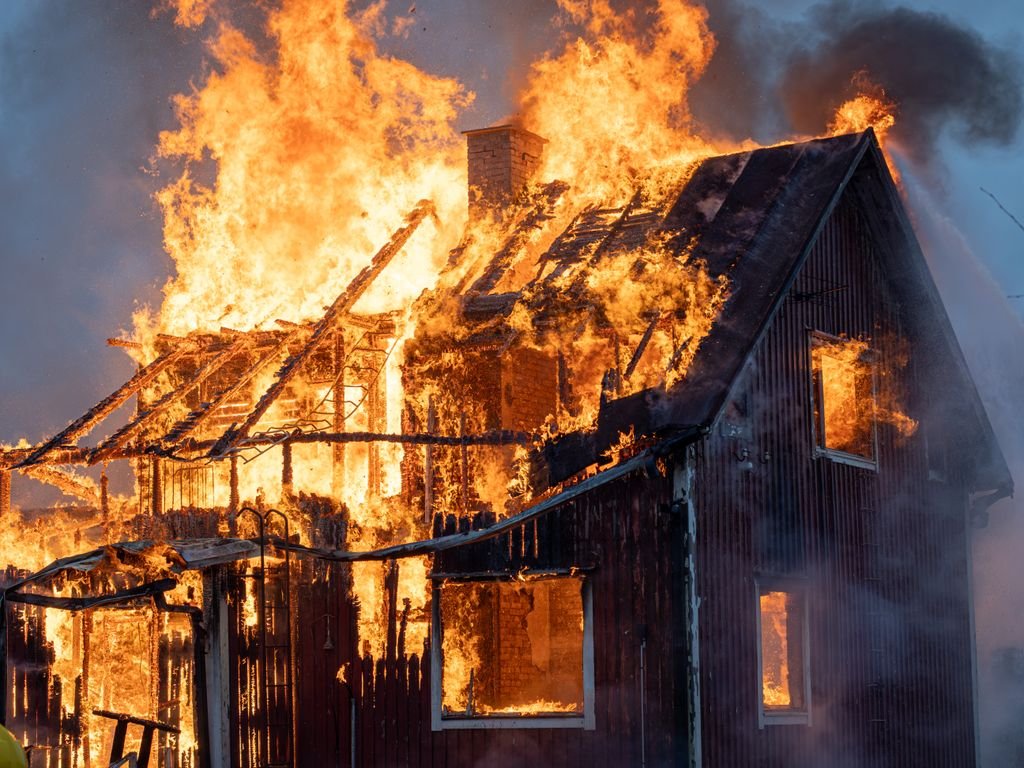
Renters insurance generally covers personal belongings damaged or destroyed by fire, smoke, and certain related losses. It may also pay additional living expenses when a covered apartment fire makes your rental temporarily uninhabitable.
Coverage can apply whether the fire begins in your apartment, a neighboring unit, another part of the building, or outside the property as a wildfire.
However, renters insurance protects your possessions rather than the landlord’s building. It also does not cover intentional fires, and policy limits, deductibles, exclusions, and valuation methods can reduce the claim payment.
If you accidentally caused the fire, your personal-property coverage may still protect eligible belongings, while personal liability coverage may address certain claims for damage to the building or another person’s property. The insurer must evaluate the circumstances and policy language.
Renters Insurance Fire Coverage at a Glance
| Fire-related loss | Renters insurance may cover it? | Important consideration |
|---|---|---|
| Furniture damaged by fire | Usually | Personal-property limit and deductible apply |
| Clothing damaged by smoke | Usually | Professional cleaning may be required |
| Electronics damaged by soot | Usually | Insurer may determine whether repair is possible |
| Water damage from firefighters | Often | Generally treated as resulting damage from the covered fire |
| Sprinkler damage during a fire | Often | Cause and policy terms matter |
| Hotel after an apartment fire | Possibly | Rental must generally be uninhabitable |
| Fire starting in a neighboring unit | Usually | Your property coverage does not require you to cause the fire |
| Accidental cooking fire | Often | Intentional acts and certain negligence exclusions may apply |
| Tenant’s liability for building damage | Possibly | Liability provisions and rented-property exclusions matter |
| Landlord’s walls, roof, and fixtures | No | Landlord’s property policy handles the structure |
| Wildfire damage to belongings | Usually | Fire must be covered under the policy |
| Car damaged by fire | No | Auto comprehensive coverage may apply |
| Intentional fire caused by the insured | No | Intentional losses are generally excluded |
| Jewelry destroyed in a fire | Possibly | Valuation and special limits should be checked |
This table describes common outcomes. The actual policy, cause of the fire, property ownership, and claim evidence determine coverage.
What Does Renters Insurance Cover After a Fire?
Three parts of a renters policy may become relevant after a covered fire.
Personal-property coverage
This coverage can help repair or replace belongings you own, including:
- Furniture
- Clothing
- Electronics
- Kitchenware
- Small appliances
- Books
- Rugs
- Bicycles
- Bedding
- Other household possessions
Payment remains subject to the personal-property limit, deductible, special limits, exclusions, and loss-settlement terms.
The Texas Department of Insurance states that most renters policies cover losses caused by fire and smoke, along with theft, vandalism, and certain water damage. Review its renters insurance guidance.
Loss-of-use coverage
Loss-of-use coverage may pay reasonable additional living expenses when covered fire damage prevents you from living in the rental.
Potential expenses include:
- Hotel or temporary apartment
- Additional food costs
- Extra transportation
- Laundry
- Pet boarding
- Moving
- Temporary storage
Personal liability coverage
Liability coverage may help if you are legally responsible for causing the fire and another person seeks compensation for covered property damage or injury.
Possible claimants include:
- Landlord
- Neighbor
- Property-management company
- Building insurer
- Injured guest
- Another affected tenant
Liability coverage does not automatically apply to every fire you accidentally cause. The policy may contain special rules for property you rent, occupy, use, or control.
Does Renters Insurance Cover an Accidental Kitchen Fire?
An accidental cooking fire is commonly covered under renters insurance.
Examples include:
- Oil catches fire on a stove.
- Food left cooking ignites.
- A toaster or small appliance catches fire.
- An oven malfunction starts a fire.
- A towel or other item accidentally contacts a burner.
Personal-property coverage may pay for eligible belongings damaged by flames, smoke, soot, or firefighting efforts.
If your actions caused damage to the landlord’s building or another apartment, personal liability coverage might apply. The insurer will examine:
- How the fire started
- Whether the conduct was accidental
- Whether anyone violated the law
- Whether policy exclusions apply
- Who owns the damaged property
- Whether you are legally responsible
Do not admit legal liability or agree to reimburse the landlord before reporting the incident to your insurer.
Does Renters Insurance Cover an Electrical Fire?
Renters insurance generally covers personal belongings damaged by a sudden electrical fire.
Possible causes include:
- Faulty building wiring
- Overheated appliance
- Damaged power cord
- Electrical short circuit
- Outlet failure
- Malfunctioning charger
The landlord’s property insurance normally handles damage to the building’s wiring, walls, floors, and installed fixtures. Your renters policy handles eligible possessions you own.
Insurance may pay for the resulting fire damage without paying to replace the defective appliance or wiring that caused it. Mechanical breakdown, wear and tear, defective products, and poor maintenance can be treated differently from the resulting fire.
Preserve the appliance or device suspected of starting the fire unless investigators or the insurer authorize its disposal.
What If the Fire Starts in Another Apartment?
Your renters insurance may cover your belongings even when the fire begins in a neighboring apartment or common area.
You generally do not need to prove that your neighbor was negligent before filing a personal-property claim under your own policy.
For example:
- A kitchen fire starts in the apartment below.
- Flames, smoke, and firefighting water reach your unit.
- Your sofa, clothing, and computer are damaged.
- You file a renters insurance claim for your belongings.
Your insurer may later pursue recovery from a responsible person or that person’s insurer. This process is called subrogation.
Do not delay your own claim while waiting for the landlord, neighbor, or fire department to determine fault.
Does Renters Insurance Cover Smoke and Soot Damage?
Smoke and soot damage are commonly covered when they result from a covered fire.
Even when flames never enter your apartment, smoke can affect:
- Clothing
- Furniture
- Curtains
- Carpets
- Electronics
- Books
- Artwork
- Kitchenware
- Bedding
Smoke residue can contain hazardous substances, and incorrect cleaning may permanently damage property or create health risks.
Do not immediately wash, wipe, or operate affected electronics. Ask the insurer whether it will arrange:
- Textile cleaning
- Electronics restoration
- Furniture cleaning
- Odor removal
- Professional assessment
- Property disposal
Document every affected item before cleaning begins.
Is Firefighting Water Damage Covered?
Renters insurance commonly covers belongings damaged by water, foam, or other measures used to extinguish a covered fire.
Examples include:
- Fire-hose water
- Activated sprinkler systems
- Water from a neighboring unit
- Firefighters opening walls or doors
- Belongings damaged during emergency access
- Temporary exposure after firefighters break a window
This differs from external flooding, which standard renters insurance generally excludes.
If firefighting water damages your belongings, explain clearly that the water resulted from the fire response. Our guide to when renters insurance covers water damage explains how the source of water affects coverage.
Does Renters Insurance Cover Wildfire Damage?
Fire is commonly a covered peril regardless of whether it begins inside the building or as a wildfire.
Renters insurance may cover:
- Belongings destroyed by flames
- Smoke and soot damage
- Damage caused by firefighting efforts
- Additional living expenses after covered damage
- Property temporarily removed to protect it from an approaching fire
Coverage availability can become more restricted in areas with severe wildfire risk. Review the policy for:
- Wildfire exclusions
- Moratoriums on new coverage
- Special deductibles
- Smoke limitations
- Property-removal coverage
- Civil-authority provisions
- Loss-of-use limits
Purchase or update coverage before a wildfire approaches. Insurers may temporarily stop writing new policies or increasing limits during an active threat.
Will Renters Insurance Pay for a Hotel After a Fire?
Loss-of-use coverage may pay additional living expenses when a covered fire makes your rental uninhabitable.
Progressive explains that when fire makes a rental home uninhabitable, loss-of-use coverage may help pay for a short-term rental, storage, and food expenses above normal spending. Read its renters coverage overview.
Suppose your regular weekly food expense is $140, but staying in a hotel without a kitchen increases it to $250.
Normal weekly food cost: $140
Temporary weekly food cost: $250
Potential additional expense: $110
Calculation:
$250 − $140 = $110
The coverage generally addresses the additional $110, not the entire $250.
Hotel coverage depends on:
- Whether the fire is covered
- Whether the unit is uninhabitable
- Loss-of-use limit
- Maximum coverage period
- Reasonableness of the accommodation
- Insurer documentation requirements
- Whether expenses exceed normal costs
Contact the insurer before booking expensive long-term accommodations when possible. Save every receipt.
Learn more about hotel, meal, transportation, and storage reimbursement through renters insurance loss-of-use coverage.
What If You Accidentally Caused the Fire?
Accidentally causing a fire does not automatically eliminate all renters coverage.
Your personal-property coverage may still protect eligible belongings unless a specific exclusion applies. Personal liability coverage might also protect you against covered claims by the landlord or other residents.
For example, your liability coverage might be relevant if:
- A cooking accident damages the building.
- A candle starts an accidental fire.
- A space heater damages the neighboring unit.
- Your actions cause smoke damage elsewhere.
- Another resident suffers covered property damage.
However, policy terms involving property rented to or controlled by you can affect building-damage claims. Some policies make exceptions for fire damage to rented premises, while others handle the exposure differently.
Contact the insurer immediately if the landlord:
- Demands payment
- Sends an invoice
- Withholds the security deposit
- Files a lawsuit
- Submits an insurer’s recovery demand
- Alleges negligence
Send every document to the insurer without altering or signing it.
When Fire Damage May Not Be Covered
Intentional fire
Renters insurance generally does not cover a fire intentionally caused by an insured person.
Insurance fraud and arson can also lead to criminal consequences.
An innocent insured’s rights may depend on the policy and state law when another insured caused the fire intentionally.
Illegal activity
Coverage may be denied when the loss arises from certain criminal or illegal activities, depending on the exclusion and facts.
Fraudulent claim information
Exaggerating the number, condition, ownership, or value of damaged items can jeopardize the entire claim.
Property belonging to someone else
An unrelated roommate’s belongings are not automatically covered under your policy. Each roommate generally needs separate insurance unless specifically listed and accepted by the insurer.
Insufficient limits
A covered fire can still produce an inadequate payment when the value of destroyed property exceeds the policy limit.
Vacancy or policy lapse
Coverage may be restricted if the policy expired, premiums were unpaid, or the residence was vacant beyond a period specified in the policy.
Landlord Insurance vs. Renters Insurance
A fire can involve separate policies covering different property.
| Damaged property or expense | Policy that may apply |
|---|---|
| Building roof | Landlord’s property insurance |
| Walls and installed flooring | Landlord’s property insurance |
| Doors and windows | Landlord’s property insurance |
| Built-in appliances | Landlord’s property insurance |
| Tenant’s furniture | Renters insurance |
| Tenant’s clothing | Renters insurance |
| Tenant’s electronics | Renters insurance |
| Tenant’s hotel expenses | Renters loss-of-use coverage |
| Tenant’s legal responsibility | Renters liability coverage |
| Tenant’s vehicle | Auto insurance |
The landlord’s policy normally does not replace tenant-owned possessions. Renters insurance does not normally repair the landlord’s building under personal-property coverage.
If a fire damages the apartment’s glass, our guide explains who may pay for broken windows.
How the Renters Insurance Deductible Works
A deductible is generally subtracted from the eligible personal-property claim.
Consider this example:
Covered belongings damaged by fire: $8,000
Renters insurance deductible: $500
Potential personal-property payment: $7,500
Calculation:
$8,000 − $500 = $7,500
The actual payment may be lower because of depreciation, special property limits, or the total policy limit.
If covered damage totals $400 and the deductible is $500, the policy ordinarily will not provide a personal-property payment.
Liability and loss-of-use coverage may not use the same deductible. Review each coverage separately.
Our guide to selecting a renters insurance deductible explains how the amount affects claims and premiums.
Replacement Cost vs. Actual Cash Value
Your claim settlement may use actual cash value or replacement cost.
Actual cash value
Actual cash value accounts for depreciation.
Suppose a sofa cost $1,500 five years ago. Its actual cash value immediately before the fire might be substantially less than the cost of a new sofa.
Replacement cost
Replacement-cost coverage generally pays the eligible cost of purchasing a comparable new item, subject to limits.
The insurer may initially pay actual cash value and release additional recoverable depreciation after you replace the item and submit the receipt.
Do not assume that “replacement cost” means the insurer will pay for any upgraded product you select. The replacement generally must be comparable to the damaged item.
Are Jewelry and Valuable Items Covered in a Fire?
Jewelry may be covered when damaged or destroyed by fire, but special limits and documentation requirements can apply.
A policy may treat theft limits differently from fire losses. Still, you should review coverage for:
- Jewelry
- Watches
- Artwork
- Collectibles
- Firearms
- Business equipment
- Cash
- Securities
- Precious metals
Scheduled personal-property coverage may provide higher limits for valuable items.
Keep appraisals, receipts, certificates, and photographs somewhere outside the rental. See our detailed guide to renters insurance jewelry coverage.
Does Renters Insurance Cover a Car Damaged by Fire?
Renters insurance does not cover physical damage to cars, motorcycles, RVs, or other motor vehicles.
Auto insurance may cover fire damage through:
- Comprehensive coverage for non-collision fire
- Collision coverage when fire results from a crash
- Another party’s liability insurance when applicable
Renters insurance may cover ordinary personal belongings damaged inside the vehicle, subject to its terms. Permanently installed vehicle equipment belongs under auto insurance.
What to Do Immediately After an Apartment Fire
1. Prioritize safety
Leave the building and call emergency services. Do not return for possessions, pets, documents, or medication when doing so is unsafe.
2. Do not re-enter without authorization
Fire can weaken floors, ceilings, stairs, and walls. Smoke, gas, chemicals, and electrical hazards may remain after flames are extinguished.
Wait until the fire department or appropriate authority permits entry.
3. Notify the landlord
Report the incident immediately. The landlord must arrange structural inspection, securing, and repairs.
4. Contact your insurer
Start the claim promptly. Ask about:
- Emergency housing
- Property inspection
- Cleaning authorization
- Advance payments
- Deductible
- Coverage limits
- Inventory requirements
- Damaged-property disposal
5. Obtain the fire report
Ask the fire department how to request its incident report. The final cause investigation may take time.
6. Document everything
When authorities allow access, photograph:
- Every affected room
- Flames and heat damage
- Smoke and soot
- Firefighting water
- Damaged possessions
- Broken doors and windows
- Debris
- Serial numbers and labels
7. Secure the property
Coordinate with the landlord. Do not personally enter an unsafe building to cover windows or retrieve property.
8. Keep damaged possessions
Do not discard items until the insurer inspects them or authorizes disposal. Photograph anything that must be removed for safety.
How to Prepare a Fire-Damage Inventory
Create one line for each damaged item and include:
- Description
- Brand
- Model
- Serial number
- Approximate age
- Original price
- Current replacement cost
- Condition before the fire
- Photograph
- Receipt or other ownership evidence
Do not write only “clothing—$5,000.” Break the category into individual items or reasonable groups.
Possible ownership evidence includes:
- Purchase receipts
- Credit-card statements
- Online order history
- Warranty registrations
- Photographs from before the fire
- Product manuals
- Gift records
- Appraisals
The Texas Department of Insurance recommends maintaining an inventory and understanding whether a renters policy pays replacement cost or actual cash value.
Common Fire-Claim Mistakes
Entering an unsafe apartment
Wait for official authorization. The property may remain structurally unstable or contaminated.
Cleaning before documenting
Photograph everything before professional cleaning begins.
Operating smoke-damaged electronics
Soot and moisture can create additional damage or electrical hazards.
Throwing property away too soon
The adjuster may need to inspect it or confirm that restoration is impossible.
Accepting responsibility immediately
Describe the facts accurately, but allow insurers and investigators to determine legal liability.
Forgetting additional expenses
Save hotel, meal, laundry, transportation, storage, and emergency-purchase receipts.
Underestimating small possessions
Kitchenware, clothing, books, bedding, and household supplies can have substantial combined replacement costs.
Frequently Asked Questions
Does renters insurance cover fire damage to an apartment?
Renters insurance covers eligible tenant-owned belongings, loss-of-use expenses, and potentially liability. The landlord’s insurance covers the apartment building itself.
Does renters insurance cover smoke damage?
Generally, yes, when smoke results from a covered fire. Professional cleaning or replacement may be required.
Does renters insurance cover water damage caused by firefighters?
It commonly may because the water damage resulted from efforts to extinguish a covered fire.
Does renters insurance cover a fire caused by a neighbor?
Your personal-property coverage may protect belongings regardless of which apartment started the fire. Your insurer may later pursue a responsible party.
Does renters insurance cover a cooking fire?
Accidental cooking fires are commonly covered. Intentional acts, fraud, illegal activity, or specific exclusions can change the outcome.
Will renters insurance pay for a hotel?
It may when covered fire damage makes the rental uninhabitable. Payment remains subject to the loss-of-use limit and documentation requirements.
Does renters insurance cover a wildfire?
Fire and smoke are commonly covered perils, including wildfire. Confirm whether any location-specific restrictions or deductibles apply.
Does renters insurance cover fire caused by a candle?
An accidental candle fire may be covered. Liability coverage might also become relevant if you are legally responsible for damage to another person’s property.
What if I do not have receipts for everything?
Other proof—such as photographs, credit-card records, order histories, warranties, manuals, or witness information—may help establish ownership and value.
Does renters insurance cover fire damage caused by an earthquake?
Standard policies may cover fire following an earthquake even when direct shaking damage is excluded. State law and policy language control. Our guide explains how renters earthquake coverage separates direct quake damage from resulting fire.
Final Thoughts
Does renters insurance cover fire damage? Standard renters insurance generally protects eligible personal belongings against fire and smoke, including damage from kitchen fires, electrical fires, neighboring apartments, and wildfires.
It may also cover firefighting water, professional smoke cleanup, and additional living expenses when the apartment becomes uninhabitable.
The landlord’s insurance covers the building, while your renters policy protects possessions you own. If you accidentally caused the fire, personal liability coverage may respond to certain claims, but the insurer must review the facts and policy.
After a fire, prioritize safety, notify the landlord and insurer, obtain the fire report, photograph all damage, preserve affected property, and keep every temporary-living expense receipt.
A current home inventory and adequate replacement-cost coverage can make the difference between rebuilding your household and facing a major financial gap.
This article provides general educational information and does not constitute individualized insurance, legal, fire-safety, or financial advice. Coverage depends on the insurer, policy form, endorsements, exclusions, limits, location, and facts of the loss. Follow instructions from emergency authorities and consult appropriately qualified professionals regarding your circumstances.